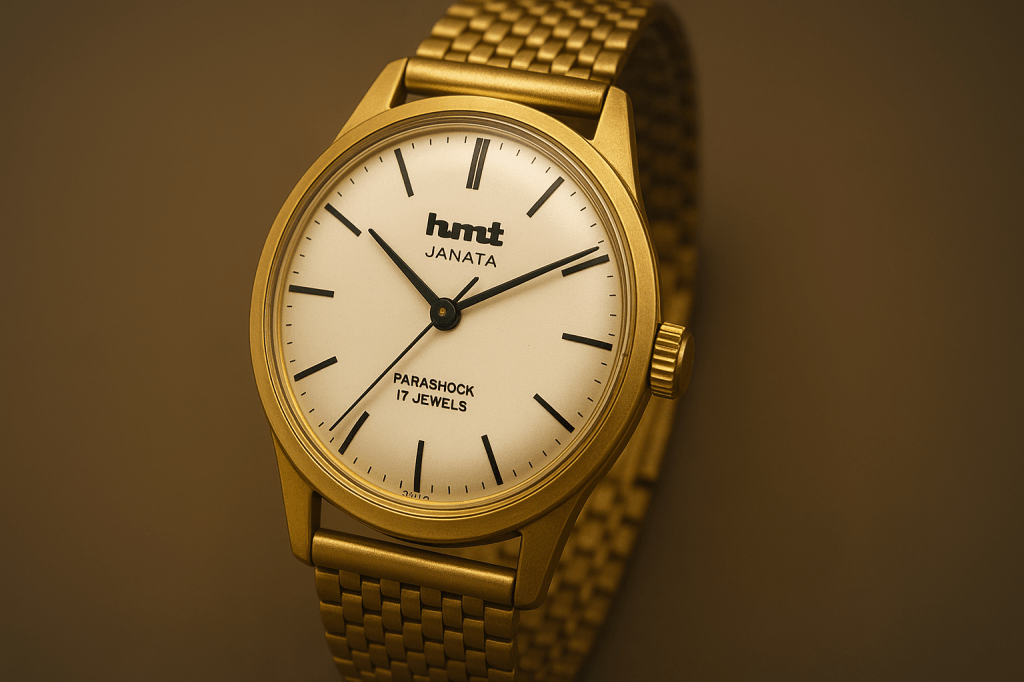
The Watch That Ticked Into My Life

The first mechanical watch I ever held wasn’t mine—it was my grandfather’s. A slim, silver-dialed HMT Rajat, always peeking out from under the cuff of his kurta. He would wind it each morning with a quiet reverence, as though awakening something sacred. It wasn’t just a tool to tell time—it was a symbol.
Through him, I discovered that HMT wasn’t just a watch brand. It was a badge of honor, a retirement gift, a wedding present, a milestone. Owning an HMT meant something in India—because it was India’s timekeeper.
As someone who now explores microbrands and affordable mechanical watches through my blog Mechanical Minutes, I wanted to step back and honor the brand that put India on time—and did it with dignity, precision, and pride.
The Backdrop: India’s Tryst with Industrial Destiny
When India gained independence in 1947, the country’s leadership knew that self-reliance wouldn’t just come from freedom—it needed factories, tools, and technology.
In 1953, Hindustan Machine Tools (HMT) was born as a state-owned enterprise focused on machine tools. But it wasn’t long before Nehru’s vision expanded. By 1961, with technical assistance from Japan’s Citizen Watch Co., HMT took on a new mission: manufacturing India’s very first wristwatches.
This wasn’t just industrial diversification—it was nation-building on your wrist.
HMT’s Contributions: Timekeeping as Nation-Building
🏭 Made in India, For Indians
HMT created watches in India, by Indians, for Indians—a revolutionary concept in an era where imported Swiss watches were luxuries few could afford. These weren’t mass-manufactured gadgets—they were engineered with care, often by skilled artisans trained in Japan and Switzerland.
“Time is money, they say. But in India, time was also identity. And HMT gave it form.”
⏱️ Mechanical Movements for the Masses
Where the world was shifting to quartz, HMT doubled down on manual-wind mechanical calibers—tough, repairable, and romantic in their ticking rhythm. The Caliber 020, based on Citizen’s movement, powered many iconic models like the Janata, Sona, and Rajat.
Some innovations include:
- Shock-resistant designs, rare in that price bracket.
- Hand-finished dials, often with subtle textures or sunburst effects.
- Slim cases and domed acrylics, styled with Bauhaus-like restraint.
🎓 Skill Transfer & Watchmaking Ecosystem
HMT didn’t just make watches—it built an entire generation of Indian watchmakers, many of whom would later go on to launch private ventures. Its training programs were rigorous and respected, often mirroring Swiss watchmaking pedagogy.
Why Were HMT Watches So Prestigious?
Before Titan, before Seiko’s Indian presence, HMT was the gold standard of wristwatches in India. If you received one:
- At retirement—it meant your service was honored.
- As a gift—it meant you were respected.
- At marriage—it symbolized a lifelong promise.
They had emotional value, but also social status. A man wearing an HMT was punctual, disciplined, and “set in time.”

The Golden Age: Models That Defined Generations
Let’s talk icons:
- HMT Janata: Worn by Nehru himself. Clean Arabic numerals. Reliable hand-wind.
- HMT Pilot: A robust, field-style watch with cult status.
- HMT Sona & Rajat: Elegant dress watches in gold and silver tones, often passed down generations.
- HMT Jawan: Issued to the Indian Army—practical, matte, and hard-as-nails.
HMT Watches on display, via Wikimedia Commons, licensed under CC BY-SA 4.0
What Made HMT Special Technically?

Beyond nostalgia, these watches had horological merit:
In-house assembly: Movements were hand-assembled in India, not imported as kits. Low-beat but long-lasting: 18,000–21,600 bph calibers optimized for longevity, not flash. Serviceable for decades: You could find a watch repair guy in any town who knew HMT guts.
This “tool-for-life” philosophy made them more than machines—they were companions.
The Slow Ticking Out: What Went Wrong?

The Quartz Crisis hit HMT harder than most. By the late 1980s, consumers wanted slimmer, battery-powered watches. HMT’s mechanical tooling couldn’t adapt fast enough. Their quartz lineup arrived too late—and lacked the charm of their originals.
The 2000s saw further decline, with branding missteps, little innovation, and growing financial losses. In 2016, the Indian government officially shut down HMT Watches.
A Cult Rebirth: HMT in the 21st Century
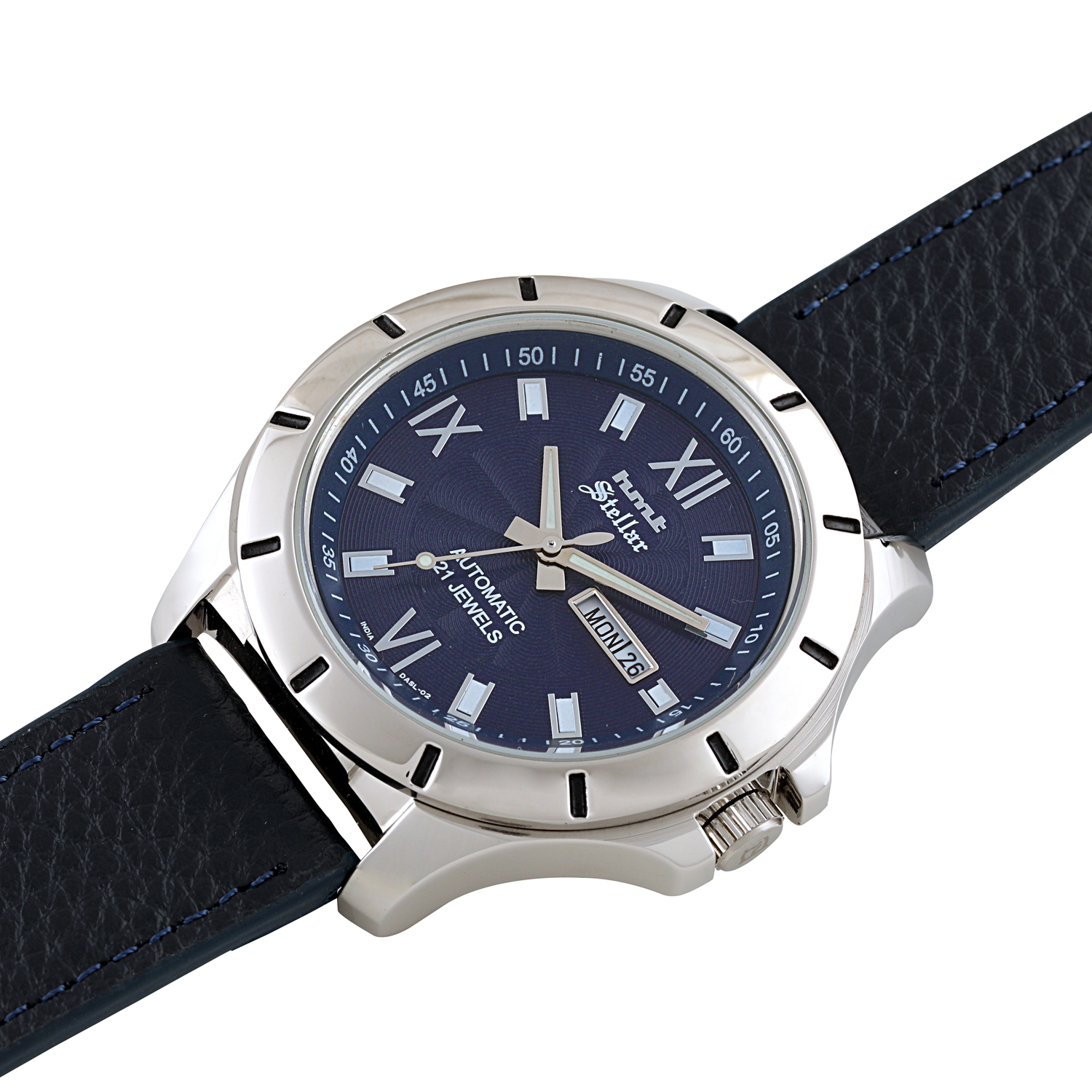
Paradoxically, HMT’s death sparked a revival. Vintage watch enthusiasts began hunting down Pilots and Janatas on eBay, refurbishing them, and showcasing them online. A new generation began to appreciate their mechanical soul.
Even today, owning an HMT is a love letter to Indian engineering, and a reminder that not all timekeeping is digital.
Final Words: A Personal Thanks
I still have my grandfather’s HMT Rajat. It doesn’t work perfectly—but that’s part of the magic. It’s not just a watch. It’s a time capsule, a tribute to a time when India built its dreams from scratch, one tick at a time.
If you’re an Indian collector, your journey begins not with a Rolex or a Nomos—but with a Janata, a Pilot, or maybe a Rajat. Check out the collection here.
Let’s keep the legacy ticking.


 Mechanical Minutes
Leave a comment