
ETA SA Manufacture Horlogère Suisse—better known as ETA—is arguably the most influential movement maker in modern horology. Whether you’re wearing a Tissot, Hamilton, Tudor, or an independent microbrand, there’s a good chance an ETA caliber beats inside. But what exactly are ETA movements? How did they become the go-to choice for brands across the price spectrum? And where does ETA stand today in a world of increasing in-house ambition?
Let’s take a closer look.
A Brief History of ETA
ETA’s story is deeply woven into the fabric of the Swiss watch industry. Established in 1856 as part of Eterna, the company was eventually folded into the Swatch Group during Switzerland’s consolidation efforts following the Quartz Crisis. Its mission: to supply Swiss watchmakers with high-quality, reliable mechanical and quartz movements.
ETA became the quiet powerhouse enabling the Swiss mechanical renaissance of the 1980s and 1990s. By producing robust calibers at scale, ETA allowed countless brands to focus on design and marketing rather than reinventing the mechanical wheel.
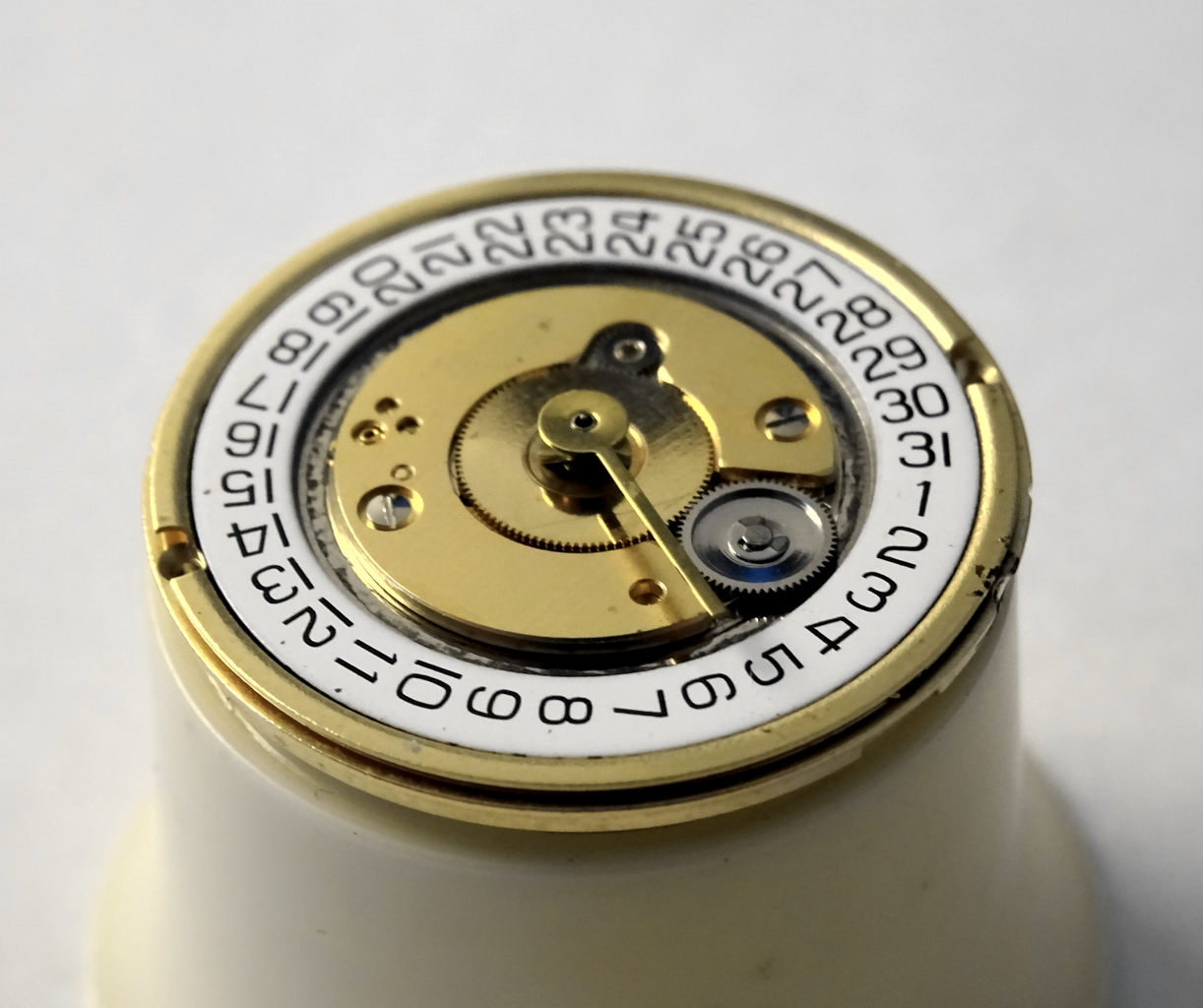
Why ETA Movements Became So Ubiquitous
ETA’s dominance comes down to a few key factors:
- Proven reliability – Movements like the ETA 2824-2 and Valjoux 7750 are known workhorses.
- Ease of servicing – Watchmakers around the world are trained to repair ETA calibers.
- Modular design – ETA movements are often modified or decorated to suit brand identities.
- Scalability – From entry-level to high-end watches, ETA offers options across tiers.
These traits made ETA ideal for microbrands and big players alike. Even luxury brands like Omega used heavily modified ETA bases before transitioning to more proprietary calibers.
Major ETA Mechanical Movements
Here’s a breakdown of ETA’s most iconic mechanical movements still relevant today:
| Caliber | Type | Frequency | Power Reserve | Notable Use Cases |
|---|---|---|---|---|
| 2824-2 | Automatic | 28,800 bph | ~38 hrs | Tissot, Hamilton, Steinhart |
| 2892-A2 | Automatic | 28,800 bph | ~42 hrs | Omega (as base), Sinn |
| 7750 | Chronograph | 28,800 bph | ~42 hrs | Sinn, Breitling, IWC |
| 2801-2 | Manual Wind | 28,800 bph | ~42 hrs | Nomos (modded), Hamilton Khaki |
| 6497/6498 | Manual Wind (pocket watch base) | 18,000 bph | ~46 hrs | Panerai, Unitas-style builds |

The Controversy: Swatch Group’s Movement Restriction
In the early 2000s, ETA announced it would gradually stop supplying ebauches (movement kits) to non-Swatch Group brands. This decision, backed by the Swiss Competition Commission, forced many brands to either develop in-house calibers or source from alternatives like Sellita, STP, La Joux-Perret, and Miyota.
This pivot had two effects:
- It catalyzed innovation. Brands like Oris and Tudor accelerated development of their own movements.
- It increased appreciation for ETA calibers. Scarcity boosted the desirability of ETA-equipped models in enthusiast circles.
ETA vs Sellita: What’s the Difference?
Sellita, once a subcontractor for ETA, now produces “clones” of popular ETA movements—most famously the SW200, based on the 2824-2. While early Sellita runs had teething issues, current versions are largely on par in performance and are used by brands like Christopher Ward and Oris (before they went in-house).
If you’re considering a watch with either movement, here’s a quick comparison:
| Feature | ETA 2824-2 | Sellita SW200-1 |
|---|---|---|
| Jewels | 25 | 26 |
| Reliability | Time-tested | Modern, well-regarded |
| Parts availability | Excellent | Excellent |
| Finishing | Varies by grade | Varies by brand spec |
ETA Today: Still Relevant?
Despite the shift toward in-house, ETA remains a critical player in horology. Swatch Group continues to use and refine ETA calibers, and many brands still rely on their consistency. Newer movements like the C07.111 Powermatic 80 (based on the 2824-2 but with 80-hour reserve and plastic parts) show ETA’s commitment to evolving with the times—even if controversially.
For collectors, a watch with an ETA movement isn’t just a placeholder—it’s a nod to the engine that quietly powered a generation of Swiss watchmaking.
Final Thoughts
ETA movements may not carry the flash of a hand-finished in-house caliber, but they are the unsung heroes of modern watchmaking. Their longevity, serviceability, and history make them worthy of both daily wear and collector respect.
If you’re new to mechanical watches or hunting for value in the pre-owned market, a well-built ETA-powered piece is a smart starting point.
Stay ticking, friends!
 Mechanical Minutes
Leave a comment