
Watch Accuracy Explained: COSC vs METAS
Accuracy is one of the most discussed topics in watch collecting forums and search results. Yet it remains widely misunderstood, especially when certifications like COSC and METAS are involved.
This article explains how mechanical watch accuracy works, what COSC and METAS actually test, and how much these certifications matter in daily wear.
What Watch Accuracy Really Means
Watch accuracy refers to how much time a watch gains or loses over a twenty four hour period. This deviation is expressed as seconds per day.
For example:
• +5 seconds per day means the watch runs fast.
• -8 seconds per day means the watch runs slow.
Mechanical watches rely on a balance wheel, escapement, and mainspring. This makes them sensitive to gravity, position, temperature, and wear. Unlike quartz, accuracy is never absolute.
Typical Accuracy Ranges for Mechanical Watches
Realistic expectations matter more than marketing claims.
| Watch Category | Expected Accuracy |
|---|---|
| Entry level mechanical | -20/+40 seconds per day |
| Mid range mechanical | -10/+20 seconds per day |
| Well regulated mechanical | -5/+10 seconds per day |
| Certified chronometer | -4/+6 seconds per day |
These ranges assume the watch is worn regularly and is in good mechanical health.
What COSC Certification Actually Tests

COSC is the Swiss Official Chronometer Testing Institute. It evaluates uncased movements over several days in controlled conditions.
Key COSC requirements include:
• Average daily rate between minus four and plus six seconds.
• Testing in five positions.
• Testing across multiple temperatures.
• Movement only, not the fully assembled watch.
COSC confirms that a movement meets baseline chronometer standards, but it does not test magnetism, water resistance, or real world wear conditions.
What METAS Certification Adds Beyond COSC
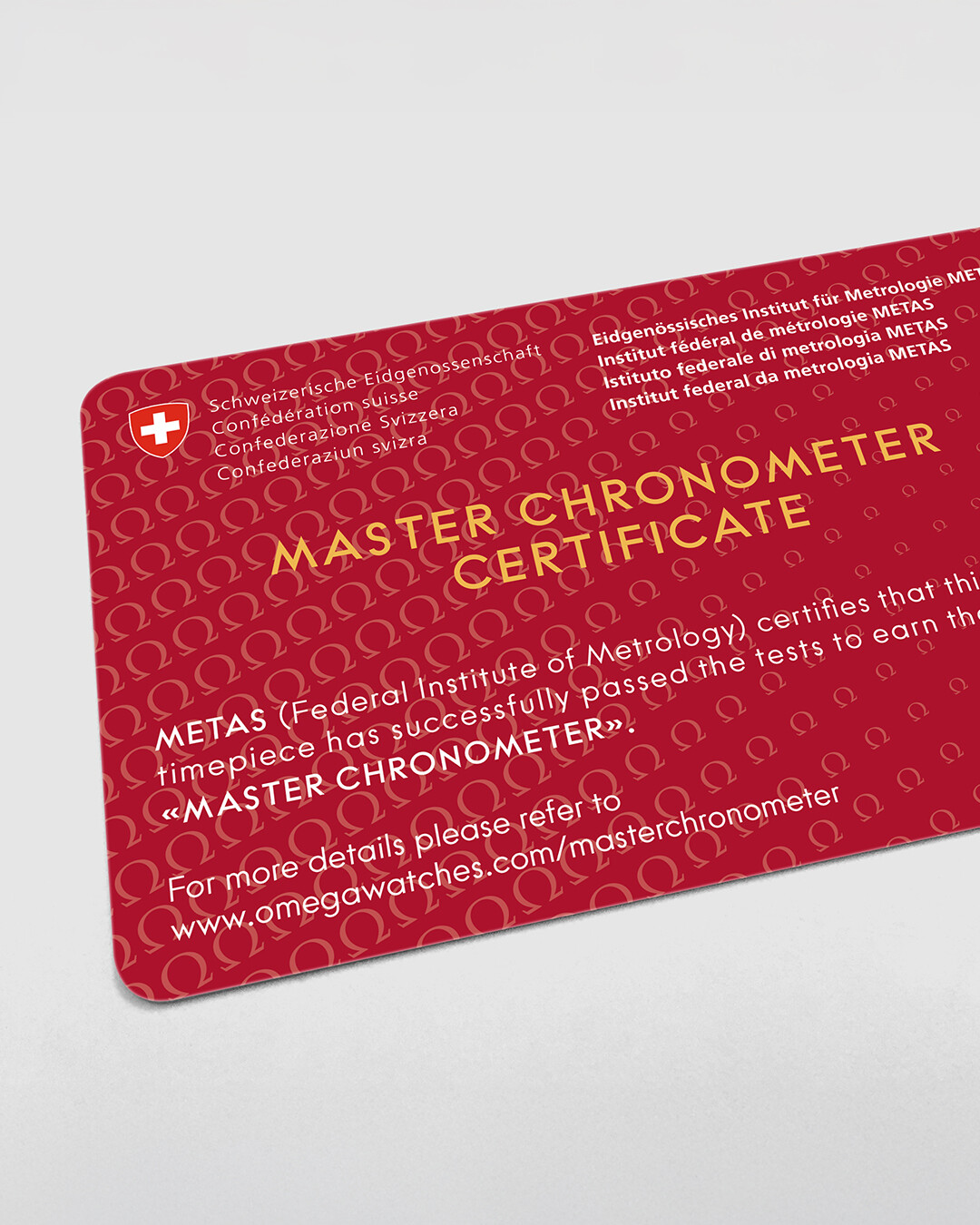
METAS is the Swiss Federal Institute of Metrology and represents a more demanding approach to certification. It tests the fully assembled watch rather than just the movement.
METAS requirements include:
• Accuracy between 0/+5 seconds per day.
• Testing in 6 positions.
• Resistance to strong magnetic fields.
• Verification of power reserve.
• Water resistance testing.
• Accuracy testing after magnetic exposure.
METAS evaluates how the entire watch performs in conditions closer to daily use.
COSC vs METAS: Key Differences
| Aspect | COSC | METAS |
|---|---|---|
| Tests movement only | Yes | No |
| Tests complete watch | No | Yes |
| Magnetism resistance | No | Yes |
| Accuracy range | -4/+6 seconds | 0/+5 seconds |
| Power reserve verified | No | Yes |
COSC remains widely respected and relevant. METAS builds on it with broader real world validation.
Positional Variance and Daily Wear Impact
Mechanical watches behave differently depending on position. This is known as positional variance.
Common observations include:
• Dial up may gain time.
• Crown down may lose time.
• Side positions vary by movement architecture.
Many collectors fine tune accuracy by resting their watch overnight in a position that offsets daytime gain or loss.
Accuracy vs Precision: Why the Difference Matters
Accuracy measures closeness to real time.
Precision measures consistency.
A watch that loses eight seconds every day consistently is precise. A watch that gains five seconds one day and loses ten the next is not. Precision allows effective regulation, while accuracy alone does not.
Regulation and Servicing Matter More Than Certification

Certification does not replace proper regulation and maintenance.
Accuracy depends heavily on:
• Quality of regulation.
• Condition of lubrication.
• Exposure to magnetism.
• Shock history.
• Wearing habits.
A well regulated non certified watch can outperform a poorly maintained certified one.
What Accuracy Should You Expect as a Collector
For everyday mechanical watches:
• Within +/-10 seconds per day is excellent.
• Up to 15 seconds per day is reasonable.
• Beyond 30 seconds suggests regulation or servicing is needed.
Mechanical watches are not about perfect timekeeping. They are about engineering, craftsmanship, and consistency.
Final Thoughts
COSC and METAS are useful benchmarks, not guarantees. Understanding what they test helps you judge accuracy realistically rather than emotionally.
A stable, consistent mechanical watch is performing exactly as intended.
 Mechanical Minutes
Leave a comment