Author: Tanay Pahare

  • Important Tips for Used Watch Buying

    Important Tips for Used Watch Buying

    Whether you’re eyeing a vintage Omega, a modern Tudor, or a microbrand gem, buying a used mechanical watch can be both rewarding and risky. While the second-hand market is full of hidden treasures, it’s also filled with overpriced listings, undisclosed issues, and—worst of all—fakes.

    This guide breaks down the 10 essential things to check before you commit. Whether you’re buying your first pre-owned piece or adding to a growing collection, these tips will help you shop smarter, avoid common traps, and get more value for your money.


    1. Look for Box and Papers

    Grand Seiko in box

    Original packaging, warranty cards, and manuals aren’t just “nice to have”—they can:

    • Boost resale value
    • Prove authenticity
    • Offer insight into the watch’s ownership history

    That said, lack of box and papers isn’t a deal-breaker for tool watches or older vintage pieces—but for premium models or limited editions, they matter.


    2. Stick to Reputable Sellers

    Ebay seller ratings
    For illustrative purposes

    Avoid impulse purchases from strangers on Instagram or forums unless you know what you’re doing. Instead:

    • Buy from reputed dealers, trusted platforms like Chrono24, WatchRecon, eBay with buyer protection, or well-reviewed watch communities.
    • Look for ratings, reviews, return policies, and a proven sales history.

    Pro tip: For watches over $1,000, trusted sellers are worth the small price premium.


    3. Examine the Condition — Aim for “Very Good” or Better

    Ebay search conditions
    Conditions listed on Chrono24

    Condition affects both aesthetics and resale value. Focus on:

    • Scratches, dings, and crystal clarity
    • Lume degradation (if vintage)
    • Bracelet stretch and clasp wear
    • Any signs of water damage or corrosion

    Avoid watches graded “fair” or “acceptable” unless you’re getting a deep discount and are ready for a service bill.


    4. Compare Prices and Time on Market

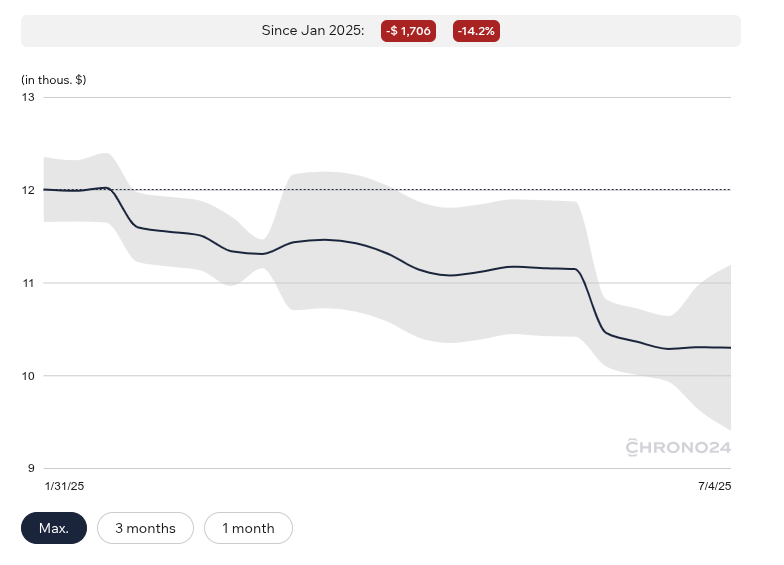
    Chrono24 prices

    Before buying, do a quick price check:

    • Use watch charts, eBay sold listings, and Chrono24’s price history tool.
    • See how long similar listings have been on the market—stale listings often mean overpricing or hidden issues.

    A fair price is usually 10–30% below retail, depending on the model, condition, and demand.


    5. Ask About Service History and Maintenance Costs

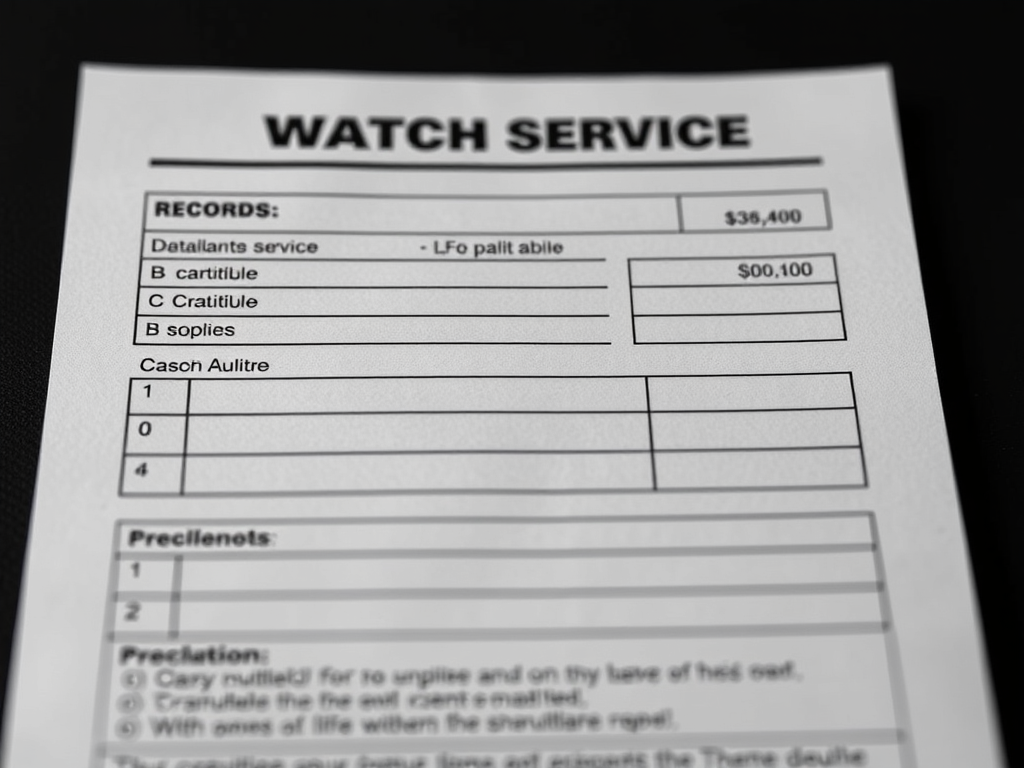
    Watch service illustration

    A cheap watch with a worn-out movement is a time bomb. Always check:

    • When it was last serviced (and by whom)
    • Whether movement parts were replaced (especially for vintage models)
    • The typical service cost for the caliber (some brands like ETA are cheaper to service than in-house movements)

    If there’s no service history, budget a few hundred dollars extra—or walk away.


    6. Request Timegrapher Readings (If Available)

    Watch timing machine
    Watch Timing Machine (BWC Vibrograf 1162), via Wikimedia Commons, licensed under CC BY-SA 4.0.

    While not every seller will have one, a Watch Timing Machine / Timegrapher reading offers a snapshot of a watch’s mechanical health—revealing accuracy, beat error, and amplitude.

    • Many reputable sellers (especially those listing $1K+ pieces) can provide this.
    • If not, ask for a 24-hour timekeeping video or use an app like WatchCheck after you buy.

    Note: Most casual sellers won’t have a timegrapher. That’s okay—but you’ll want some assurance the movement runs well.


    7. Research the Movement’s Serviceability

    Pexels image
    Photo by Tima Miroshnichenko on Pexels.com

    Before falling in love with a piece, find out:

    • Is the movement easy to service locally?
    • Are parts readily available?
    • Does it require brand-specific service (which can be costly)?

    Vintage or rare watches with obscure movements might look charming but can turn into servicing nightmares.


    8. Match Serial Numbers and References

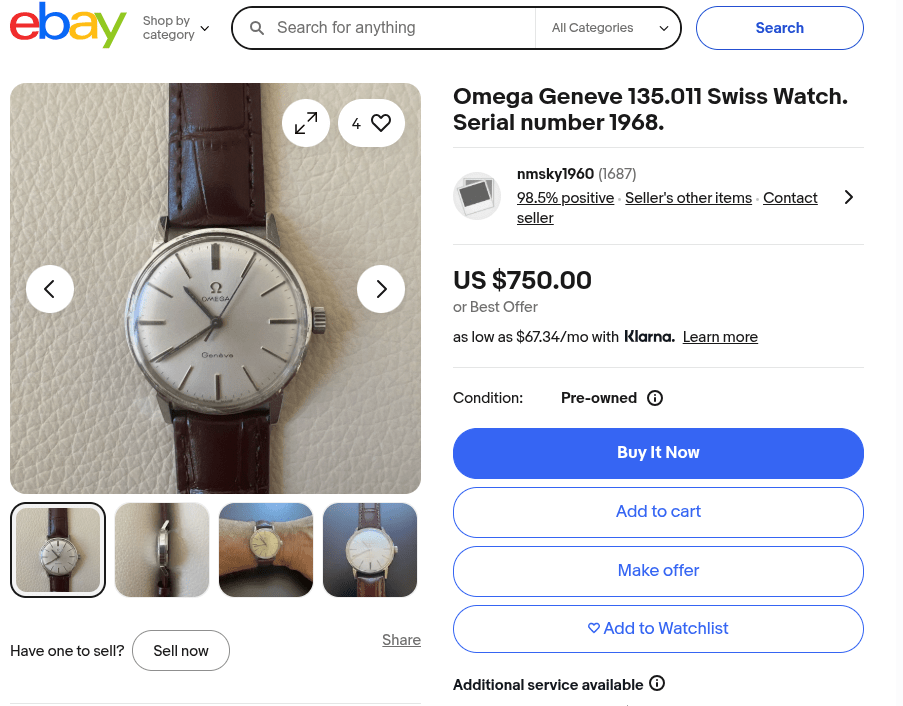
    Used Omega watch on eBay

    For higher-end watches, always:

    • Check that serial numbers match the paperwork
    • Verify the reference number corresponds to the listed model and dial configuration

    This helps avoid Frankenwatches—pieces built from mismatched parts.


    9. Don’t Fall for “Too Good to Be True” Deals

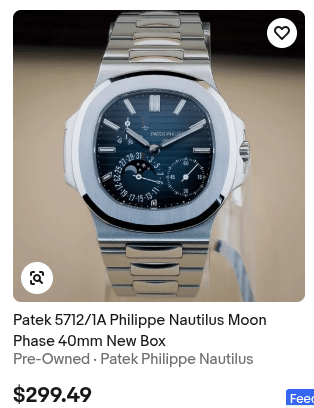
    Patek Philippe watch posting on eBay

    If a watch is 30–50% below market price, be suspicious. Common red flags:

    • Fake or aftermarket parts
    • Redials or refinished dials
    • Poorly serviced movements
    • Stolen or blacklisted watches

    A deal isn’t a deal if you’ll spend more fixing it—or worse, can’t resell it.


    10. Understand the Return Policy and Buyer Protections

    eBay return policy

    Always check:

    • Is there a return window?
    • Is your purchase protected by a platform or payment processor?
    • What happens if the watch arrives DOA?

    Buying from platforms with built-in buyer protection gives peace of mind—especially on expensive pieces.


    Final Thoughts

    U-Boat watch illustration
    Photo by Pixabay on Pexels.com

    Buying a pre-owned mechanical watch can unlock incredible value, unique finds, and timeless craftsmanship—but only if you shop smart. By following these 10 tips, you’ll steer clear of costly mistakes and build a collection that feels as good as it looks.

    Whether it’s your first or fiftieth watch, always ask questions, do your research, and trust your gut. If something feels off, walk away. There will always be another watch.


    Got questions or want help evaluating a watch? Drop a comment below or send me a message—I’m always happy to help fellow enthusiasts shop smarter. Stay ticking!

  • 5 Must-Have Watch Types for Collectors

    5 Must-Have Watch Types for Collectors

    Curating a watch collection isn’t just about owning expensive timepieces—it’s about building a personal horological narrative. Every watch should serve a purpose: some practical, others emotional. In this guide, I’ll share my approach to curating a 5-watch collection that blends daily utility, heirloom value, and collector’s curiosity. Whether you’re starting your journey or refining your rotation, this post might just help you find your own structure.


    🕰️ Category 1: The Daily Companion

    Watches that integrate into your everyday life — from meetings to meals, work to weekends.

    ⭐ Sinn 104 St Sa

    Sinn 104 with Psychology of Money in background

    My first serious mechanical watch, and still a favorite. The Sinn 104 strikes that rare balance between tool watch practicality and visual elegance. It’s robust, legible, and versatile enough to wear with a T-shirt or a blazer. It also holds sentimental value—a trait no spec sheet can quantify.

    🔑 Why this category matters: You’ll wear these the most. Prioritize comfort, brand reputation, durability, and emotional connection.


    🎩 Category 2: The Dress Watch

    Elegant timepieces reserved for moments that matter — weddings, celebrations, formal events.

    ⭐ Jaeger-LeCoultre Master Ultra Thin Moon

    Jager LeCoultre Master Ultra-Thin moon
    Buy JLC Master Ultra-Thin Moon on eBay

    dress watch is your horological black tie. The JLC Master Ultra-Thin Moon embodies everything a luxury formal piece should be: slim, sophisticated, and spellbinding under a cuff. The moonphase adds a poetic dimension without being ostentatious. Works equally well with a tux or a Nehru jacket.

    🔑 What to look for: Thin case, leather strap, timeless design, and finishing finesse. A complication like a moonphase or small seconds adds charm without clutter.


    🎨 Category 3: The Artistic Independent

    A wildcard — expressive, bold, and conversation-starting.

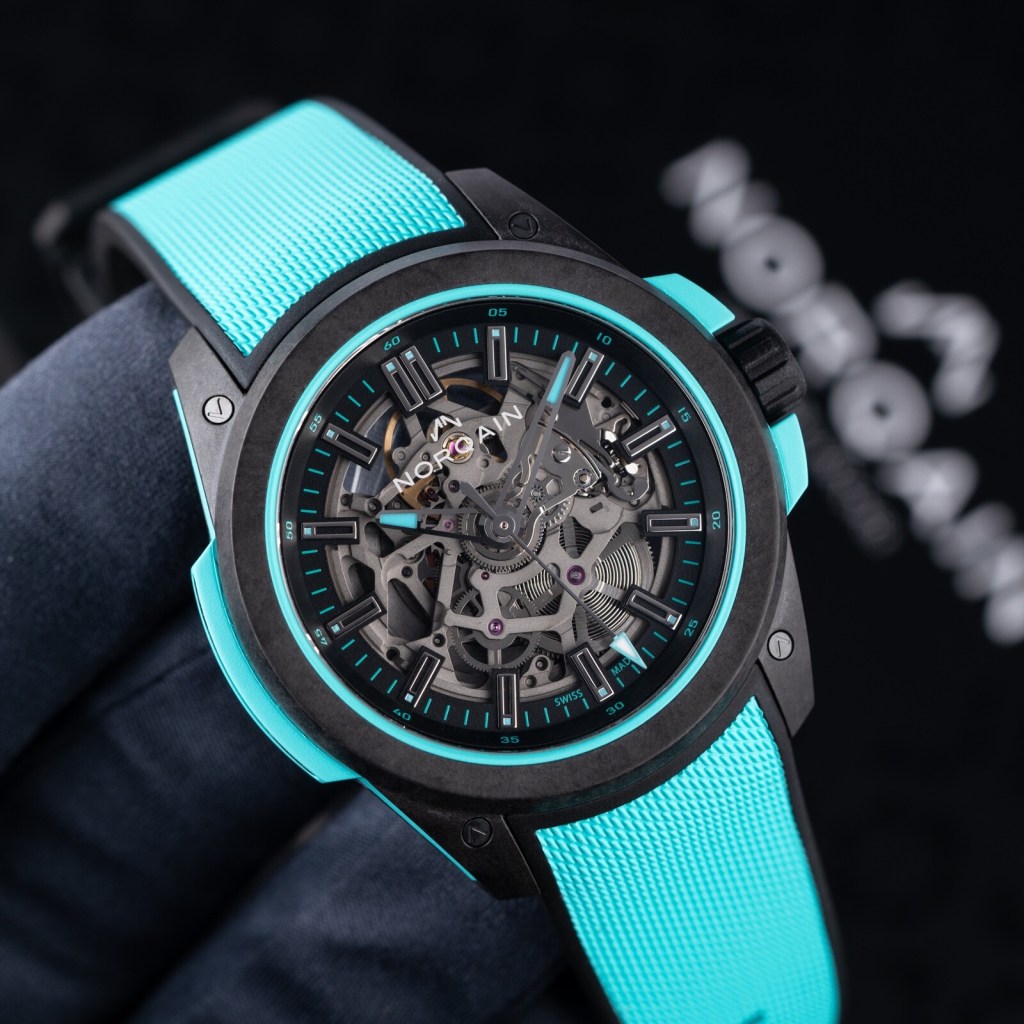
    Norqain Wild One on eBay
    Buy Norqain Wild One on eBay

    This category celebrates independent watchmaking and unique design language. These aren’t mainstream picks, but rather thoughtful pieces from niche houses pushing creative boundaries.

    🧭 Contenders:

    • BA111OD Chapter 5: Swiss ingenuity meets transparency—both in design and pricing.
    • Norqain Wild One: A rugged but refined indie sport watch with bold aesthetics.
    • Louis Erard x Alain Silberstein: Pure horological art. Colorful, expressive, and rare.
    • Ochs und Junior Moonphase: Minimalist, brainy, and handmade.
    • Ming 17.x or 27.x series: Ethereal case shapes and stunning dials that defy their price point.

    🔑 Why it matters: These watches reflect taste, curiosity, and support for the craft. They’re often limited and collectible.


    🛡️ Category 4: The Beater / Tool Watch

    Tough, affordable, mechanical watches that you can truly use.

    Every collection needs a watch you can knock around—without knocking your soul. Something you wear while traveling, hiking, swimming, or just doing life.

    ⭐ Seiko SRPK43

    Seiko SRPK43
    Buy Seiko SRPK43 on eBay

    A blackout beauty with great lume, reliable automatic movement, and serious wrist presence. The SRPK43 is a modern reinterpretation of the legendary SKX—tough, stylish, and under-the-radar.

    ⭐ Certina DS Action Diver

    Certina DS Action Diver
    Buy Certina DS Action Diver on eBay

    Swiss made, ISO-certified dive watch with a Powermatic 80 movement. It punches far above its price point in ruggedness and everyday appeal.

    🔑 Checklist for this slot: 200m+ water resistance, strong lume, shock resistance, and a price point that doesn’t sting when scratched.


    🧭 Category 5: The Legacy Piece

    A future heirloom—iconic, timeless, and emotionally significant.

    Though some watches already serve dual purposes (like the Datejust), this final category is about choosing a flagship piece that speaks to your identity and will outlive trends. For me, this overlaps with my daily wear, but for others, it could be a complication-rich chronograph, a GMT for a frequent traveler, or a vintage-inspired reissue.

    Think of this watch not just as a purchase, but as a story you’re writing for the next generation.

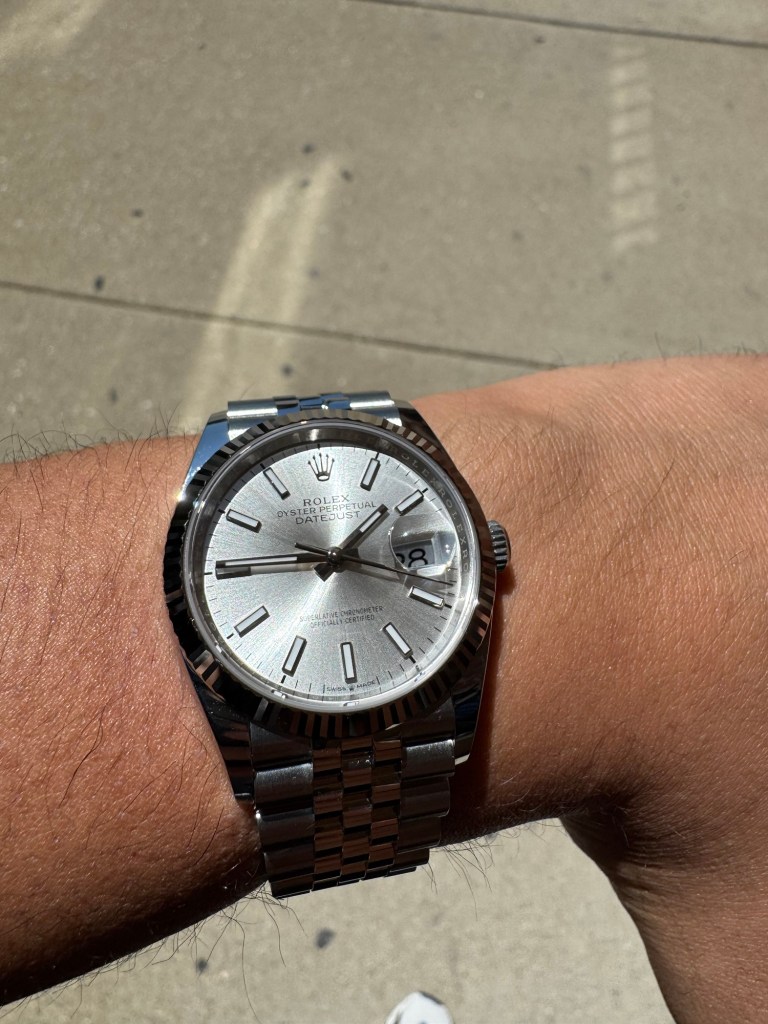
    ⭐ Rolex Datejust 36mm

    Rolex Oyster Perpetual Datejust

    With the jubilee braceletfluted bezel, and timeless silver dial, the Rolex Datejust 36transcends trends. It’s a piece I can wear to work, weddings, or just lounging at home. More than a luxury item, it’s a future heirloom—like how my grandfather’s Rajat watch still echoes his presence.


    Final Thoughts: Don’t Chase, Curate

    Building a watch collection is a deeply personal journey. There’s no one right way to do it—but defining your own categories helps filter the noise. Watches aren’t just about specs—they’re about purpose, emotion, and presence. Buy slowly, wear often, and choose pieces that resonate with your life.

    📝 What’s your 5-watch dream collection? Drop a comment or check out more on MechanicalMinutes.com.

  • Spend-Conscious Watch Collection Guide

    Spend-Conscious Watch Collection Guide

    There’s a strange affliction that hits collectors the moment they buy a watch they love: the immediate desire to find the next one.

    After picking up my Sinn 104—a watch I still admire for its clean pilot aesthetic, rugged build, and just the right dash of everyday wearability—I expected to feel done. At least for a while. But instead, I fell into one of my recurring watch phases: a dopamine-fueled spiral of browsing, wishlist building, and near-purchases that all end the same way—me losing interest days later.

    Sound familiar?

    ai image

    This cycle isn’t just anecdotal. There’s actually a term for it in psychology: “hedonic adaptation.” It’s the human tendency to quickly return to a baseline level of satisfaction after experiencing something positive. That burst of joy when the package arrives? It fades. And we start hunting for the next high.

    Why Curating a Collection Can Be a Money Pit

    Let’s be honest. This hobby—especially when you’re venturing into mechanical watches—is a slow bleed on your bank account if left unchecked. You can justify each purchase with “diversity,” “investment potential,” or “heritage,” but it’s all too easy to end up with a drawer full of watches you don’t wear and a savings account that looks like it lost a fight with a NATO strap.

    And I say this as someone who loves the hunt. The problem isn’t loving watches; it’s loving too many at once with no clear framework.

    The Smart Way to Curate Your Collection

    Here’s what I’ve learned (often the hard way):

    1. Define the Role Before the Watch

    Seiko watch from Pexels
    Photo by Thang Cao on Pexels.com

    Every watch should earn its place. Before falling for a model’s lume shot or bracelet clasp, ask: What gap does this fill?

    Do I need a dress watch that actually fits under a cuff? Do I need a travel watch with GMT functionality? Do I just want a weekend beater that doesn’t cost a fortune to service?

    Let the function define the form.

    2. Set a Watch Budget Like You Mean It

    AI Image

    If you don’t treat your watch budget like a real category—like rent or groceries—you’ll always find ways to justify stretching it. Set your yearly or per-watch limit and stick to it. Ingenuity thrives under constraint. That’s part of what makes finding the one so rewarding.

    3. Impose a Cool-Off Period

    Sandglass image

    My new rule: no impulse buys. If I fall in love with a piece, I give it a 30-day cooling-off period. If I still want it just as much—and I’ve imagined exactly how and when I’ll wear it—then it’s probably worth pulling the trigger.

    And you’d be surprised how many “grails” fall off the radar after two weeks.

    4. Research Like a Collector, Not a Consumer

    Pexels image
    Photo by George Milton on Pexels.com

    I no longer chase what looks good in an Instagram post. I go deeper. Movement reliability, servicing cost, heritage, community feedback—these things matter more in the long run than a killer press photo. If possible, try it before you buy it!

    A good question to ask: Would I still want this if nobody else saw it on my wrist?

    Where I’m At Now with my watch buying

    After spending hours on Hodinkee, Teddy Baldassarre, and countless other watch blogs and sites, I’ve come to realize one thing: finding a truly desirable watch takes time.

    What you find desirable one day might not appeal to you the next. My watch searches have started with a Seiko SPK43 and ended with an IWC Aquatimer. So, don’t trust your taste until you find yourself consistently drawn to the same watch. For me, only my 104 has managed to do that.

    To help myself decide, I’ve come up with a four-category watch list—which I’ll describe in a future blog post.

    Until then, stay ticking!

  • Top 10 Watch Movements for Collectors

    Top 10 Watch Movements for Collectors

    What makes a watch truly worth collecting? The dial might charm, and the case might shine—but it’s the movement underneath that tells the real story. For collectors, the caliber powering the watch isn’t just a mechanism; it’s the soul of the timepiece.

    In today’s post, I will spotlight 10 watch movements that every modern collector should know—grouped not by price or brand, but by their real-world relevance, horological significance, and mechanical merit. From reliable entry-level staples to movements that define luxury watchmaking, these are the engines shaping the wristwatch world in 2025.


    The Everyday Legends

    Affordable, accessible, and the backbone of the enthusiast community


    1. Miyota 9015 – The Microbrand Powerhouse

    Techné Harrier Ref. 363 (Miyota 9015), versions 132 & 031,
    Techné Harrier Ref. 363 (Miyota 9015), versions 132 & 031, via Wikimedia Commons, licensed under CC BY-SA 4.0.

    Used in: Zelos, Baltic, Lorier, Laco
    Specs: Automatic, 28,800 vph, 42-hour power reserve, hacking & hand-winding

    The Miyota 9015 is the unsung hero of the modern microbrand scene. Thin, reliable, and cost-effective, it’s a Swiss ETA alternative made in Japan—perfect for slim, everyday automatics. Its high beat rate gives a satisfying sweep, and it’s used in watches often priced under $1,000.


    2. Seiko NH35 (a.k.a. 4R35) – The People’s Choice

    Buy the Seiko NH35 movement on eBay
    Buy the Seiko NH35 movement on eBay

    Used in: Seiko 5, Invicta, Vostok Europe, many modded builds
    Specs: Automatic, 21,600 vph, 41-hour power reserve, hacking

    One of the most mass-produced movements in the world, the NH35 is beloved by modders and budget brands alike. It’s durable, serviceable, and works forever—literally, some watches run for a decade with no intervention. What it lacks in finesse, it makes up for in rugged character.


    3. ETA 2824-2 – The Swiss Benchmark

    ETA 2824-2 Automatic Movement
    ETA 2824-2 Automatic Movement, via Wikimedia Commons, licensed under CC BY-SA 3.0 DE.

    Used in: Hamilton, Tissot, Steinhart, Sinn
    Specs: Automatic, 28,800 vph, 38-hour power reserve

    Even with limited availability, the ETA 2824-2 is still one of the most respected entry-level Swiss movements. Known for its smooth sweep, compact build, and high accuracy, it’s a trusted choice in field watches, divers, and affordable luxury pieces alike.


    4. Sellita SW200-1 – The Reliable Stand-In

    Christopher Ward C8 Power Reserve Chronometer featuring the Sellita SW200-1 movement
    Christopher Ward C8 Power Reserve Chronometer featuring the Sellita SW200-1 movement, via Wikimedia Commons, licensed under CC BY 2.0.

    Used in: Sinn, Oris, Christopher Ward, Formex
    Specs: Automatic, 28,800 vph, 38-hour power reserve

    When ETA restricted movement supply, Sellita became the savior for many independent brands. The SW200-1 is an ETA 2824 clone that’s been steadily improved. Today, it’s practically indistinguishable in terms of performance, and widely adopted in rugged tool watches under $2K.


    Chronograph Powerhouses

    Still the heart of the modern chronograph scene


    5. Valjoux 7750 – The Chrono Classic

    Valjoux 7750 Movement in Franchi Menotti Automatic Chronograph
    Valjoux 7750 Movement in Franchi Menotti Automatic Chronograph, via Wikimedia Commons, licensed under CC BY-SA 4.0.

    Used in: Sinn 103, Hamilton Khaki Chronograph, Fortis
    Specs: Automatic Chronograph, 28,800 vph, 42-hour power reserve

    The Valjoux 7750 is the most popular automatic chronograph movement in the world. With its distinctive rotor wobble and loud ticking, it’s not subtle—but it is reliable. Collectors appreciate it for its rich history and continued use in rugged, aviation-style chronographs.


    Innovators & Icons

    Where engineering meets elegance


    6. Omega Co-Axial Caliber 8900 – The Escapement Revolution

    Omega Seamaster Planet Ocean Ref. 215.30.44.21.03.001 featuring the Co-Axial Master Chronometer Caliber 8900
    Omega Seamaster Planet Ocean Ref. 215.30.44.21.03.001 featuring the Co-Axial Master Chronometer Caliber 8900, via Wikimedia Commons, licensed under CC BY-SA 4.0.

    Used in: Seamaster Diver 300M, Aqua Terra, Globemaster
    Specs: Automatic, 25,200 vph, 60-hour power reserve, METAS-certified

    This is the movement that set Omega apart in modern watchmaking. With George Daniels’ co-axial escapement and anti-magnetic silicon parts, the Caliber 8900 offers incredible long-term stability. Certified by METAS, it exceeds COSC standards and delivers next-level performance for under $10K.


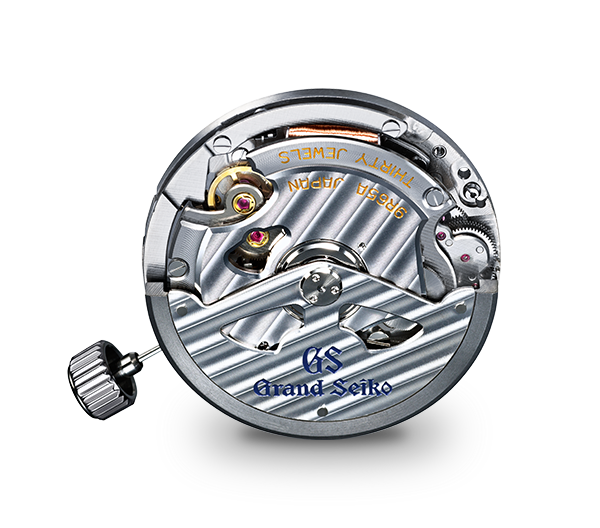
    7. Grand Seiko Spring Drive 9R65 – Glide into Precision

    Grand Seiko Movement
    Source: Grand Seiko USA

    Used in: SBGA211 “Snowflake,” SBGA413 “Cherry Blossom”
    Specs: Hybrid (mechanical + quartz), ±1s/day, 72-hour power reserve

    The 9R65 is where mechanical craftsmanship meets quartz accuracy. Exclusive to Grand Seiko, it produces the smoothest seconds hand sweep in the business—no ticking, just pure glide. For collectors who love tradition but crave precision, this movement is a technical marvel.


    8. Jaeger-LeCoultre Caliber 899 – The Elegant Performer

    A close-up of a Jaeger-LeCoultre wristwatch featuring a silver dial, gold hour and minute hands, a date window, and two sub-dials, worn on a wrist with a black leather strap.
    Jaeger-LeCoultre Master Control Hometime Ref. 147.2.05.S, via Wikimedia Commons, licensed under CC BY-SA 4.0.

    Used in: JLC Master Control, Polaris
    Specs: Automatic, 28,800 vph, 70-hour power reserve

    JLC is often behind the scenes, making movements for other big names. But the Caliber 899 proves they deserve the spotlight. Thin, beautifully decorated, and highly reliable, it’s a collector’s favorite in refined dress watches that don’t sacrifice engineering for elegance.


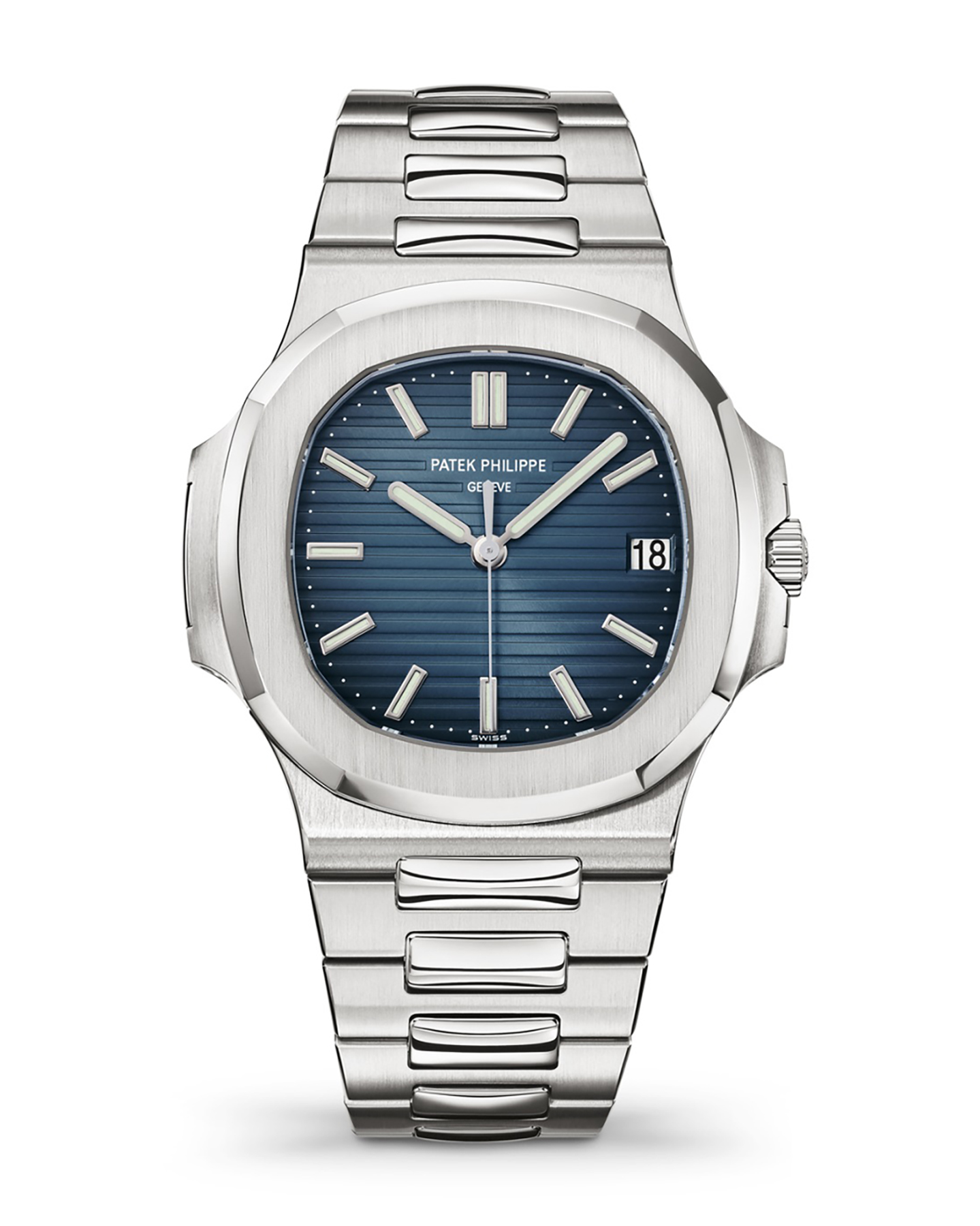
    9. Patek Philippe Caliber 324 S C – Haute Horlogerie, Refined

    A stainless steel Patek Philippe watch featuring a blue dial with horizontal stripes, silver hour markers, and a date display. The watch has a sleek, integrated bracelet and an octagonal bezel, showcasing its modern design.
    Iconic Patek Philippe Nautilus Ref. 5711/1A-010 featuring Caliber 324 S C, via Wikimedia Commons, licensed under CC BY-SA 4.0.

    Used in: Calatrava, Nautilus (earlier references)
    Specs: Automatic, 28,800 vph, 45-hour power reserve

    One of Patek Philippe’s signature movements, the 324 S C is known for exquisite finishing, tight tolerances, and smooth winding. It’s found in some of the most collectible watches ever made, and while not as complicated as a tourbillon, its refinement is second to none.


    10. Rolex Caliber 3235 – The Modern Rolex Workhorse

    Close-up of a Rolex Sea-Dweller watch featuring a black dial, luminous markers, and a stainless steel bracelet.
    Rolex Sea-Dweller, featuring Caliber 3235, by John Torcasio, CC BY-SA 3.0, via Wikimedia Commons

    Used in: Rolex Datejust 41, Submariner Date, Sea-Dweller, Yacht-Master
    Specs: Automatic, 28,800 vph, 70-hour power reserve

    Rolex’s flagship automatic movement, the Caliber 3235, powers most of their modern lineup and represents a significant evolution from the long-serving 3135. It features the proprietary Chronergy escapement—optimized for efficiency—and a longer mainspring, resulting in a robust 70-hour reserve. With a Parachrom hairspring, Paraflex shock protection, and Superlative Chronometer accuracy, it blends daily reliability with technical refinement. While not haute horology, it’s one of the most battle-tested and serviceable modern calibers in high-end watchmaking, built for longevity and precision.


    Final Thoughts: Know What Drives Your Watch

    Behind every great watch is a great movement. Whether you’re exploring microbrands, investing in your first Swiss automatic, or dreaming of your next haute horlogerie piece, understanding the engine inside your timepiece gives your collection meaning and depth.

    These 10 movements aren’t just parts—they’re proof that watchmaking is alive, evolving, and accessible at every level of collecting.


    Stay curious. Stay passionate. And as always—stay ticking.

  • HMT Watches: A Legacy of Indian Timekeeping

    HMT Watches: A Legacy of Indian Timekeeping

    The Watch That Ticked Into My Life

    My grandfather’s worn-out HMT Rajat is still the most precious watch in my collection.

    The first mechanical watch I ever held wasn’t mine—it was my grandfather’s. A slim, silver-dialed HMT Rajat, always peeking out from under the cuff of his kurta. He would wind it each morning with a quiet reverence, as though awakening something sacred. It wasn’t just a tool to tell time—it was a symbol.

    Through him, I discovered that HMT wasn’t just a watch brand. It was a badge of honor, a retirement gift, a wedding present, a milestone. Owning an HMT meant something in India—because it was India’s timekeeper.

    As someone who now explores microbrands and affordable mechanical watches through my blog Mechanical Minutes, I wanted to step back and honor the brand that put India on time—and did it with dignity, precision, and pride.

    The Backdrop: India’s Tryst with Industrial Destiny

    When India gained independence in 1947, the country’s leadership knew that self-reliance wouldn’t just come from freedom—it needed factories, tools, and technology.

    In 1953, Hindustan Machine Tools (HMT) was born as a state-owned enterprise focused on machine tools. But it wasn’t long before Nehru’s vision expanded. By 1961, with technical assistance from Japan’s Citizen Watch Co., HMT took on a new mission: manufacturing India’s very first wristwatches.

    This wasn’t just industrial diversification—it was nation-building on your wrist.

    HMT’s Contributions: Timekeeping as Nation-Building

    🏭 Made in India, For Indians

    HMT created watches in India, by Indians, for Indians—a revolutionary concept in an era where imported Swiss watches were luxuries few could afford. These weren’t mass-manufactured gadgets—they were engineered with care, often by skilled artisans trained in Japan and Switzerland.

    “Time is money, they say. But in India, time was also identity. And HMT gave it form.”

    ⏱️ Mechanical Movements for the Masses

    Where the world was shifting to quartz, HMT doubled down on manual-wind mechanical calibers—tough, repairable, and romantic in their ticking rhythm. The Caliber 020, based on Citizen’s movement, powered many iconic models like the Janata, Sona, and Rajat.

    Some innovations include:

    • Shock-resistant designs, rare in that price bracket.
    • Hand-finished dials, often with subtle textures or sunburst effects.
    • Slim cases and domed acrylics, styled with Bauhaus-like restraint.

    🎓 Skill Transfer & Watchmaking Ecosystem

    HMT didn’t just make watches—it built an entire generation of Indian watchmakers, many of whom would later go on to launch private ventures. Its training programs were rigorous and respected, often mirroring Swiss watchmaking pedagogy.

    Why Were HMT Watches So Prestigious?

    Before Titan, before Seiko’s Indian presence, HMT was the gold standard of wristwatches in India. If you received one:

    • At retirement—it meant your service was honored.
    • As a gift—it meant you were respected.
    • At marriage—it symbolized a lifelong promise.

    They had emotional value, but also social status. A man wearing an HMT was punctual, disciplined, and “set in time.”

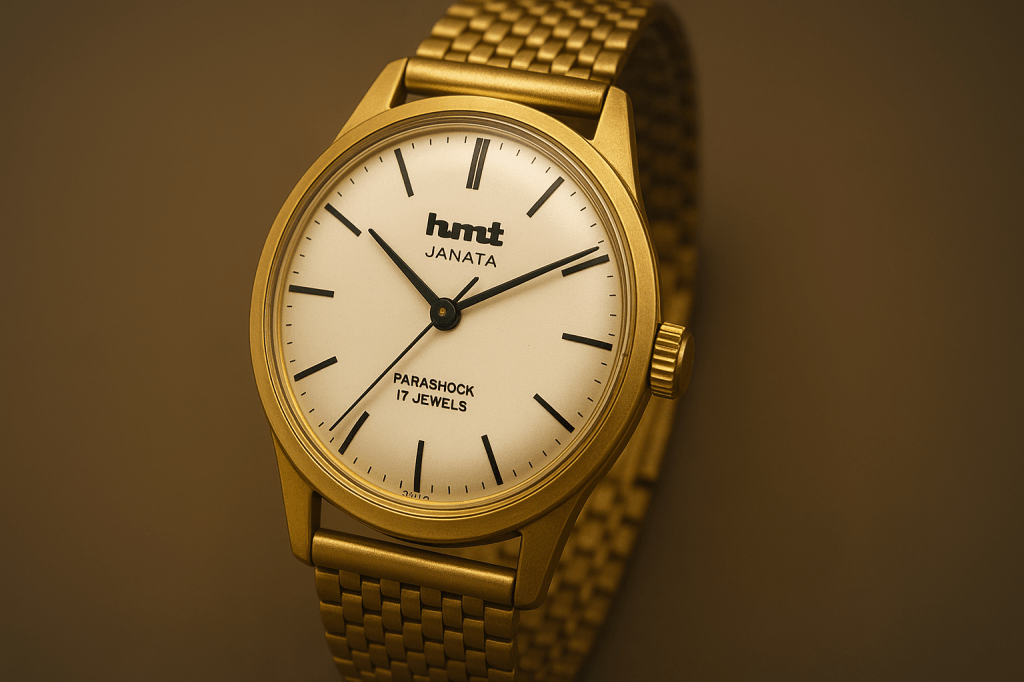
    HMT Janata, via Wikimedia Commons, licensed under GNU

    The Golden Age: Models That Defined Generations

    Let’s talk icons:

    • HMT Janata: Worn by Nehru himself. Clean Arabic numerals. Reliable hand-wind.
    • HMT Pilot: A robust, field-style watch with cult status.
    • HMT Sona & Rajat: Elegant dress watches in gold and silver tones, often passed down generations.
    • HMT Jawan: Issued to the Indian Army—practical, matte, and hard-as-nails.

    HMT Watches on display, via Wikimedia Commons, licensed under CC BY-SA 4.0

    What Made HMT Special Technically?

    HMT Jhalak via Wikimedia Commons, licensed under GNU

    Beyond nostalgia, these watches had horological merit:

    In-house assembly: Movements were hand-assembled in India, not imported as kits. Low-beat but long-lasting: 18,000–21,600 bph calibers optimized for longevity, not flash. Serviceable for decades: You could find a watch repair guy in any town who knew HMT guts.

    This “tool-for-life” philosophy made them more than machines—they were companions.

    The Slow Ticking Out: What Went Wrong?

    Photo by Raunak Jha on Unsplash

    The Quartz Crisis hit HMT harder than most. By the late 1980s, consumers wanted slimmer, battery-powered watches. HMT’s mechanical tooling couldn’t adapt fast enough. Their quartz lineup arrived too late—and lacked the charm of their originals.

    The 2000s saw further decline, with branding missteps, little innovation, and growing financial losses. In 2016, the Indian government officially shut down HMT Watches.

    A Cult Rebirth: HMT in the 21st Century

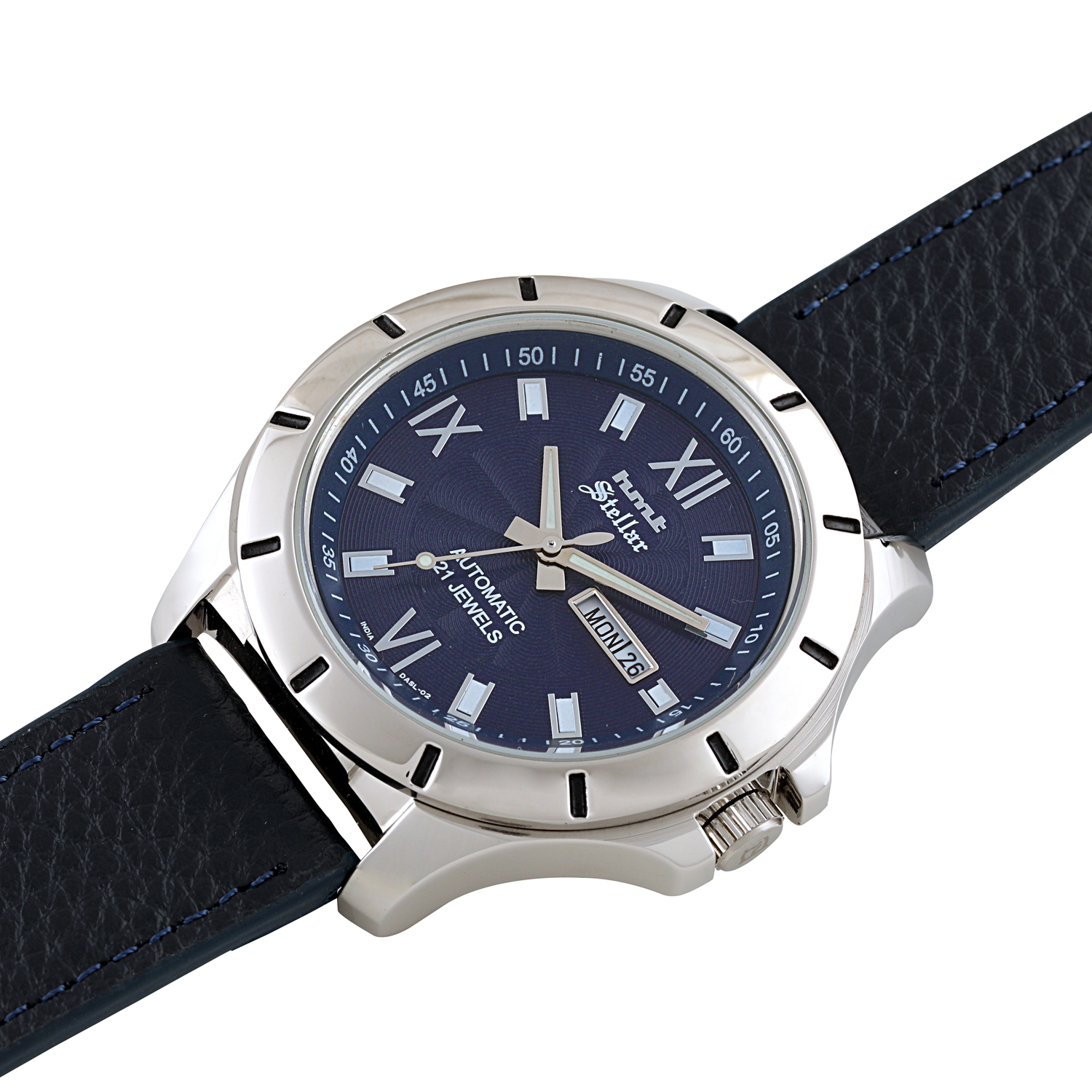
    HMT Stellar DASL 02 BLUE

    Paradoxically, HMT’s death sparked a revival. Vintage watch enthusiasts began hunting down Pilots and Janatas on eBay, refurbishing them, and showcasing them online. A new generation began to appreciate their mechanical soul.

    Even today, owning an HMT is a love letter to Indian engineering, and a reminder that not all timekeeping is digital.

    Final Words: A Personal Thanks

    I still have my grandfather’s HMT Rajat. It doesn’t work perfectly—but that’s part of the magic. It’s not just a watch. It’s a time capsule, a tribute to a time when India built its dreams from scratch, one tick at a time.

    If you’re an Indian collector, your journey begins not with a Rolex or a Nomos—but with a Janata, a Pilot, or maybe a Rajat. Check out the collection here.

    Let’s keep the legacy ticking.

  • BA111OD: A Tech-Driven Swiss Watchmaking Disruptor

    BA111OD: A Tech-Driven Swiss Watchmaking Disruptor

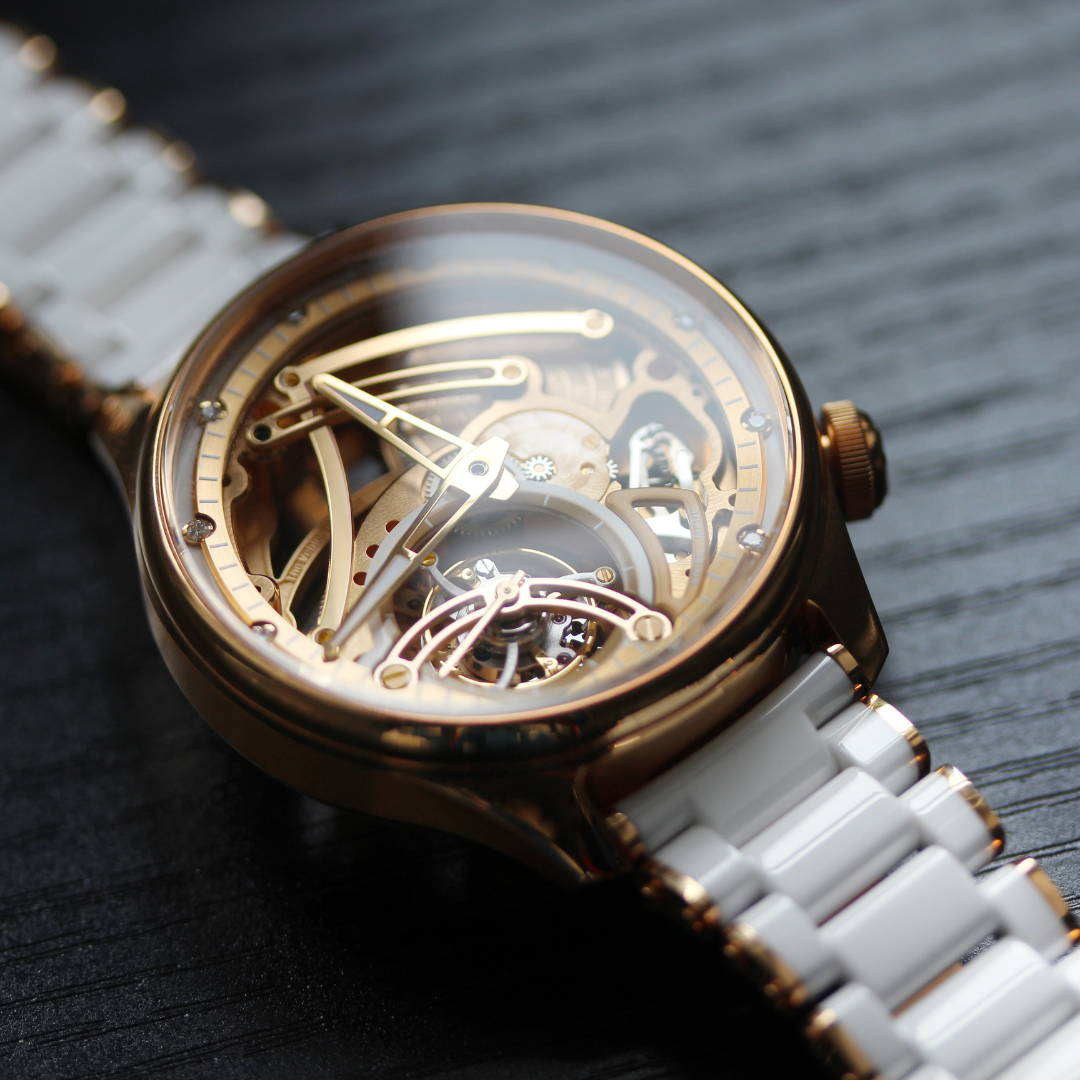
    5th Anniversary Edition Tourbillon from Ba111od.
    5th Anniversary Edition Tourbillon from Ba111od.

    There are Swiss watch brands, and then there’s BA111OD—a maverick rewriting the rules of traditional horology. In a landscape dominated by legacy houses and centuries-old savoir-faire, BA111OD dares to ask: what if Swiss watchmaking could be just as innovative in how it’s sold as in how it’s made?

    This post explores how the brand is combining classical mechanical excellence with bold tech-fueled disruption—and why it may deserve a spot in your collection sooner than you think.


    From Neuchâtel With a New Mission

    Founded in 2019 by Thomas Baillod, a veteran of the watch industry, BA111OD was born out of frustration with outdated distribution models. Instead of relying on retailers or middlemen, Baillod built a direct-to-consumer system enhanced by mobile app technology and peer-to-peer sales—something almost unheard of in traditional Swiss watch circles.

    Ba111od HQ in Neuchâtel.
    Ba111od HQ in Neuchâtel.

    This democratized model, dubbed phygital (physical + digital), allows owners to become brand ambassadors, reselling watches through a controlled ecosystem while earning commissions or discounts—almost like watch collecting meets affiliate entrepreneurship.


    Design Language: Bold, Architectural, and Avant-Garde

    Each Chapter in BA111OD’s lineup feels like a creative statement. Think of the Chapter 1 and 2 as early prototypes with modern skeleton dials and affordable pricing. But things really heat up with Chapter 3 and beyond, where the brand leans into complications, architectural casework, and luxury materials—without touching the usual five-figure price tags.

    • Chapter 3.1: Skeleton dial, automatic movement, and sapphire caseback for under CHF 600.
    • Chapter 4.1 T.V.D.: A tribute to Baillod’s father, featuring a tourbillon—yes, a Swiss tourbillon—for around CHF 4,200.
    • Chapter 5 Chrono Magma: A sculptural chronograph with a micro-rotor and fiery forged carbon case.
    Chapter 4.2 Lily Tourbillon
    Chapter 4.2 Lily Tourbillon

    Not Just Gimmicks: Legit Horological Street Cred

    It’s easy to dismiss disruptive brands as hype machines, but BA111OD earns its stripes through in-house development, Swiss manufacturing, and smart complication sourcing.

    • Tourbillon movements are co-developed with Concepto Watch Factory.
    • Chronograph modules are finely decorated and precision-tested.
    • Cases are machined and assembled in Switzerland, with sapphire crystals and quality control at par with far pricier brands.

    For those who care about value per dollar (or franc), few can match the spec sheet BA111OD brings to the table.

    Chapter 4 Dial
    Chapter 4 Dial

    A Watch You Can Buy—From a Friend

    One of BA111OD’s most radical moves is its referral model, where existing owners act as micro-retailers through the BA111OD app. It’s not MLM, it’s curated. Access to some models is only available through existing “Afluendors”—affluent influencers, as Baillod calls them.

    This makes ownership feel exclusive but not exclusionary—and turns every customer into a potential community-builder.


    Should You Add One to Your Collection?

    If you’re a collector who:

    • Loves brands with a strong founder story,
    • Wants to support independent innovation,
    • Is excited by tourbillons or micro-rotors at approachable prices,
    • Enjoys the idea of community-driven access…

    …then yes, BA111OD might just belong on your wrist.

    Chapter 4 Infinity Flying Tourbillon
    Chapter 4 Infinity Flying Tourbillon

    Final Thoughts

    BA111OD isn’t just a watch brand—it’s a movement. A movement challenging the norms of how watches are made, sold, and experienced. With their combination of Swiss quality, smart pricing, and futuristic distribution, they’ve earned a place on the radar of serious enthusiasts.

    If the Swiss watch industry ever needed a wake-up call, BA111OD might be holding the megaphone.

  • Top Pre-Owned Luxury Watches Under $2000

    Top Pre-Owned Luxury Watches Under $2000

    Navigating the pre-owned luxury watch market can be daunting, but with a discerning eye, you can find timepieces that offer both prestige and value. Below is a curated list of ten watches that stand out for their craftsmanship, reliability, and esteem among watch enthusiasts—all available for around or under $2,000.


    1. Grand Seiko SBGR051

    Why It Stands Out:
    Grand Seiko is renowned for its meticulous craftsmanship, and the SBGR051 exemplifies this with its Zaratsu-polished 37mm case and in-house 9S65 movement, offering a 72-hour power reserve. Its understated elegance and exceptional finishing make it a favorite among collectors.

    Typical Price Range: $1,650–$2,000


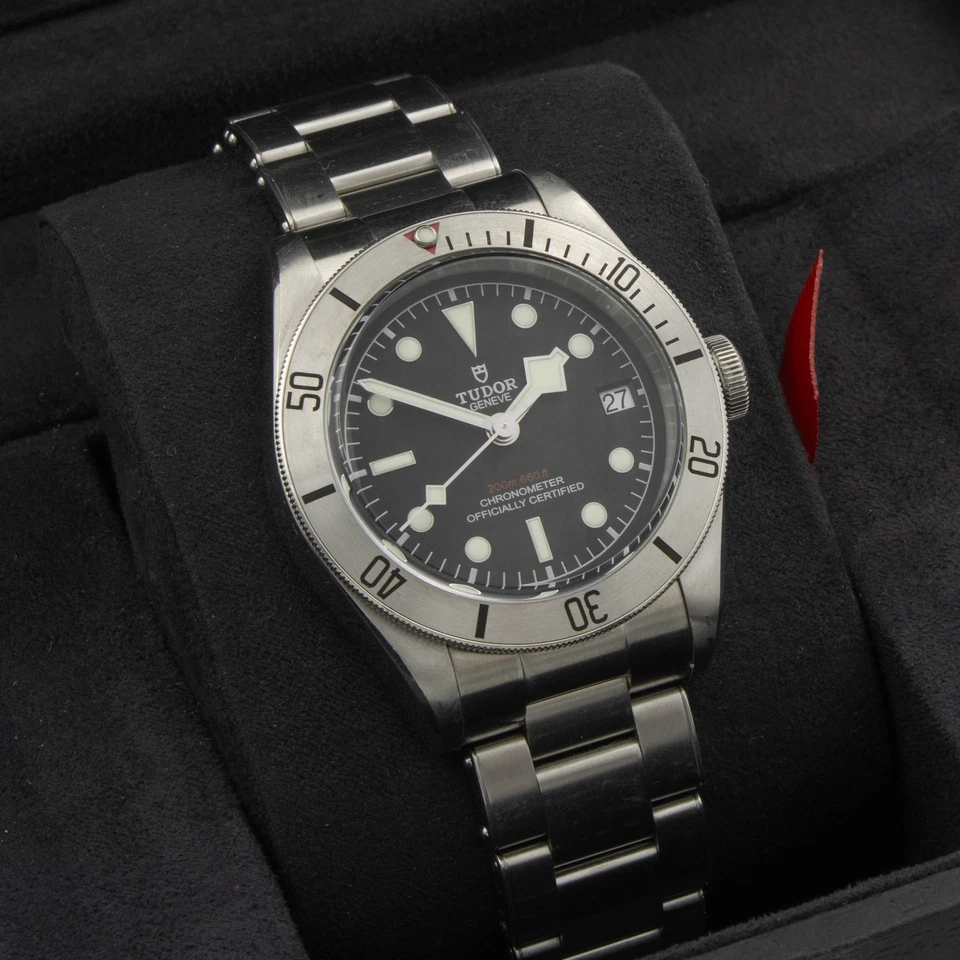
    2. Tudor Black Bay 41 (Ref. 79730)

    Why It Stands Out:
    A standout daily wear piece that balances vintage Explorer aesthetics with a fresh, modern twist. The black dial brings a beautiful contrast, while the Tudor-modified ETA movement ensures rock-solid reliability. It’s discreet but undeniably premium on the wrist.

    Typical Price Range: $1,800 – $3,000


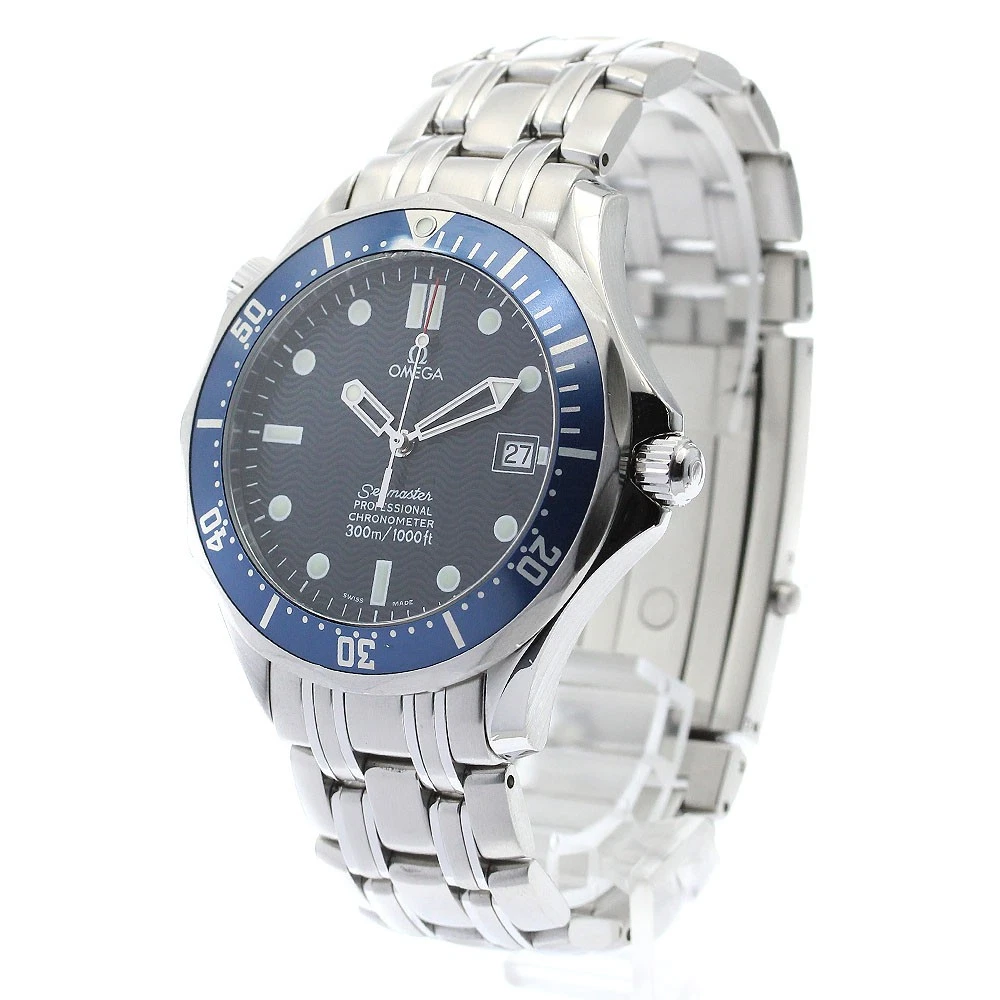
    3. Omega Seamaster 300M Automatic (Ref. 2531.80 – Pre-Coax)

    Why It Stands Out:
    This watch barely makes it in my budget, but it still deserves a spot. The pre-coaxial Seamaster Professional 300M is a Bond-era classic. Featuring the Omega Caliber 1120 (based on the COSC-certified ETA 2892-A2), a wave-patterned blue dial, and the iconic skeleton hands, it offers serious dive credentials with 300m WR and a helium escape valve. The design has stood the test of time—and remains one of the most accessible full-mechanical Seamasters.

    Typical Price Range: $1,900+


    4. Nomos Club Campus 38 mm

    Why It Stands Out:
    This modern Bauhaus-inspired watch has real personality. The colorful dials, bold Arabic numerals, and playful green-tipped hands bring youthful elegance. With a manual Alpha caliber (visible through sapphire display-back), 38 mm case, and a leather strap, it’s both stylish and wearable—appealing to enthusiasts who appreciate minimalist mechanics and design.

    Typical Price Range: $1,199–1,340


    5. Zenith Elite Ultra-Thin

    Why It Stands Out:
    Zenith’s Elite collection is known for its sleek design and in-house movements. The Ultra-Thin models, often around 40mm in diameter, feature minimalist dials and slim profiles, making them excellent dress watches. The Elite movement offers a 50-hour power reserve and high accuracy.

    Typical Price Range: $1,400–$2,000


    6. Union Glashütte Belisar

    Why It Stands Out:
    A dressy German timepiece made in the historic Glashütte region. The Belisar Date features a domed sapphire crystal, sunburst dial, polished 40mm case, and a beautifully decorated movement. It blends Saxon elegance with modern reliability—delivering German prestige at an accessible price.

    Typical Price Range: $1,200–$1,700 (pre-owned)


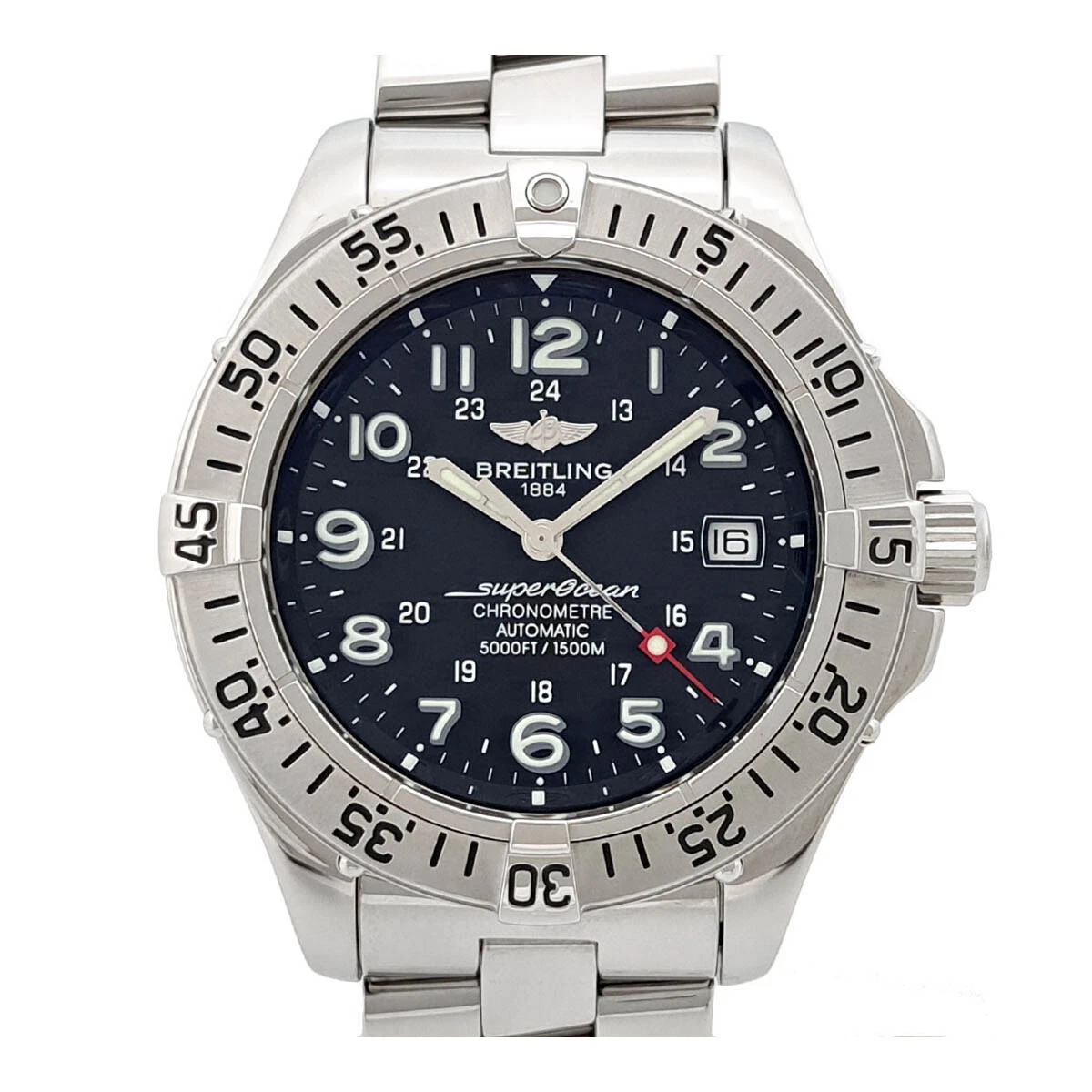
    7. Breitling Superocean Automatic (Ref. A17360)

    Why It Stands Out:
    A serious tool diver from a storied sports brand—bold, durable, and instantly recognizable. These 42 mm models are powered by COSC-certified automatic movements, boast 500 m+ water resistance, and come rugged strap or bracelet as standard.

    Typical Price Range: $1,500 – $2,000


    8. Longines Master Collection 41mm

    Why It Stands Out:
    A rare blend of dive-watch toughness and bold visual appeal. The dial pops under light, and the glossy ceramic bezel adds premium tactility. With 300 m WR, a sturdy bracelet, and the upgraded L888 caliber, this is a watch that’s as practical as it is striking.

    Typical Price Range: $1,250–$1,750


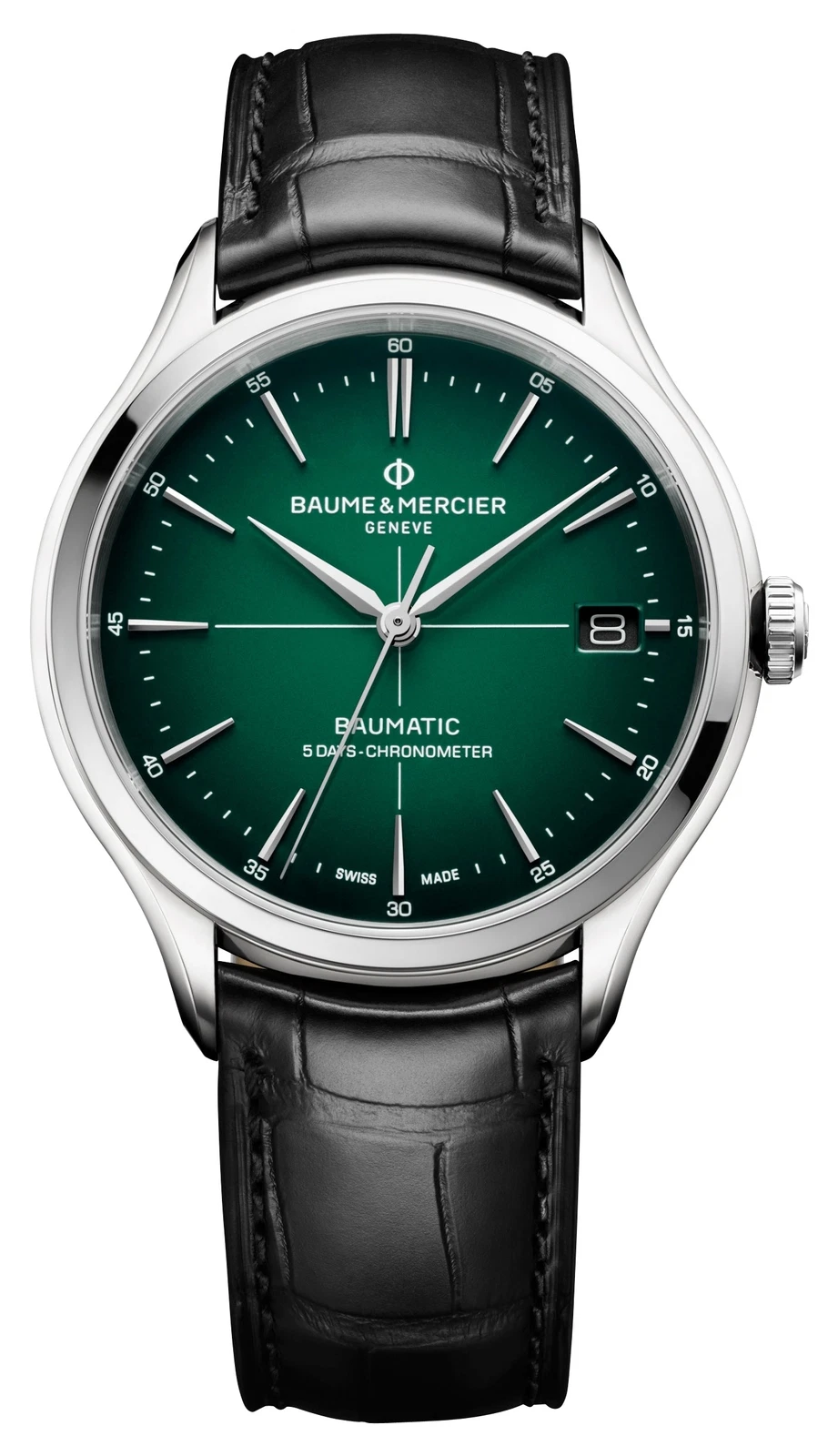
    9. Baume & Mercier Clifton Baumatic

    Why It Stands Out:
    A serious horological statement from an often-overlooked brand. The Baumatic is powered by Baume’s proprietary BM13-1975A movement, offering a whopping 120-hour power reserve and chronometer-level accuracy. It’s a dressy, sleek, and tech-forward watch that positions Baume as more than just a Richemont catalog filler.

    Typical Price Range: $1,400–$1,800 (pre-owned)


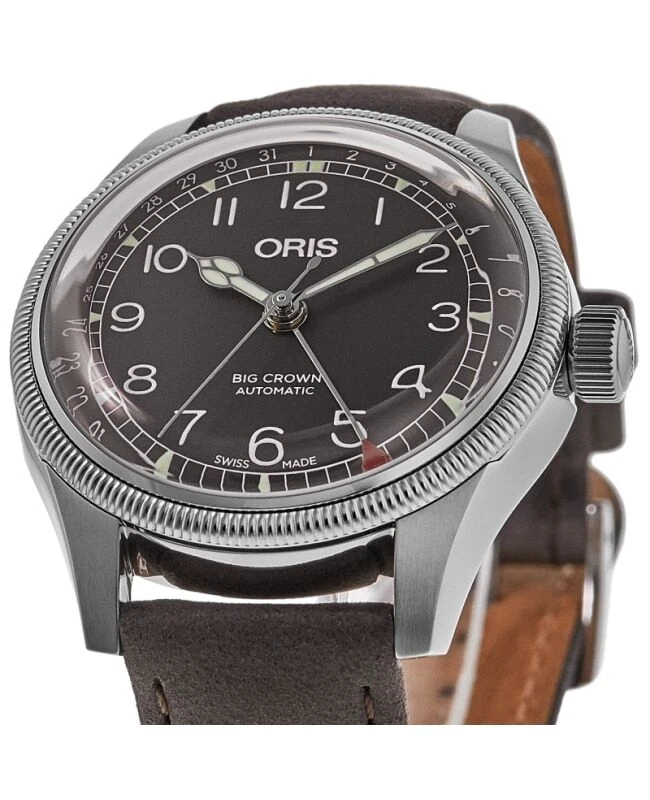
    10. Oris Big Crown Pointer Date 40mm

    Why It Stands Out:
    The Oris Big Crown Pointer Date is celebrated for its distinctive date indication via a central pointer hand. The 40mm case, coin-edge bezel, and cathedral hands give it a vintage charm. It’s powered by the reliable Oris Caliber 754, based on the Sellita SW200-1.

    Typical Price Range: $600–$1,200


    Final Thoughts

    Each of these timepieces offers a blend of quality, heritage, and value, making them excellent choices for collectors and enthusiasts alike. When purchasing pre-owned watches, always ensure authenticity and consider service history to maintain their performance and longevity.

    Stay ticking!

  • Understanding Watch Complications: A Quick Guide

    Understanding Watch Complications: A Quick Guide

    As soon as you start surfing Chrono24, Bob’s Watches, or binge-watching Teddy Baldassarre, one thing jumps out: watches do much more than tell time. From timing a lap to summoning the phases of the moon, each “function”—or complication—adds engineering flair, price, and bragging rights.

    Below is a lightning-round tour of ten of the most talked-about functions. For each one you’ll see how it workstypical price entry points, an iconic reference, and an affordable gateway piece (when one exists—some complications stay stubbornly expensive).

    FunctionWhat Makes It TickStarting Price1Iconic PieceAffordable Gateway
    Date / Day-DateA simple disk under the dial jumps once per day.≈ $150Rolex Day-Date (aka “President”)Seiko 5 Sports
    ChronographStart/stop/reset cams2 & levers run a secondary gear-train to time events.≈ $250Omega Speedmaster “Moonwatch”Tissot PRX Chronograph
    GMT / Dual TimeA 24-hour hand geared to rotate once per day tracks a second zone.≈ $300Rolex GMT-Master II “Pepsi”Seiko 5 GMT (SSK series)
    AlarmA separate spring barrel drives a hammer that strikes an internal gong.≈ $600Jaeger-LeCoultre MemovoxSeiko “Bell-Matic” (vintage)
    Moon PhaseA 59-tooth disk advances once every 24 h to sync with the 29.5-day lunar cycle.≈ $300Patek Philippe 3940Orient Sun & Moon v4
    Tachymeter (with Chronograph)Fixed bezel or dial scale converts elapsed seconds into speed or rate.Chronograph pricingOmega SpeedmasterBulova Lunar Pilot
    Annual CalendarUses a cam programmed for 30-/31-day months; needs adjustment only on Feb 28/29.≈ $3 000Patek Philippe 5035 (first ever)Longines Master Collection Moonphase Retrograde Annual Calendar
    Perpetual CalendarLever “memory” accounts for leap years—no correction until 2100.≈ $6 000 (used)Audemars Piguet Royal Oak PerpetualNone—high-horology only
    Flyback ChronographClutch lets you reset & restart timing with one press—perfect for pilots.≈ $1400Breguet Type XXBaltic Bicompax “Panda”
    TourbillonThe entire escapement spins in a cage each minute to average out positional errors.≈ $500 (Chinese brands)Breguet Classique 5317Seagull ST8000 tourbillon

    Bite-Size Deep-Dives


    1. Date / Day-Date

    Photo by Arjunn. la on Pexels.com
    • Why it matters: Everyday convenience.
    • Geek fact: Rolex’s 1945 Datejust was the first self-winding wristwatch with an instantaneous date jump; the “quick-set” feature didn’t appear until 1977.

    2. Chronograph

    Photo by Quang Viet Nguyen on Pexels.com
    • Why it matters: Lap timing + tactile pusher feel.
    • Geek fact: Vertical-clutch chronographs (e.g., Seiko 6139, Zenith El Primero) let the seconds hand run continuously with virtually no amplitude loss—perfect for OCD accuracy nerds.

    3. GMT / Dual Time

    Photo by Bhop Phikanesuan on Pexels.com
    • Why it matters: Track two zones at once.
    • Geek fact: The Rolex 6542 “Pepsi” (1954) was developed for Pan Am pilots; its original Bakelite bezel was so fragile many were swapped for aluminum—surviving Bakelite models fetch six-figure sums.

    4. Alarm

    Seiko Bell-Matic 17 Jewels, via Wikimedia Commons, licensed under CC BY-SA 3.0 AT.
    • Why it matters: A mechanical ringtone on your wrist.
    • Geek fact: The Vulcain “Cricket” was nicknamed The President’s Watch—Truman, Eisenhower, Nixon and Johnson all wore one in the Oval Office.

    5. Moon Phase

    Photo by SevenStorm JUHASZIMRUS on Pexels.com
    • Why it matters: Pure romance.
    • Geek fact: A 135-tooth moon-phase disk (e.g., H. Moser Endeavour) drifts by one day every 122 years—over 4 × more accurate than the traditional 59-tooth setup.

    6. Tachymeter (w/ Chronograph)

    Omega Speedmaster Professional, via Wikimedia Commons, released into the public domain by the author, Torsten Bolten.
    • Why it matters: Converts elapsed time into speed or rate.
    • Geek fact: You can flip the script—time one unit of production (say, wrapping a burrito) and the tachy scale shows burritos per hour. Fast-food nerd badge unlocked.

    7. Annual Calendar

    Jaeger-LeCoultre Master Calendar in Stainless Steel (Ref. Q151842A), via Wikimedia Commons, licensed under CC BY-SA 4.0.
    • Why it matters: Adjust once a year, not every month.
    • Geek fact: Patek Philippe created the complication only in 1996 (Ref 5035); they patented the three-cam mechanism that became the modern template.

    8. Perpetual Calendar

    Audemars Piguet Royal Oak Perpetual Calendar in Gold, mid-1990s, via Wikimedia Commons, licensed under CC BY-SA 4.0.
    • Why it matters: No correction until 2100.
    • Geek fact: Patek’s 1925 Ref 97975 was the first wrist-perpetual; its 48-month “leap-year cam” makes just one full rotation every 4 years.

    9. Flyback Chronograph

    Breguet Watch, via Wikimedia Commons, licensed under CC BY-SA 3.0.
    • Why it matters: Reset & restart with one push—ideal for navigation legs.
    • Geek fact: The Breguet Type 20 spec demanded the movement reset within 0.2 seconds—a quality-control test still enforced on modern Type XX models.

    10. Tourbillon

    Greubel Forsey Tourbillon 24 Secondes Incliné, via Wikimedia Commons, licensed under CC BY-SA 3.0.

    Geek fact: The original 1801 Breguet patent was for pocket watches; multi-axis tourbillons (e.g., Jaeger-LeCoultre Gyrotourbillon) compound the effect by spinning on two or three perpendicular axes.

    Why it matters: Rotating escapement eye-candy.


    Wrapping Up

    Complications add personality and engineering theater. Whether you’re timing a marathon or admiring a miniature lunar cycle, knowing why a function exists helps you decide if the extra cost (and service complexity) is worth it.


    Stay ticking!


    1. Typical street prices for stainless-steel pieces, new unless noted. Prices vary significantly based on brand, movement type, materials, and market demand. ↩︎
    2. Cams in watchmaking are specially shaped mechanical components that convert rotary motion into linear or intermittent movement. They are a critical part of many watch complications, particularly chronographs, where they help coordinate the start, stop, and reset actions. ↩︎

    Share & Subscribe

    If this deep dive made you look at your wrist differently, share the post and subscribe to Mechanical Minutes for more no‑nonsense horology every week.

  • 10 Watch Maintenance Mistakes to Avoid

    10 Watch Maintenance Mistakes to Avoid

    A quick, 5-minute read to keep your timepiece ticking for decades.


    1. Skipping the Post-Swim Rinse

    ❌ Mistake: Assuming “water-resistant” means “chlorine-proof.”

    ⚙️ Fix: After every swim—pool or ocean—rinse under cool tap water, pat dry, then air-dry crown-down. Salt and chemicals eat gaskets fast.


    2. Setting the Date Between 9 p.m. – 3 a.m.

    ❌ Mistake: Adjusting the date while the date-change gears are engaged.

    ⚙️ Fix: Pull the crown to time-setting, move hands past 3 a.m., then set the date. Zero stripped gears, zero drama.


    3. Over-Winding Manuals & Under-Winding Autos

    ❌ Mistake: Cranking a manual until it squeaks—or never giving an automatic its 30–40 crown turns after downtime.

    ⚙️ Fix: Stop winding manuals the moment you feel resistance. For autos at rest, give 30 smooth crown turns before wearing.


    4. Ignoring Yearly Pressure Tests on “Water-Resistant” Quartz

    ❌ Mistake: Believing quartz gaskets last forever.

    ⚙️ Fix: Pressure-test every 12–18 months if you shower or swim with it. A $30 test beats a $300 movement swap.


    5. Leaving Crowns or Pushers Un-Screwed

    ❌ Mistake: Forgetting to screw-down the crown, or pressing chrono buttons underwater.

    ⚙️ Fix: Ritualize it—wind, set, screw-down. Keep hands off pushers unless the watch is clearly rated for it (200 m+).


    6. Storing on a Hot Dashboard or in Direct Sun

    ❌ Mistake: Heat bakes lubricants and fades dials.

    ⚙️ Fix: Use a shaded drawer or travel roll. In a car, glovebox > dashboard.


    7. Magnetizing Your Movement

    ❌ Mistake: Parking the watch near laptop speakers, phone mags, or magnetic bag clasps.

    ⚙️ Fix: Keep watches 15 cm / 6 in away. Second hand stuttering? A $20 demagnetizer fixes it in 10 sec.


    8. DIY Strap Changes Without Tape or a Spring-Bar Tool

    ❌ Mistake: Prying with a knife and scarring the lugs.

    ⚙️ Fix: Spend $10 on a spring-bar tool and cover lugs with painter’s tape. Two minutes of prep = zero resale-killing scratches.


    9. Letting Automatics Sit Dead for Weeks

    ❌ Mistake: Repeatedly draining the power reserve to zero.

    ⚙️ Fix: If unworn > 3 weeks, give a full wind monthly or use a low-TPD winder. Lubes stay fluid; accuracy stays tight.


    10. Skipping the 5-Year Full Service

    ❌ Mistake: Waiting until the watch runs slow—or stops.

    ⚙️ Fix: Budget an overhaul every 4–6 years (clean, oil, regulate, new seals). Cheaper than replacing a worn escapement later.


    Quick-Reference Cheat Sheet

    ✅ Do This🚫 For Avoiding This
    Rinse after swimmingChlorine / salt buildup
    Wind manuals until resistanceOver-cranking
    Set date outside 9 p.m.–3 a.m.Stripping date gears
    Tape lugs before strap swapsLug scratches
    Pressure-test yearly if you swimSilent gasket failure

    Final Thoughts

    Mechanical or quartz, a wristwatch is a miniature machine enduring 100+ million vibrations a day. Respect the tolerances, and it will outlive you; abuse them, and it becomes a paperweight. Follow the checklist above, and you’ll spend more time enjoying your watch than explaining repair invoices.


    🚀 Keep Learning

    • Subscribe to Mechanical Minutes for deep dives into calibres and affordable watch picks.
    • Got a horror story? Share your biggest maintenance mistake in the comments—help the next enthusiast avoid it!

    Stay ticking!

  • Water-Resistant Watches: What Ratings Really Mean

    Water-Resistant Watches: What Ratings Really Mean

    Whether you’re buying a desk-diver or a saturation-ready diver’s tool, that little “50 m,” “10 bar,” or “300 m” on the dial is easy to misread. Below is a guide that demystifies laboratory ratings, explains why depth ≠ real-world use, and shows exactly which activities each rating can (and can’t) handle.


    1. How Watchmakers Test Water Resistance

    Term on WatchWhat It Actually Refers ToTypical Test Method
    Meters (m)Static depth in still, room-temperature water.Pressure chamber gradually pressurized to equivalent depth, held for ~10 min.
    Bar / Atmospheres (ATM)1 bar ≈ average sea-level atmospheric pressure (14.5 psi).Same chamber test; 10 bar = 100 m, 20 bar = 200 m, etc.

    Key point: Tests are static—the watch simply sits there in a chamber. Real-world activities (swimming strokes, faucet jets, sudden temperature swings) create dynamic pressure spikes far higher than the label suggests.


    2. Depth Ratings vs. Real-Life Water Sports

    RatingCasual Hand-Washing & RainShowerSwimming PoolSnorkeling, Kayaking, Water-SkiingRecreational Scuba (≤40 m)
    30 m / 3 bar⚠️
    Steam & soap can sneak past gaskets
    50 m / 5 bar
    Avoid hot sprays
    ✅ Easy laps
    ⚠️ Vigorous laps
    100 m / 10 bar
    Vigorous laps
    ✅ Snorkeling, kayaking, water-skiing⚠️
    Risky
    200 m / 20 bar✅ Recreational scuba
    300 m+ / ISO 6425 Diver’s
    All air-tank diving

    *Why “⚠️” at 100 m? Laboratory 10 bar tests don’t simulate the rapid pressure changes, water impact, and prolonged immersion of scuba. Unless your watch also states “Diver’s 100 m” (ISO 6425), stick to snorkeling or shallower fun.


    3. Why 100 m Isn’t Automatically “Scuba-Safe”

    1. Dynamic pressure spikes – A freestyle arm pull can momentarily multiply pressure by 3-5×.
    2. Thermal shock – Jumping from a hot deck into 20 °C water shrinks seals.
    3. Long dwell time – A 40-minute dive keeps gaskets under load far longer than a 10-minute lab test.
    4. ISO 22810 vs. ISO 6425 – Most watches only meet the general-purpose ISO 22810 guideline (formerly “Water-Resistant”). ISO 6425 adds vibration, salt-fog, shock, temperature-cycle, and 25 % extra pressure margin tests—then allows the “Diver’s” label.

    4. Reading the Fine Print

    Casio G-SHOCK FROGMAN, via Wikimedia Commons, licensed under GNU
    MarkingWhat It ImpliesTypical Use Case Examples
    “Water-Resistant 30 m”Minimal splash defense.Rainy commute, washing hands.
    “W.R. 50 m”Light aquatic play.Casual swim, hotel pool selfie.
    “100 m / 10 ATM”Robust for surface sports.Snorkeling reefs, jet-skiing, SUP.
    “Diver’s 200 m”ISO 6425 certified; readable in dark, unidirectional bezel, antimagnetic, etc.Open-water diving, PADI class watch.
    “Diver’s 300 m with HeV”Built for saturation work; helium-escape valve.Commercial bell diving, mixed gas, professional tool watch realm.

    5. Care & Maintenance Tips

    1. Rinse after salt or chlorine – Prevent gasket-eating crystal deposits.
    2. Avoid hot tubs – Heat + chemicals accelerate seal fatigue.
    3. Service the seals – Manufacturers recommend pressure tests every 1-2 years if you actually swim.
    4. Crown discipline – Screw it down firmly before touching water, never under it.
    5. Don’t test fate – If the watch is sentimental or vintage, treat the rating as historical fiction.

    6. Myth-Busting Quick Hits

    • “My 100 m watch survived a 50 m dive, so it’s fine.” Maybe today—gaskets age.
    • “30 m watches leak only if defective.” Regular shower heat alone can defeat them.
    • “Helium valves are marketing fluff.” Not if you live in a saturation chamber for days; otherwise, yes, mostly bragging rights.

    8. Bottom Line

    Water-resistance markings are guides, not guarantees. Treat a 50 m watch as a pool buddy, a 100 m as a snorkel pal, and a Diver’s 200 m as your scuba wingman. Anything less? Keep it high and dry—or at least above the splash line.


    Stay ticking!


    Share & Subscribe

    If this deep dive made you look at your wrist differently, share the post and subscribe to Mechanical Minutes for more no‑nonsense horology every week.