Every great watch has a story, and this section is dedicated to uncovering the rich history behind some of the world’s most fascinating watch brands and movements. From HMT’s pivotal role in post-independence India to the aviation-inspired roots of Sinn and the innovative rise of Zelos, these articles explore the legacies that shaped the watch industry. Dive deep into the past to appreciate the craftsmanship, heritage, and bold innovations that continue to inspire watch enthusiasts today.
There was a time when the word vintage meant dusty cases and questionable lume. Today, it’s a badge of honor. But lately, a subtler movement has emerged — neo-vintage watches, those quiet marvels from the 1980s to early 2000s that bridge the gap between the purely mechanical past and the modern, over-engineered present.
They carry the quirks of analog watchmaking yet the dependability of sapphire crystals and better water resistance. Collectors love them because they represent the last era before luxury watches became… luxury products.
The past few years have seen Instagram-driven hype cycles that make prices swing like pendulums. But a growing crowd of enthusiasts is turning inward — toward pieces that feel like their own. Neo-vintage scratches that itch.
They reward study, patience, and taste rather than hype-chasing. As one collector put it, “It’s the difference between wearing a story and wearing a billboard.”
Where This Is Headed
Brands have noticed. You can see neo-vintage DNA in modern designs: the Longines Heritage line, Tudor’s Black Bay 54, and TAG Heuer’s Carrera reissues. Even independents like Baltic and Serica are riffing on late-century aesthetics with 21st-century specs.
If history repeats, we’re witnessing the “neo-vintage bubble” forming—only this one’s built on genuine affection, not speculation.
Watches are deceptively simple objects. At first glance, they’re just machines that tell time. But anyone who has wound a movement, felt the weight of steel on the wrist, or seen lume glowing in the dark knows that a watch is far more than a utility. It’s history on your wrist, engineering distilled into art, and—most importantly—a conversation starter that can connect you with people in surprising ways.
One of the best things about this hobby is how it breaks down walls between strangers. On a recent flight, I noticed the man seated next to me wearing a Rolex GMT-Master. I leaned over to ask about it, and that simple gesture led to an hour-long conversation. He told me he wears the watch all the time—even when he sleeps—and how it has served him faithfully for years, far outlasting the Tag Heuer Carrera he once owned.
It struck me that while brands, models, and complications matter, what really counts are the personal stories attached to these timepieces. Watches aren’t just objects—they’re companions to life itself.
Unlike some hobbies that demand ever-new equipment or extreme conditions, watches stay with you every day. You don’t need to set aside special time—they sit quietly on your wrist, reminding you of the craftsmanship, design, and innovation packed into something smaller than a matchbox. The fact that a purely mechanical movement—gears, springs, and levers—can keep time with such accuracy still feels miraculous in the digital age.
A Hobby with Layers of Meaning
History: Wearing a Speedmaster connects you to the moon landing; a Submariner, to generations of divers.
Engineering: Movements like ETA’s Powermatic 80 or Rolex’s 3235 aren’t just specs—they’re living testaments to precision.
Aesthetics: The artistry of dials, cases, and complications makes every piece an object of beauty.
Community: Enthusiast forums, watch fairs, and even casual office chats weave you into a global network of collectors.
Collecting watches can quickly spiral into a money pit and even a hoarding problem if you’re not careful. The temptation to chase every new release, every “must-have” limited edition, or every bargain on a sales forum is real. Before long, you’re not curating a collection—you’re filling drawers with watches you barely wear.
I’ve caught myself on this slope before, realizing that the line between meaningful collecting and compulsive buying can blur easily. The key is to recognize what truly resonates with you and to buy with intention, not impulse.
Unlike many hobbies that come and go with phases of interest, watches age with you. They gather scratches, patina, and stories along the way. Your daily beater becomes the watch you wore through promotions, milestones, and travels. Your first serious piece becomes the one you’ll hand down, carrying not just timekeeping function but personal history.
In a world where distractions are endless and hobbies can feel shallow, mechanical watches ground you. They remind you to slow down, to appreciate craftsmanship, and to value continuity.
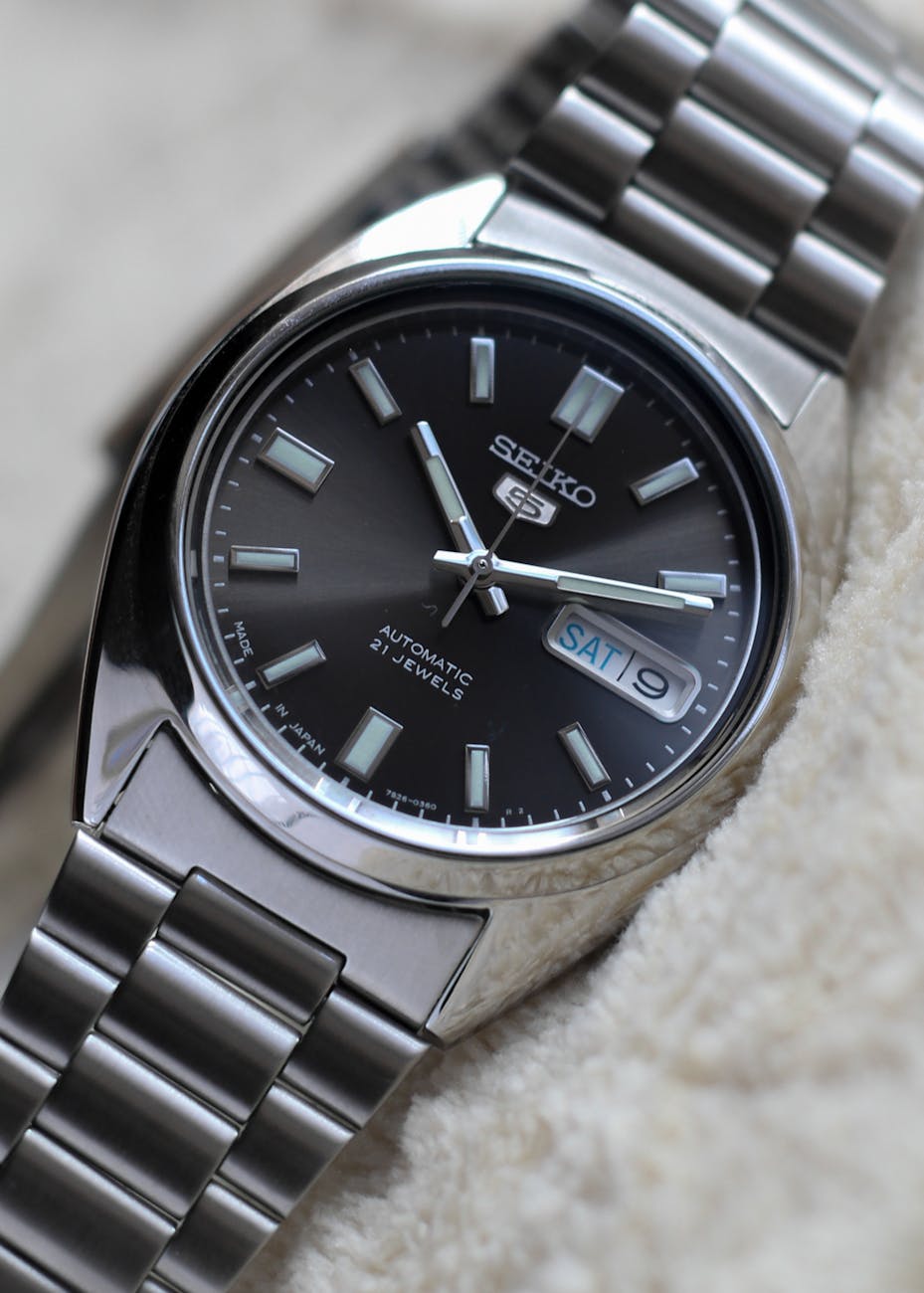
Photo by Su00f3c Nu0103ng u0110u1ed9ng on Pexels.com
Final Thought
Pursuing watches as a hobby isn’t about chasing luxury or flexing status—it’s about discovering meaning in the mechanical, connecting with people across the world, and finding an anchor you can carry on your wrist for a lifetime. Just remember: a collection should tell your story, not bury it under excess.
Watches tell time, but their evolution tells a story. From medieval tower clocks to precision micro-mechanics on our wrists, the journey of watches spans centuries of invention, fashion, and obsession. This is the tale of how timekeeping became personal—and what might come next.
The Dawn of Timekeeping: Sundials and Tower Clocks
Long before watches, ancient civilizations tracked time using sundials, water clocks, and candle clocks. But these were immobile, communal, and far from precise.
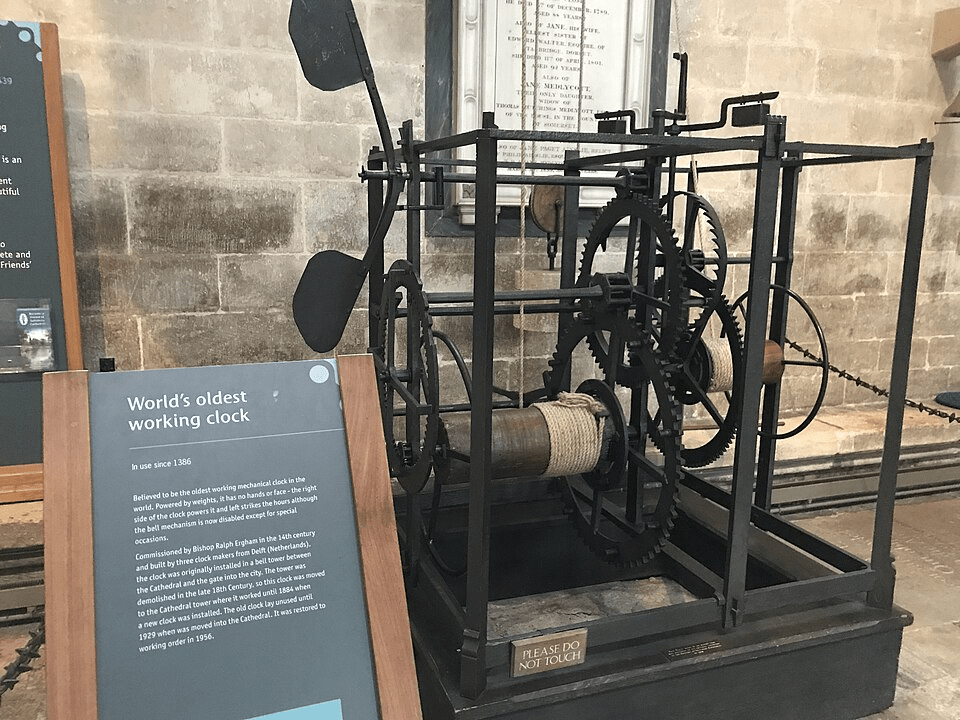
It wasn’t until the 14th century in Europe that mechanical tower clocks began to dominate town squares—giant machines powered by weights and regulated by verge escapements. These massive clocks brought standardized time to communities, often regulated by monks and cathedral bells.
14th-century clock mechanism, Salisbury Cathedral. Image via Wikimedia Commons, licensed under CC BY-SA 4.0.
Enter the Pocket Watch: Time Gets Personal
In the 16th century, German inventor Peter Henlein created one of the first portable clocks—what we now call a pocket watch. These “Nuremberg Eggs” were spring-driven and worn around the neck or carried in pockets.
Image of a clock-watch “Nuremberg Egg” watch by Peter Henlein, 1510 via Wikimedia Commons under CC BY-SA 3.0.
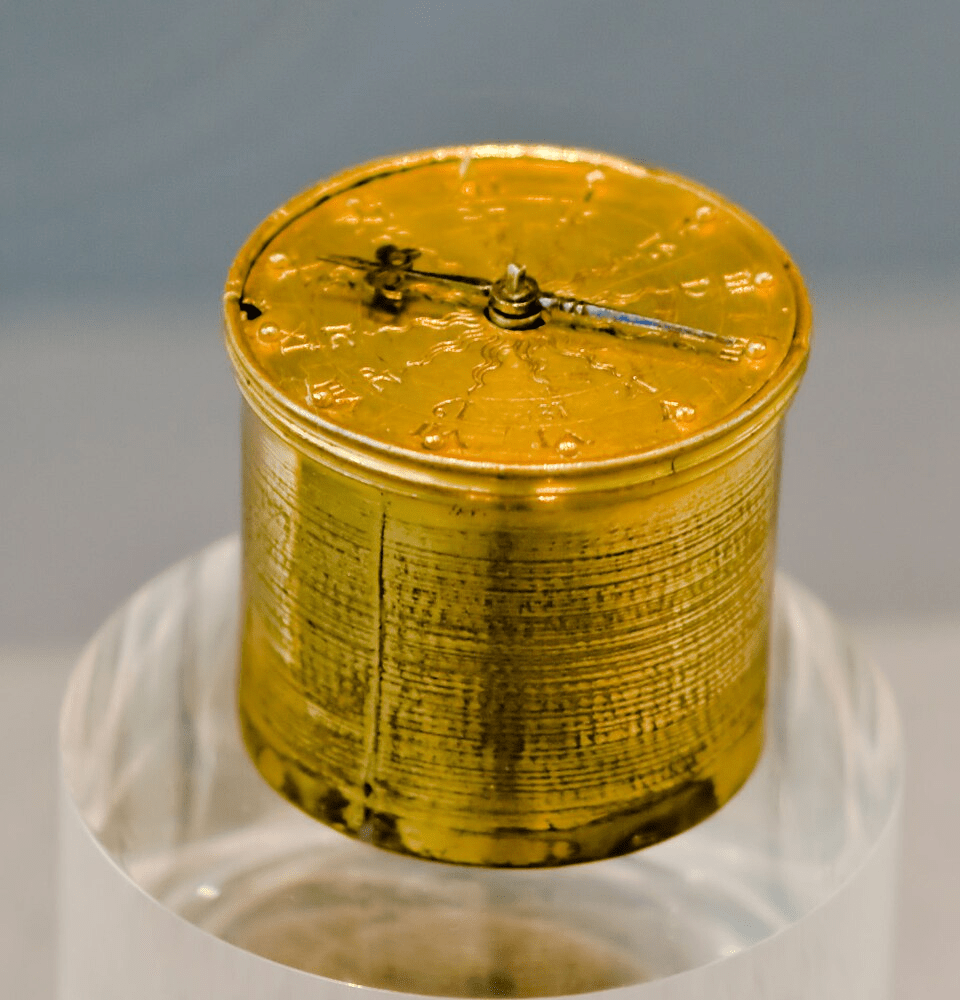
As watchmaking advanced through the 17th and 18th centuries, pocket watches became slimmer, more accurate, and increasingly decorative—status symbols for nobility and merchants alike. Innovations like the balance spring (1675) and jeweled movements greatly enhanced accuracy and durability.
Photo of 16th-century portable clock from Musée Paul‑Dupuy’s collection in Toulouse, via Wikimedia Commons, licensed under CC BY-SA 3.0.
The Birth of the Wristwatch: War, Women, and Innovation
Despite their elegance, pocket watches had a flaw—they needed two hands to check the time. The idea of strapping a timepiece to the wrist was initially considered feminine. But practicality changed everything.
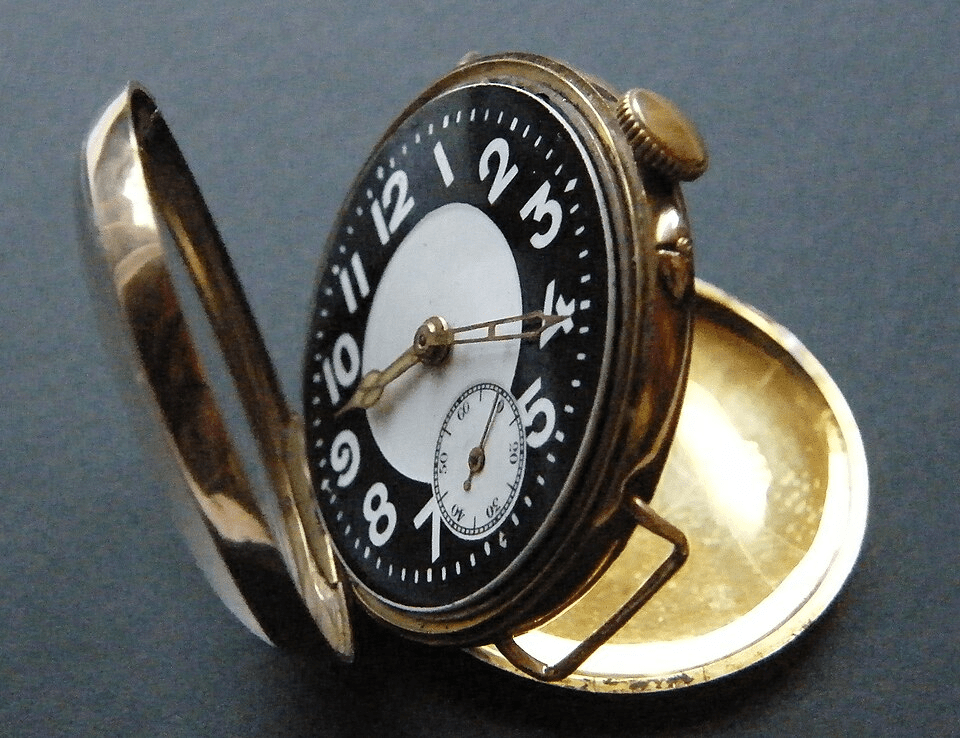
During the Boer War and World War I, soldiers began wearing modified pocket watches on their wrists for quick access. Military utility made wristwatches masculine, reliable, and essential.
By the 1920s, brands like Rolex, Longines, and Cartier were producing dedicated wristwatches for men. The transition was complete—wristwatches became the new standard.
WWI-era trench wristwatch. Image via Wikimedia Commons, released under public domain.
The Quartz Revolution: Accuracy vs. Tradition
In 1969, the world changed again when Seiko released the Astron, the first commercial quartz watch. Accurate to within seconds per month, it triggered the Quartz Crisis, nearly destroying the Swiss mechanical watch industry.
Brands like Omega, Tissot, and even Rolex scrambled to catch up. Meanwhile, Swatch emerged in the 1980s with colorful, affordable quartz watches, helping Switzerland regain relevance with mass-market appeal.
1969 Seiko Astron – the first quartz wristwatch. Image via Wikimedia Commons, licensed under CC BY-SA 4.0.”
Mechanical Renaissance: Art Meets Engineering
Despite quartz dominance, mechanical watches made a comeback in the 1990s and 2000s. No longer about pure utility, they became luxury items, heritage symbols, and feats of engineering.
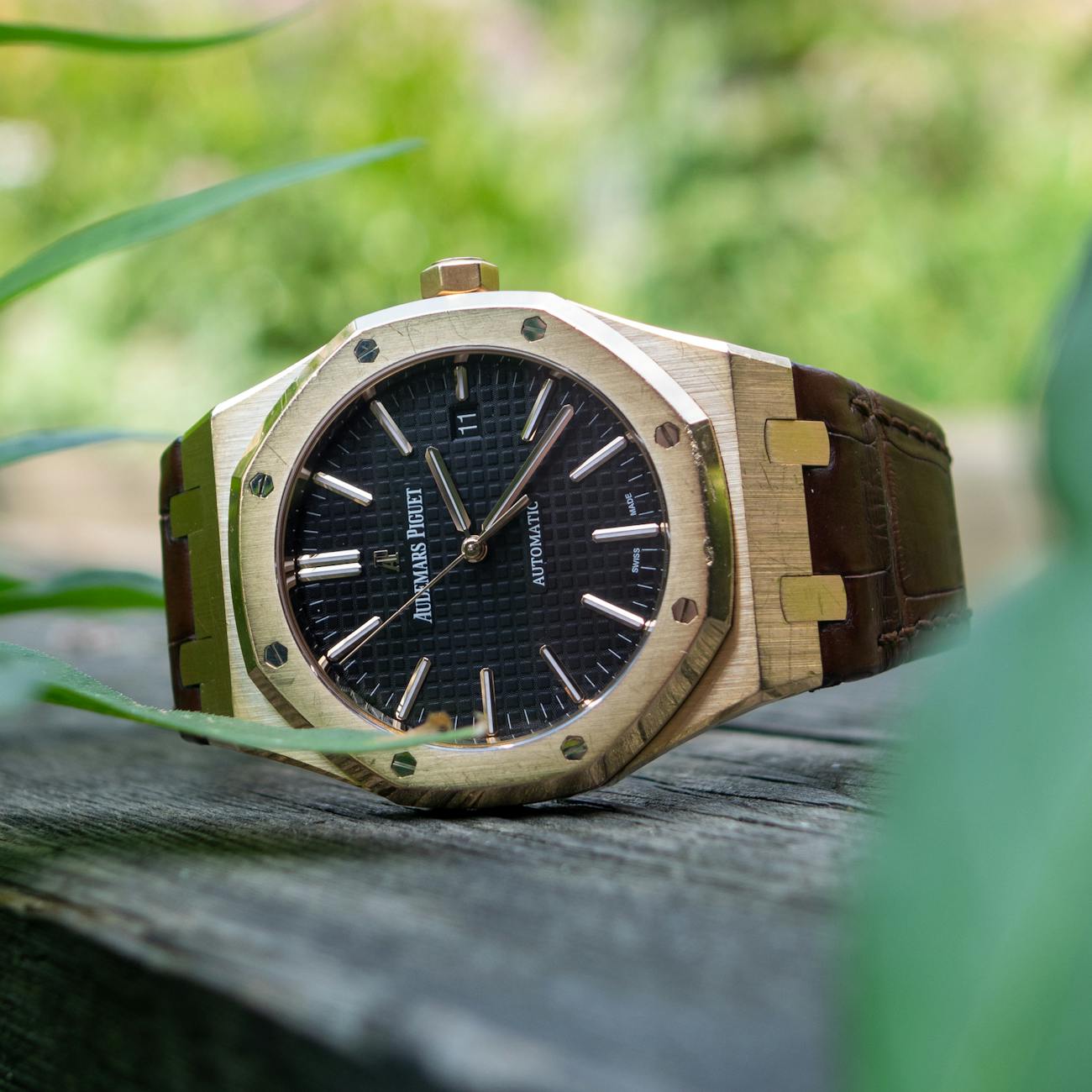
Collectors revered the ticking heartbeat of an automatic movement, the craftsmanship behind hand-finished cases, and the legacy behind names like Patek Philippe, Audemars Piguet, and Rolex.
The 2010s ushered in a new contender: the smartwatch. Apple, Samsung, and Garmin blurred the line between fitness trackers, notifications, and health monitoring. Yet, traditional mechanical watches haven’t disappeared.
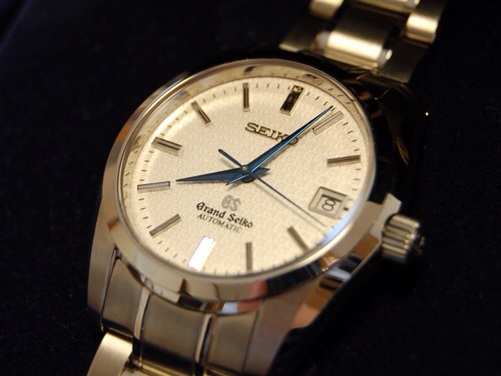
We might see mechanical hybrids (like Grand Seiko’s Spring Drive or experimental micro-energy harvesters), watches with blockchain service records (as used by Breitling and Vacheron Constantin), or AI-assisted movement calibration (still emerging, but being explored in manufacturing and smart hybrid platforms) in the near future.
My grandfather’s worn-out HMT Rajat is still the most precious watch in my collection.
The first mechanical watch I ever held wasn’t mine—it was my grandfather’s. A slim, silver-dialed HMT Rajat, always peeking out from under the cuff of his kurta. He would wind it each morning with a quiet reverence, as though awakening something sacred. It wasn’t just a tool to tell time—it was a symbol.
Through him, I discovered that HMT wasn’t just a watch brand. It was a badge of honor, a retirement gift, a wedding present, a milestone. Owning an HMT meant something in India—because it was India’s timekeeper.
As someone who now explores microbrands and affordable mechanical watches through my blog Mechanical Minutes, I wanted to step back and honor the brand that put India on time—and did it with dignity, precision, and pride.
The Backdrop: India’s Tryst with Industrial Destiny
When India gained independence in 1947, the country’s leadership knew that self-reliance wouldn’t just come from freedom—it needed factories, tools, and technology.
In 1953, Hindustan Machine Tools (HMT) was born as a state-owned enterprise focused on machine tools. But it wasn’t long before Nehru’s vision expanded. By 1961, with technical assistance from Japan’s Citizen Watch Co., HMT took on a new mission: manufacturing India’s very first wristwatches.
This wasn’t just industrial diversification—it was nation-building on your wrist.
HMT’s Contributions: Timekeeping as Nation-Building
🏭 Made in India, For Indians
HMT created watches in India, by Indians, for Indians—a revolutionary concept in an era where imported Swiss watches were luxuries few could afford. These weren’t mass-manufactured gadgets—they were engineered with care, often by skilled artisans trained in Japan and Switzerland.
“Time is money, they say. But in India, time was also identity. And HMT gave it form.”
⏱️ Mechanical Movements for the Masses
Where the world was shifting to quartz, HMT doubled down on manual-wind mechanical calibers—tough, repairable, and romantic in their ticking rhythm. The Caliber 020, based on Citizen’s movement, powered many iconic models like the Janata, Sona, and Rajat.
Some innovations include:
Shock-resistant designs, rare in that price bracket.
Hand-finished dials, often with subtle textures or sunburst effects.
Slim cases and domed acrylics, styled with Bauhaus-like restraint.
🎓 Skill Transfer & Watchmaking Ecosystem
HMT didn’t just make watches—it built an entire generation of Indian watchmakers, many of whom would later go on to launch private ventures. Its training programs were rigorous and respected, often mirroring Swiss watchmaking pedagogy.
Why Were HMT Watches So Prestigious?
Before Titan, before Seiko’s Indian presence, HMT was the gold standard of wristwatches in India. If you received one:
At retirement—it meant your service was honored.
As a gift—it meant you were respected.
At marriage—it symbolized a lifelong promise.
They had emotional value, but also social status. A man wearing an HMT was punctual, disciplined, and “set in time.”
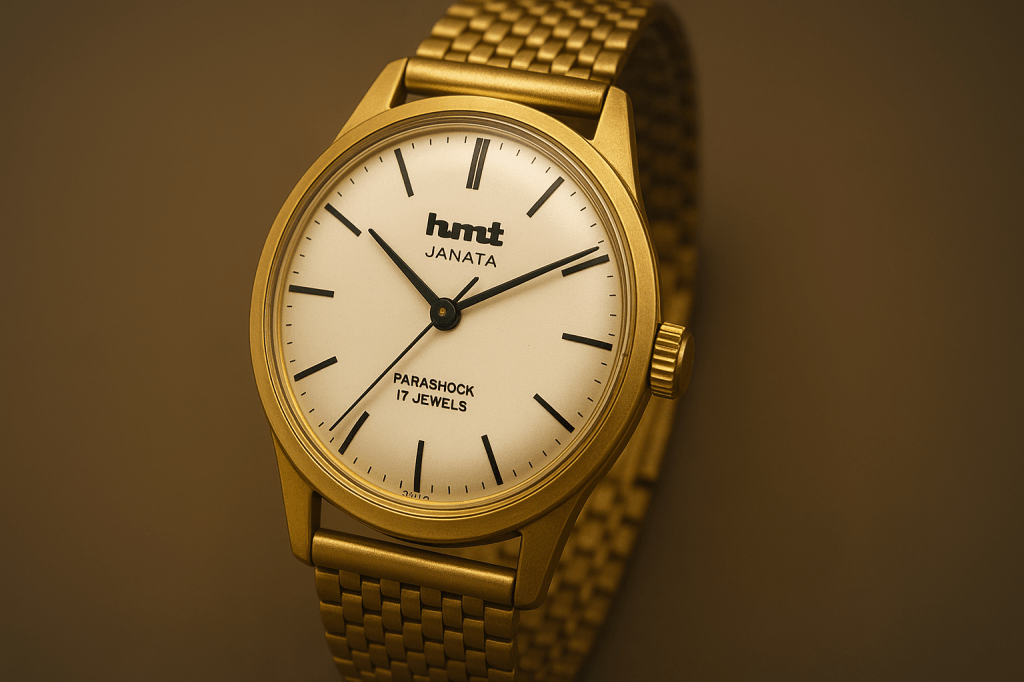
HMT Janata, via Wikimedia Commons, licensed under GNU
HMT Pilot: A robust, field-style watch with cult status.
HMT Sona & Rajat: Elegant dress watches in gold and silver tones, often passed down generations.
HMT Jawan: Issued to the Indian Army—practical, matte, and hard-as-nails.
HMT Watches on display, via Wikimedia Commons, licensed under CC BY-SA 4.0
What Made HMT Special Technically?
HMT Jhalak via Wikimedia Commons, licensed under GNU
Beyond nostalgia, these watches had horological merit:
In-house assembly: Movements were hand-assembled in India, not imported as kits. Low-beat but long-lasting: 18,000–21,600 bph calibers optimized for longevity, not flash. Serviceable for decades: You could find a watch repair guy in any town who knew HMT guts.
This “tool-for-life” philosophy made them more than machines—they were companions.
The Quartz Crisis hit HMT harder than most. By the late 1980s, consumers wanted slimmer, battery-powered watches. HMT’s mechanical tooling couldn’t adapt fast enough. Their quartz lineup arrived too late—and lacked the charm of their originals.
The 2000s saw further decline, with branding missteps, little innovation, and growing financial losses. In 2016, the Indian government officially shut down HMT Watches.
A Cult Rebirth: HMT in the 21st Century
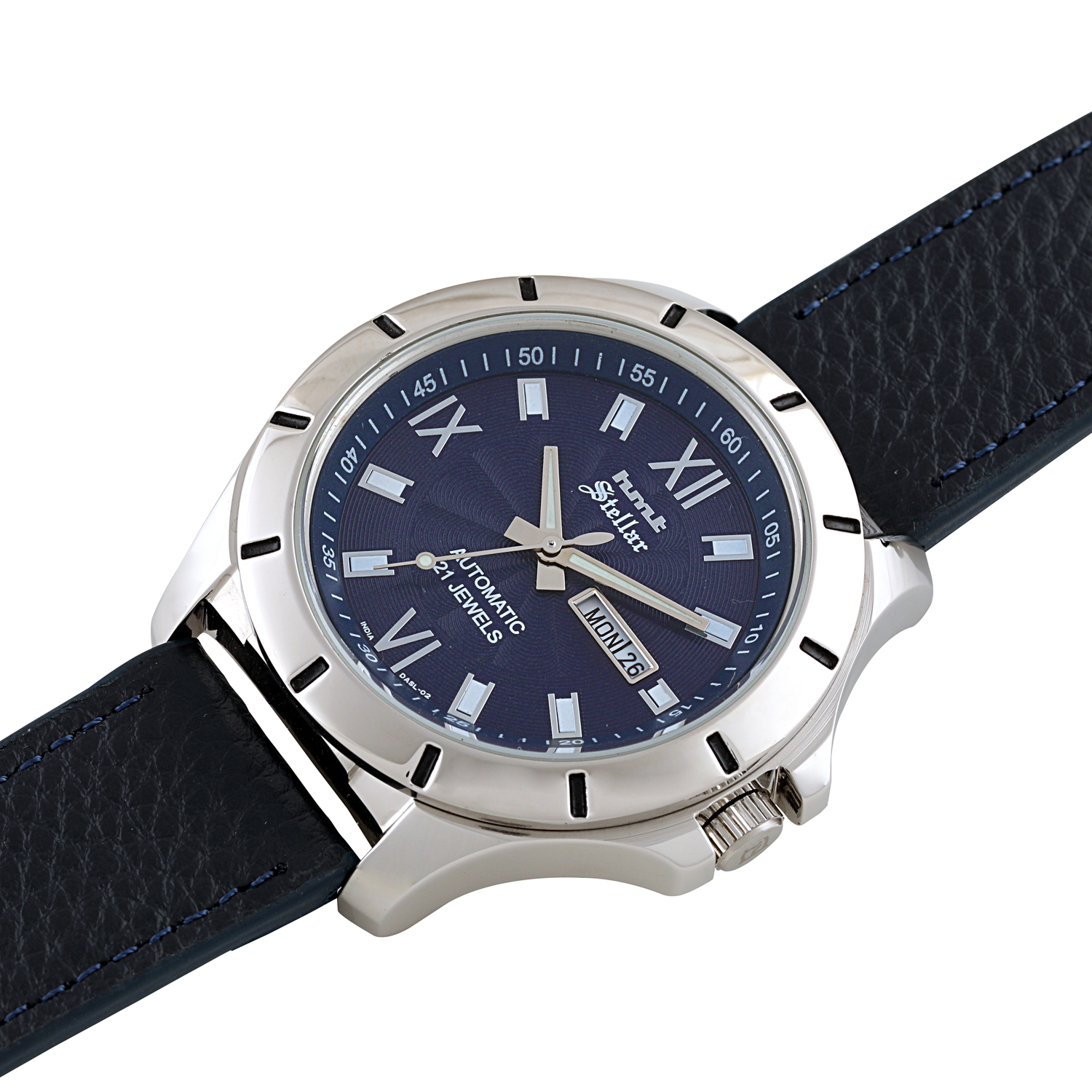
HMT Stellar DASL 02 BLUE
Paradoxically, HMT’s death sparked a revival. Vintage watch enthusiasts began hunting down Pilots and Janatas on eBay, refurbishing them, and showcasing them online. A new generation began to appreciate their mechanical soul.
Even today, owning an HMT is a love letter to Indian engineering, and a reminder that not all timekeeping is digital.
Final Words: A Personal Thanks
I still have my grandfather’s HMT Rajat. It doesn’t work perfectly—but that’s part of the magic. It’s not just a watch. It’s a time capsule, a tribute to a time when India built its dreams from scratch, one tick at a time.
If you’re an Indian collector, your journey begins not with a Rolex or a Nomos—but with a Janata, a Pilot, or maybe a Rajat. Check out the collection here.









 Mechanical Minutes