Unlock the fascinating world of horology with our Watch Basics series. From understanding different watch movements and materials to mastering the art of selecting the perfect timepiece, this category covers the essential knowledge every watch enthusiast needs. Whether you’re a beginner or a seasoned collector, these articles break down complex watch jargon and history into simple, digestible guides. Dive in to become a more informed and confident watch enthusiast.
Nothing kills the romance of a diver quicker than a dial that vanishes at dusk. Let’s make sure yours doesn’t.
What Exactly Is “Lume”?
Lume is any luminous compound applied to a watch’s hands, indices, or bezel so the wearer can read time in the dark. Modern formulas are either self-charging phosphorescent paints (e.g., Super-LumiNova, LumiBrite) or tiny sealed tritium gas tubes that glow continuously through beta decay.
Luminova Pigments via Wikimedia Commons (public domain)
A Two-Minute History Lesson
Radium paint (1910s-1960s) – radioactive, banned for safety.
Tritium paint (1960s-1990s) – less radioactive but still regulated.
ETA SA Manufacture Horlogère Suisse—better known as ETA—is arguably the most influential movement maker in modern horology. Whether you’re wearing a Tissot, Hamilton, Tudor, or an independent microbrand, there’s a good chance an ETA caliber beats inside. But what exactly are ETA movements? How did they become the go-to choice for brands across the price spectrum? And where does ETA stand today in a world of increasing in-house ambition?
Let’s take a closer look.
A Brief History of ETA
ETA’s story is deeply woven into the fabric of the Swiss watch industry. Established in 1856 as part of Eterna, the company was eventually folded into the Swatch Group during Switzerland’s consolidation efforts following the Quartz Crisis. Its mission: to supply Swiss watchmakers with high-quality, reliable mechanical and quartz movements.
ETA became the quiet powerhouse enabling the Swiss mechanical renaissance of the 1980s and 1990s. By producing robust calibers at scale, ETA allowed countless brands to focus on design and marketing rather than reinventing the mechanical wheel.
ETA Quartz Movement via Wikimedia Commons, licensed under CC0
Why ETA Movements Became So Ubiquitous
ETA’s dominance comes down to a few key factors:
Proven reliability – Movements like the ETA 2824-2 and Valjoux 7750 are known workhorses.
Ease of servicing – Watchmakers around the world are trained to repair ETA calibers.
Modular design – ETA movements are often modified or decorated to suit brand identities.
Scalability – From entry-level to high-end watches, ETA offers options across tiers.
These traits made ETA ideal for microbrands and big players alike. Even luxury brands like Omega used heavily modified ETA bases before transitioning to more proprietary calibers.
Major ETA Mechanical Movements
Here’s a breakdown of ETA’s most iconic mechanical movements still relevant today:
Caliber
Type
Frequency
Power Reserve
Notable Use Cases
2824-2
Automatic
28,800 bph
~38 hrs
Tissot, Hamilton, Steinhart
2892-A2
Automatic
28,800 bph
~42 hrs
Omega (as base), Sinn
7750
Chronograph
28,800 bph
~42 hrs
Sinn, Breitling, IWC
2801-2
Manual Wind
28,800 bph
~42 hrs
Nomos (modded), Hamilton Khaki
6497/6498
Manual Wind (pocket watch base)
18,000 bph
~46 hrs
Panerai, Unitas-style builds
ETA 2824-2 movement close-up – via Wikimedia Commons, licensed under CC BY-SA 3.0
The Controversy: Swatch Group’s Movement Restriction
In the early 2000s, ETA announced it would gradually stop supplying ebauches (movement kits) to non-Swatch Group brands. This decision, backed by the Swiss Competition Commission, forced many brands to either develop in-house calibers or source from alternatives like Sellita, STP, La Joux-Perret, and Miyota.
This pivot had two effects:
It catalyzed innovation. Brands like Oris and Tudor accelerated development of their own movements.
It increased appreciation for ETA calibers. Scarcity boosted the desirability of ETA-equipped models in enthusiast circles.
ETA vs Sellita: What’s the Difference?
Sellita, once a subcontractor for ETA, now produces “clones” of popular ETA movements—most famously the SW200, based on the 2824-2. While early Sellita runs had teething issues, current versions are largely on par in performance and are used by brands like Christopher Ward and Oris (before they went in-house).
If you’re considering a watch with either movement, here’s a quick comparison:
Feature
ETA 2824-2
Sellita SW200-1
Jewels
25
26
Reliability
Time-tested
Modern, well-regarded
Parts availability
Excellent
Excellent
Finishing
Varies by grade
Varies by brand spec
ETA Today: Still Relevant?
Despite the shift toward in-house, ETA remains a critical player in horology. Swatch Group continues to use and refine ETA calibers, and many brands still rely on their consistency. Newer movements like the C07.111 Powermatic 80 (based on the 2824-2 but with 80-hour reserve and plastic parts) show ETA’s commitment to evolving with the times—even if controversially.
For collectors, a watch with an ETA movement isn’t just a placeholder—it’s a nod to the engine that quietly powered a generation of Swiss watchmaking.
Final Thoughts
ETA movements may not carry the flash of a hand-finished in-house caliber, but they are the unsung heroes of modern watchmaking. Their longevity, serviceability, and history make them worthy of both daily wear and collector respect.
If you’re new to mechanical watches or hunting for value in the pre-owned market, a well-built ETA-powered piece is a smart starting point.
What makes a watch truly worth collecting? The dial might charm, and the case might shine—but it’s the movement underneath that tells the real story. For collectors, the caliber powering the watch isn’t just a mechanism; it’s the soul of the timepiece.
In today’s post, I will spotlight 10 watch movements that every modern collector should know—grouped not by price or brand, but by their real-world relevance, horological significance, and mechanical merit. From reliable entry-level staples to movements that define luxury watchmaking, these are the engines shaping the wristwatch world in 2025.
The Everyday Legends
Affordable, accessible, and the backbone of the enthusiast community
1. Miyota 9015 – The Microbrand Powerhouse
Techné Harrier Ref. 363 (Miyota 9015), versions 132 & 031, via Wikimedia Commons, licensed under CC BY-SA 4.0.
Used in: Zelos, Baltic, Lorier, Laco Specs: Automatic, 28,800 vph, 42-hour power reserve, hacking & hand-winding
The Miyota 9015 is the unsung hero of the modern microbrand scene. Thin, reliable, and cost-effective, it’s a Swiss ETA alternative made in Japan—perfect for slim, everyday automatics. Its high beat rate gives a satisfying sweep, and it’s used in watches often priced under $1,000.
Used in: Seiko 5, Invicta, Vostok Europe, many modded builds Specs: Automatic, 21,600 vph, 41-hour power reserve, hacking
One of the most mass-produced movements in the world, the NH35 is beloved by modders and budget brands alike. It’s durable, serviceable, and works forever—literally, some watches run for a decade with no intervention. What it lacks in finesse, it makes up for in rugged character.
3. ETA 2824-2 – The Swiss Benchmark
ETA 2824-2 Automatic Movement, via Wikimedia Commons, licensed under CC BY-SA 3.0 DE.
Used in: Hamilton, Tissot, Steinhart, Sinn Specs: Automatic, 28,800 vph, 38-hour power reserve
Even with limited availability, the ETA 2824-2 is still one of the most respected entry-level Swiss movements. Known for its smooth sweep, compact build, and high accuracy, it’s a trusted choice in field watches, divers, and affordable luxury pieces alike.
4. Sellita SW200-1 – The Reliable Stand-In
Christopher Ward C8 Power Reserve Chronometer featuring the Sellita SW200-1 movement, via Wikimedia Commons, licensed under CC BY 2.0.
Used in: Sinn, Oris, Christopher Ward, Formex Specs: Automatic, 28,800 vph, 38-hour power reserve
When ETA restricted movement supply, Sellita became the savior for many independent brands. The SW200-1 is an ETA 2824 clone that’s been steadily improved. Today, it’s practically indistinguishable in terms of performance, and widely adopted in rugged tool watches under $2K.
Chronograph Powerhouses
Still the heart of the modern chronograph scene
5. Valjoux 7750 – The Chrono Classic
Valjoux 7750 Movement in Franchi Menotti Automatic Chronograph, via Wikimedia Commons, licensed under CC BY-SA 4.0.
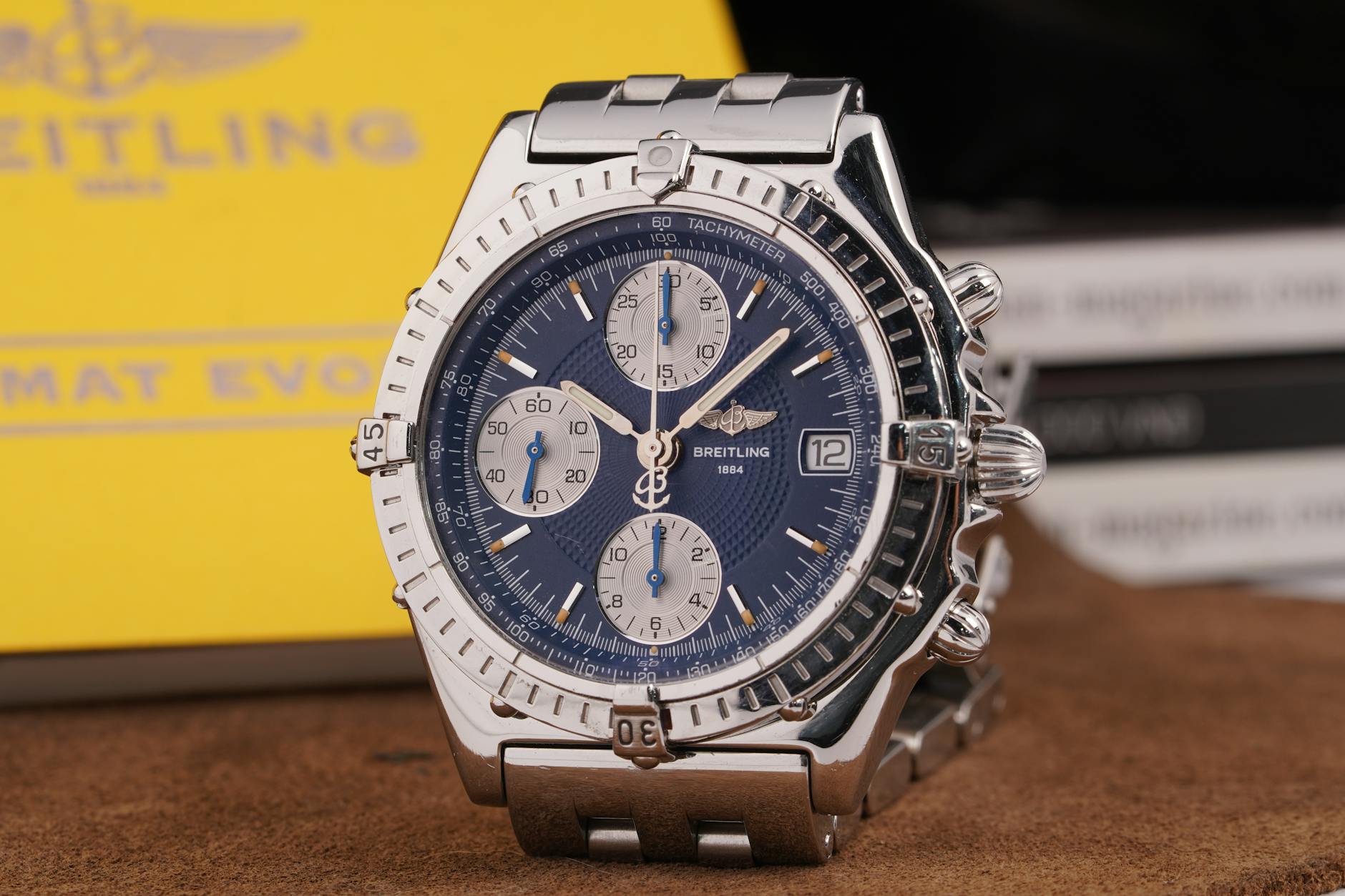
Used in: Sinn 103, Hamilton Khaki Chronograph, Fortis Specs: Automatic Chronograph, 28,800 vph, 42-hour power reserve
The Valjoux 7750 is the most popular automatic chronograph movement in the world. With its distinctive rotor wobble and loud ticking, it’s not subtle—but it is reliable. Collectors appreciate it for its rich history and continued use in rugged, aviation-style chronographs.
Innovators & Icons
Where engineering meets elegance
6. Omega Co-Axial Caliber 8900 – The Escapement Revolution
Omega Seamaster Planet Ocean Ref. 215.30.44.21.03.001 featuring the Co-Axial Master Chronometer Caliber 8900, via Wikimedia Commons, licensed under CC BY-SA 4.0.
Used in: Seamaster Diver 300M, Aqua Terra, Globemaster Specs: Automatic, 25,200 vph, 60-hour power reserve, METAS-certified
This is the movement that set Omega apart in modern watchmaking. With George Daniels’ co-axial escapement and anti-magnetic silicon parts, the Caliber 8900 offers incredible long-term stability. Certified by METAS, it exceeds COSC standards and delivers next-level performance for under $10K.
7. Grand Seiko Spring Drive 9R65 – Glide into Precision
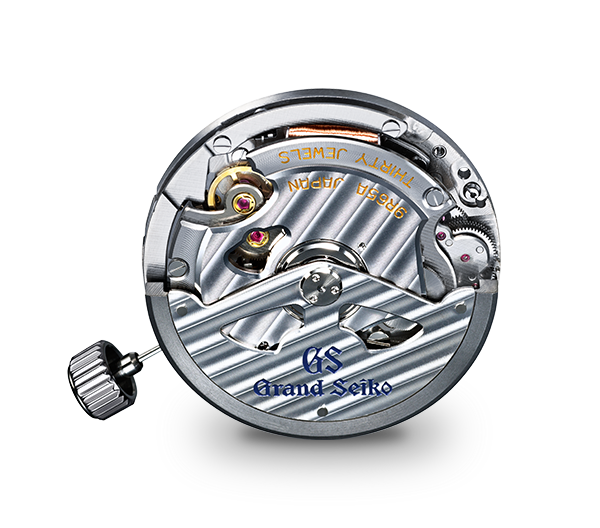
Used in: SBGA211 “Snowflake,” SBGA413 “Cherry Blossom” Specs: Hybrid (mechanical + quartz), ±1s/day, 72-hour power reserve
The 9R65 is where mechanical craftsmanship meets quartz accuracy. Exclusive to Grand Seiko, it produces the smoothest seconds hand sweep in the business—no ticking, just pure glide. For collectors who love tradition but crave precision, this movement is a technical marvel.
8. Jaeger-LeCoultre Caliber 899 – The Elegant Performer
Jaeger-LeCoultre Master Control Hometime Ref. 147.2.05.S, via Wikimedia Commons, licensed under CC BY-SA 4.0.
Used in: JLC Master Control, Polaris Specs: Automatic, 28,800 vph, 70-hour power reserve
JLC is often behind the scenes, making movements for other big names. But the Caliber 899 proves they deserve the spotlight. Thin, beautifully decorated, and highly reliable, it’s a collector’s favorite in refined dress watches that don’t sacrifice engineering for elegance.
9. Patek Philippe Caliber 324 S C – Haute Horlogerie, Refined
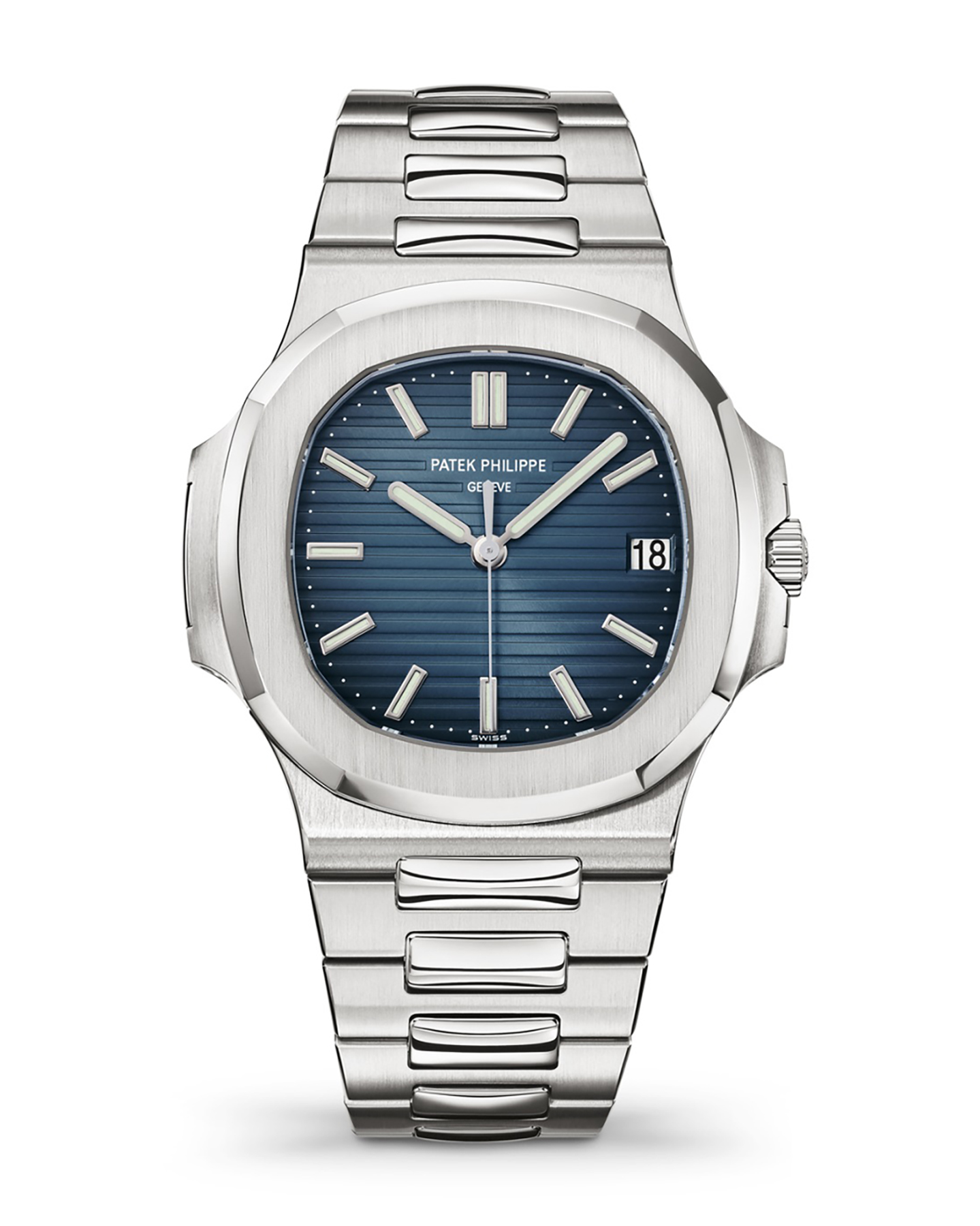
Iconic Patek Philippe Nautilus Ref. 5711/1A-010 featuring Caliber 324 S C, via Wikimedia Commons, licensed under CC BY-SA 4.0.
Used in: Calatrava, Nautilus (earlier references) Specs: Automatic, 28,800 vph, 45-hour power reserve
One of Patek Philippe’s signature movements, the 324 S C is known for exquisite finishing, tight tolerances, and smooth winding. It’s found in some of the most collectible watches ever made, and while not as complicated as a tourbillon, its refinement is second to none.
10. Rolex Caliber 3235 – The Modern Rolex Workhorse
Rolex Sea-Dweller, featuring Caliber 3235, by John Torcasio, CC BY-SA 3.0, via Wikimedia Commons
Used in: Rolex Datejust 41, Submariner Date, Sea-Dweller, Yacht-Master Specs: Automatic, 28,800 vph, 70-hour power reserve
Rolex’s flagship automatic movement, the Caliber 3235, powers most of their modern lineup and represents a significant evolution from the long-serving 3135. It features the proprietary Chronergy escapement—optimized for efficiency—and a longer mainspring, resulting in a robust 70-hour reserve. With a Parachrom hairspring, Paraflex shock protection, and Superlative Chronometer accuracy, it blends daily reliability with technical refinement. While not haute horology, it’s one of the most battle-tested and serviceable modern calibers in high-end watchmaking, built for longevity and precision.
Final Thoughts: Know What Drives Your Watch
Behind every great watch is a great movement. Whether you’re exploring microbrands, investing in your first Swiss automatic, or dreaming of your next haute horlogerie piece, understanding the engine inside your timepiece gives your collection meaning and depth.
These 10 movements aren’t just parts—they’re proof that watchmaking is alive, evolving, and accessible at every level of collecting.
Stay curious. Stay passionate. And as always—stay ticking.
As soon as you start surfing Chrono24, Bob’s Watches, or binge-watching Teddy Baldassarre, one thing jumps out: watches do much more than tell time. From timing a lap to summoning the phases of the moon, each “function”—or complication—adds engineering flair, price, and bragging rights.
Below is a lightning-round tour of ten of the most talked-about functions. For each one you’ll see how it works, typical price entry points, an iconic reference, and an affordable gateway piece (when one exists—some complications stay stubbornly expensive).
Geek fact: Rolex’s 1945 Datejust was the first self-winding wristwatch with an instantaneous date jump; the “quick-set” feature didn’t appear until 1977.
Geek fact: Vertical-clutch chronographs (e.g., Seiko 6139, Zenith El Primero) let the seconds hand run continuously with virtually no amplitude loss—perfect for OCD accuracy nerds.
Geek fact: The Rolex 6542 “Pepsi” (1954) was developed for Pan Am pilots; its original Bakelite bezel was so fragile many were swapped for aluminum—surviving Bakelite models fetch six-figure sums.
Geek fact: A 135-tooth moon-phase disk (e.g., H. Moser Endeavour) drifts by one day every 122 years—over 4 × more accurate than the traditional 59-tooth setup.
6. Tachymeter (w/ Chronograph)
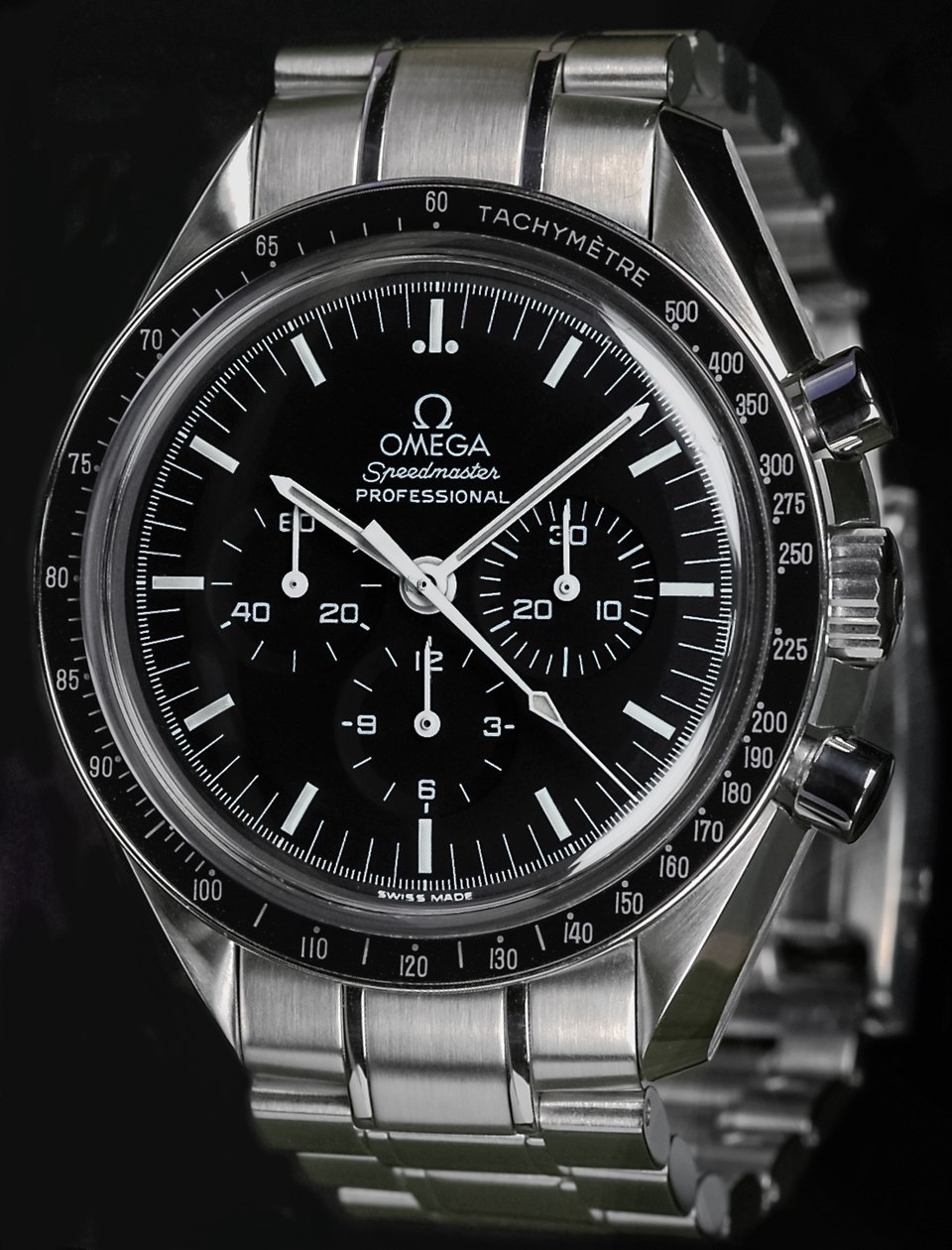
Omega Speedmaster Professional, via Wikimedia Commons, released into the public domain by the author, Torsten Bolten.
Why it matters: Converts elapsed time into speed or rate.
Geek fact: You can flip the script—time one unit of production (say, wrapping a burrito) and the tachy scale shows burritos per hour. Fast-food nerd badge unlocked.
7. Annual Calendar
Jaeger-LeCoultre Master Calendar in Stainless Steel (Ref. Q151842A), via Wikimedia Commons, licensed under CC BY-SA 4.0.
Why it matters: Adjust once a year, not every month.
Geek fact: Patek Philippe created the complication only in 1996 (Ref 5035); they patented the three-cam mechanism that became the modern template.
8. Perpetual Calendar
Audemars Piguet Royal Oak Perpetual Calendar in Gold, mid-1990s, via Wikimedia Commons, licensed under CC BY-SA 4.0.
Why it matters: No correction until 2100.
Geek fact: Patek’s 1925 Ref 97975 was the first wrist-perpetual; its 48-month “leap-year cam” makes just one full rotation every 4 years.
9. Flyback Chronograph
Breguet Watch, via Wikimedia Commons, licensed under CC BY-SA 3.0.
Why it matters: Reset & restart with one push—ideal for navigation legs.
Geek fact: The Breguet Type 20 spec demanded the movement reset within 0.2 seconds—a quality-control test still enforced on modern Type XX models.
10. Tourbillon
Greubel Forsey Tourbillon 24 Secondes Incliné, via Wikimedia Commons, licensed under CC BY-SA 3.0.
Geek fact: The original 1801 Breguet patent was for pocket watches; multi-axis tourbillons (e.g., Jaeger-LeCoultre Gyrotourbillon) compound the effect by spinning on two or three perpendicular axes.
Why it matters: Rotating escapement eye-candy.
Wrapping Up
Complications add personality and engineering theater. Whether you’re timing a marathon or admiring a miniature lunar cycle, knowing why a function exists helps you decide if the extra cost (and service complexity) is worth it.
Stay ticking!
Typical street prices for stainless-steel pieces, new unless noted. Prices vary significantly based on brand, movement type, materials, and market demand. ↩︎
Cams in watchmaking are specially shaped mechanical components that convert rotary motion into linear or intermittent movement. They are a critical part of many watch complications, particularly chronographs, where they help coordinate the start, stop, and reset actions. ↩︎
Share & Subscribe
If this deep dive made you look at your wrist differently, share the post and subscribe to Mechanical Minutes for more no‑nonsense horology every week.
Whether you’re buying a desk-diver or a saturation-ready diver’s tool, that little “50 m,” “10 bar,” or “300 m” on the dial is easy to misread. Below is a guide that demystifies laboratory ratings, explains why depth ≠ real-world use, and shows exactly which activities each rating can (and can’t) handle.
1. How Watchmakers Test Water Resistance
Term on Watch
What It Actually Refers To
Typical Test Method
Meters (m)
Static depth in still, room-temperature water.
Pressure chamber gradually pressurized to equivalent depth, held for ~10 min.
Bar / Atmospheres (ATM)
1 bar ≈ average sea-level atmospheric pressure (14.5 psi).
Same chamber test; 10 bar = 100 m, 20 bar = 200 m, etc.
Key point: Tests are static—the watch simply sits there in a chamber. Real-world activities (swimming strokes, faucet jets, sudden temperature swings) create dynamic pressure spikes far higher than the label suggests.
2. Depth Ratings vs. Real-Life Water Sports
Rating
Casual Hand-Washing & Rain
Shower
Swimming Pool
Snorkeling, Kayaking, Water-Skiing
Recreational Scuba (≤40 m)
30 m / 3 bar
✅
⚠️ Steam & soap can sneak past gaskets
❌
❌
❌
50 m / 5 bar
✅
✅ Avoid hot sprays
✅ Easy laps ⚠️ Vigorous laps
❌
❌
100 m / 10 bar
✅
✅
✅ Vigorous laps
✅ Snorkeling, kayaking, water-skiing
⚠️ Risky
200 m / 20 bar
✅
✅
✅
✅
✅ Recreational scuba
300 m+ / ISO 6425 Diver’s
✅
✅
✅
✅
✅ All air-tank diving
*Why “⚠️” at 100 m? Laboratory 10 bar tests don’t simulate the rapid pressure changes, water impact, and prolonged immersion of scuba. Unless your watch also states “Diver’s 100 m” (ISO 6425), stick to snorkeling or shallower fun.
3. Why 100 m Isn’t Automatically “Scuba-Safe”
Dynamic pressure spikes – A freestyle arm pull can momentarily multiply pressure by 3-5×.
Thermal shock – Jumping from a hot deck into 20 °C water shrinks seals.
Long dwell time – A 40-minute dive keeps gaskets under load far longer than a 10-minute lab test.
ISO 22810 vs. ISO 6425 – Most watches only meet the general-purpose ISO 22810 guideline (formerly “Water-Resistant”). ISO 6425 adds vibration, salt-fog, shock, temperature-cycle, and 25 % extra pressure margin tests—then allows the “Diver’s” label.
ISO 6425 certified; readable in dark, unidirectional bezel, antimagnetic, etc.
Open-water diving, PADI class watch.
“Diver’s 300 m with HeV”
Built for saturation work; helium-escape valve.
Commercial bell diving, mixed gas, professional tool watch realm.
5. Care & Maintenance Tips
Rinse after salt or chlorine – Prevent gasket-eating crystal deposits.
Avoid hot tubs – Heat + chemicals accelerate seal fatigue.
Service the seals – Manufacturers recommend pressure tests every 1-2 years if you actually swim.
Crown discipline – Screw it down firmly before touching water, never under it.
Don’t test fate – If the watch is sentimental or vintage, treat the rating as historical fiction.
6. Myth-Busting Quick Hits
“My 100 m watch survived a 50 m dive, so it’s fine.” Maybe today—gaskets age.
“30 m watches leak only if defective.” Regular shower heat alone can defeat them.
“Helium valves are marketing fluff.” Not if you live in a saturation chamber for days; otherwise, yes, mostly bragging rights.
8. Bottom Line
Water-resistance markings are guides, not guarantees. Treat a 50 m watch as a pool buddy, a 100 m as a snorkel pal, and a Diver’s 200 m as your scuba wingman. Anything less? Keep it high and dry—or at least above the splash line.
Stay ticking!
Share & Subscribe
If this deep dive made you look at your wrist differently, share the post and subscribe to Mechanical Minutes for more no‑nonsense horology every week.
A mechanical watch stores energy in its mainspring. Keeping that spring in its ideal tension “sweet spot” (roughly the first 70-80 % of its power reserve) lets the balance wheel swing with consistent amplitude, which is what keeps time reliably. Winding correctly therefore isn’t just about avoiding damage—it’s about day-to-day accuracy.
1. Know What’s on Your Wrist
Movement type
Typical power-reserve (hrs)
Clutch to stop overwind?
Best practice
Manual-wind (e.g., ETA 6497)
38–50
No – you can force breakages
Wind once a day at the same time
Modern hand-wind (e.g., Peseux 7001)
42–55
No
Wind until resistance, stop
Automatic (e.g., ETA 2824, Miyota 9000)
38–70
Yes – slipping bridle
30–40 crown turns after a full stop, then rely on wrist wear
2. When Should You Wind?
Manual watches: every morning before you strap it on. A daily routine prevents the amplitude dip that creeps in as the spring relaxes.
Automatics you don’t wear daily: give them a 30-40-turn “top-off” once a week or whenever they’ve stopped. Doing so resets the power reserve and the lubricants inside stay evenly distributed.
3. The Safe Winding Routine (Step-by-Step)
Take the watch off your wrist – avoids lateral pressure on the stem.
Unscrew the crown (if it’s a screw-down) to position 0.
Turn the crown clockwise in smooth, quarter-turn flicks.
Manual: expect 20-40 turns; resistance will grow steadily.
Automatic: expect a soft “whir” and little resistance at first.
Stop the instant you feel firm resistance – that is the spring at full tension. For automatics the bridle will slip silently beyond this point, but continuing serves no purpose.
Push / screw the crown back in to maintain water-resistance.
4. “Overwinding” — Myth vs Reality
Manual: Forcing past the stop can shear the arbor or snap the mainspring. That’s true overwinding.
Automatic: The slipping bridle means you cannot overwind in normal use. You can still break the stem or crown if you crank excessively hard.
Rule of thumb: Resistance = Stop. Any grinding, squeaking or sudden looseness warrants a watchmaker’s inspection.
5. Accuracy Tips
Stay topped-up: A fuller mainspring keeps the balance amplitude steadier, improving rate stability by 3–6 s/day on many calibres.
Avoid partial winds: Chasing a “few quick turns” multiple times a day creates uneven torque curves. One full wind is better than three half-winds.
Consistent posture: Wind at roughly the same time and position (crown pointing down) to minimise lubricant migration.
Service on schedule: Dried or displaced lubricants are the #1 culprit for erratic amplitude, not overwinding.
6. Quick-fire FAQ
Can I wind backward? Not needed. Most modern movements disengage in reverse but some vintage pieces don’t—avoid unnecessary wear.
How many turns is “full”? Your manual is king, but 25–35 is common. Stop at resistance.
Daily winding hurts the crown threads, right? Not if you’re gentle and keep the tube gasket lubricated at each service interval.
Should I buy a winder? Only if you have many automatics with complications (perpetual calendar, etc.). Otherwise, a manual top-off is simpler.
Take-away
Winding a mechanical watch correctly boils down to three habits:
Off-wrist, smooth clockwise turns.
Stop at first firm resistance.
Keep a consistent daily routine.
Master those, and you’ll protect your mainspring, keep time accurately, and enjoy that satisfying crown-click for decades to come.
Watch & Learn — Helpful YouTube Walk-throughs
1. How to wind an automatic watch
2. Automatic Movement Best Practices. Proper Winding, Helicopter Rotor, Movement Longevity.
Stay ticking!
Share & Subscribe
If this deep dive made you look at your wrist differently, share the post and subscribe to Mechanical Minutes for more no‑nonsense horology every week.
A natural follow‑up toWatch Movements 101 Pt 1—this guide steps outside the movement to explore every visible (and a few hidden) components that make your watch look, feel, and perform the way it does.
1‑Minute Recap of Pt 1
In Watch Movements 101Pt 1 we dug into the engine room—mainspring, gear train, escapement, balance wheel, and fine regulation. Today we zoom out to the chassis and bodywork that protect and showcase that engine:
Interface elements (dial, hands, lume, pushers, strap/bracelet & clasps)
Supporting cast (jewels, rotor, bridges & plates—how they tie into the case)
Goal: After this 5‑7 minute read, you’ll glance at a watch and instantly recognize why every detail exists, not just what it is.
2. Surface Essentials—What You Touch & See First
2.1 Crystal
A watch crystal is the transparent shield that keeps dust, moisture, and a life of knocks away from the dial. The scratch resistance of watch crystal is measured using the Mohs scale, with 1 being the softest (for example, talc, which can be easily scratched using a fingernail) to the highest being 10 (diamond). Commonly used materials: • Sapphire (9 Mohs): Almost scratch‑proof; premium divers and luxury pieces. • Mineral glass (≈5 Mohs): Hardened but affordable; easy to replace. • Acrylic (≈3 Mohs): Vintage charm, cheap, can be polished; shatters less dangerously (no prickly shattered pieces).
The crown is the command centre: wind, set, hack, or change modes. Screw‑down designs and twin gaskets safeguard water resistance. Chronographs add pushers—plunger buttons—usually at 2 & 4 o’clock. Photo by John Torcasio on Unsplash – Free to use.
2.4 Lugs & Spring Bars
Lugs are the horns that accept spring bars, letting straps swap easily. Shorter, downward‑curving lugs wear smaller; drilled lug holes speed up strap changes.
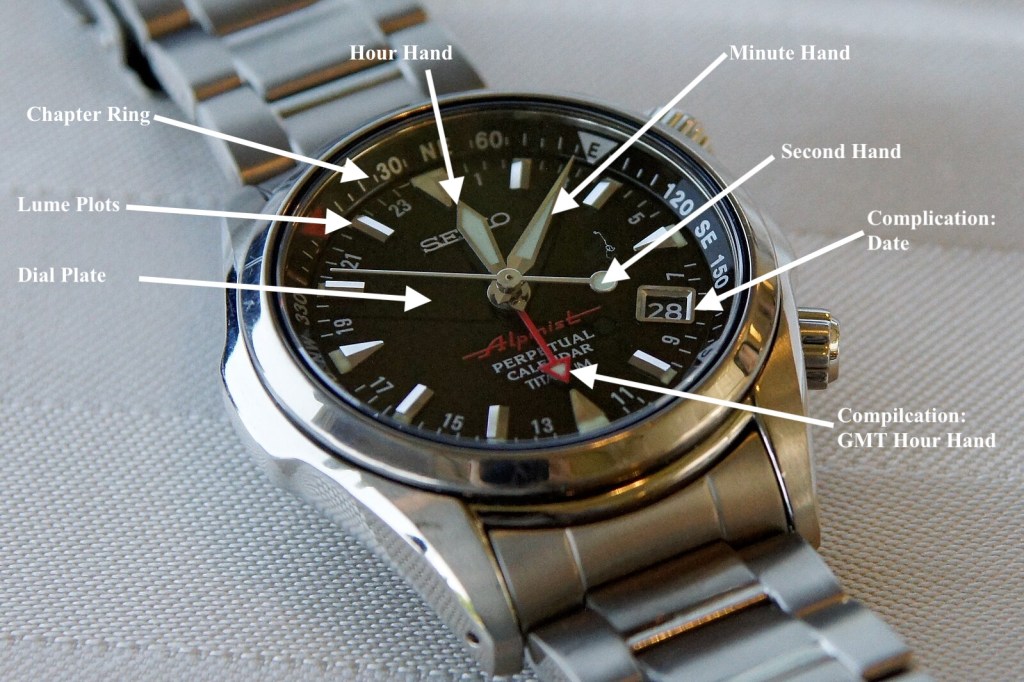
The dial is the face of the watch, where time is displayed and complications are showcased. It serves as the primary interface between the watch and its wearer, combining both function and style.
Dial Plate: The main surface of the dial, typically made from brass or German silver, then coated, printed, or enamelled for color and texture. This is where the hour markers, brand logo, and other visual elements are applied.
Hands: The moving pointers that indicate hours, minutes, and seconds. Often made from lightweight metal, they come in various shapes, from sword hands to dauphine or skeletonized designs.
Rehaut/Chapter Ring: The angled ring surrounding the dial, often used for minute tracks or depth markers. It provides a sense of depth to the watch and can be engraved or printed with additional markings. Read more here.
Lume Plots: Small, often raised dots or lines filled with luminous material like Super-LumiNova, designed to glow in the dark for improved legibility.
Complications: Additional functions beyond just displaying hours and minutes. Common examples include date windows, chronograph sub-dials, moon phase indicators, and power reserve meters.
5. Under‑The‑Hood Add‑Ons—Beyond the “101” Movement
While Movements 101 covered power, transmission, and regulation, three supporting parts deserve a cameo here:
Rotor (automatic only): A semicircular weight that swings 360°, winding the mainspring in one or two directions. Adds about 1 mm height but saves you daily hand winding.
Bridges & Plates: The movement’s “skeleton”—bridges hold gears; the main‑plate anchors everything. Haute horlogerie brands skeletonise bridges for art and weight savings. Read more here.
Shock Protection (Incabloc/KIF): Spring‑mounted jewel settings let the balance staff flex during impact, boosting durability. Read more here.
6. Straps, Bracelets & Closures
Bracelet (metal): Links + solid end links (SELs) + clasp. Look for screws, not friction pins.
Strap (leather, rubber, fabric): Quick‑release spring bars are a boon for daily wearers.
Hot‑take: A $20 well‑matched NATO strap can elevate a $500 micro‑brand better than a rattly stock bracelet.
7. Bringing It All Together—Why This Matters
Understanding the outer anatomy lets you:
Diagnose: If your watch crystal fogs up, it’s not necessarily a movement issue—it’s more likely a gasket failure allowing moisture in. Knowing this saves you from unnecessary panic or costly movement repairs.
Buy smarter: When buying a watch, it’s crucial to understand why certain features (like a ceramic bezel or a sapphire caseback) increase the price. It’s not just about aesthetics; these materials offer superior durability and scratch resistance, justifying the investment.
Maintain: A gritty feeling when winding or setting your watch could indicate dirt or wear inside the screw-down crown tube. Getting it serviced early prevents water ingress, which could otherwise damage the movement you learned about earlier.
Your watch isn’t a black box; it’s an ecosystem where every screw and gasket plays its part. Recognise the synergy, and routine time‑checks become moments of appreciation.
Further Learning
🎥 Video pick: “A Complete Guide to the Parts of a Watch”
Just like the 101 part 1, I’m sharing a video to that helps you visualize the components that you just reviewed.
Share & Subscribe
If this deep dive made you look at your wrist differently, share the post and subscribe to Mechanical Minutes for more no‑nonsense horology every week.
Ask for a time-grapher print-out when buying vintage; amplitude & beat-error reveal health better than dial cosmetics.
Service history matters more than brand hype for long-term reliability.
📹 Quick Watch: Understanding Watch Anatomy
More of a visual learner? I get it. This quick watch (pun intended) covers the core concepts from this post, perfect for absorbing the details in a few minutes.
A watch’s “movement” is its engine—the mechanism that turns energy into steadily advancing hands. Choosing a movement type affects maintenance, accuracy, cost, and even how emotionally connected you’ll feel to the piece. Let’s break down the three classics you’ll see in most spec sheets.
How it works: A tiny battery sends electricity through a quartz crystal. The crystal vibrates at 32,768 Hz; an integrated circuit counts those vibrations and drives an ultra‑efficient step‑per‑second motor.
Pros
Top‑tier accuracy: You’ll lose or gain only a few seconds a month.
Low maintenance: Swap a $5 battery every couple of years—done.
Slim & affordable: Fewer gears mean thinner cases and lower prices.
Cons
Disposable vibe: Many quartz modules are cheaper to replace than repair.
Less romance: No sweeping seconds hand, no visible mechanics for enthusiasts to drool over (unless you spring for high‑end Spring Drive or thermo‑compensated quartz).
Best for: Anyone who wants grab‑and‑go reliability, travel watches, tool watches, or a low‑cost entry to the hobby.
How it works: You turn the crown; that winds a mainspring. As the spring unwinds, gears and an escapement regulate the release of energy, advancing the hands six or eight times per second.
Pros
Tactile ritual: Daily winding builds a personal connection.
Display‑case sex appeal: Visible gears and a smooth(ish) sweep.
No batteries to die mid‑meeting.
Cons
Less accurate: Expect ±20‑30 sec/day unless it’s COSC‑certified.
Needs love: A full strip‑down and oiling every 5–7 years keeps it healthy.
Power‑reserve anxiety: Forget to wind and it stops.
Best for: Purists who value heritage and don’t mind a quick morning wind‑up.
How it works: A pivoting metal rotor spins with wrist movement, winding the mainspring automatically. Inside, it’s 95 % the same as a manual—plus the rotor and a reversing gear train.
Pros
Set it and wear it: Your motion keeps it running.
Same visceral sweep and craftsmanship as manual.
Many options under $500 thanks to workhorse movements like Seiko NH35, Miyota 8xxx, or ETA 2824 clones.
Cons
Still mechanical accuracy limits: ±15‑25 sec/day on average.
Thickness & cost: Rotor stack adds height and complexity.
Not truly grab‑and‑go: If it sits in a drawer for a couple of days, you’ll reset time and date.
Best for: Daily wearers who crave mechanical soul without daily winding.
Which One Should You Buy?
First watch / everyday beater? Grab a reliable quartz (e.g., Citizen Eco‑Drive, Casio G‑Shock). Zero fuss.
Looking for horological art? Manual‑wind dress watches like the Hamilton Khaki Mechanical or a vintage Omega Cal. 30T2 whisper “watch‑nerd” without words.
One‑watch collection? A robust automatic diver (think Seiko 5 SKX‑style or Formex Essence) balances romance and practicality.
Final Thoughts (and a 30‑Second Nerd Flex)
Quartz watches didn’t just disrupt the industry – they redefined it. With their unmatched accuracy, low maintenance, and rugged build, they became the default choice for anyone who valued function over flair. That’s why Bill Gates wears a $50 Casio – it’s a nod to practicality in a world obsessed with status. On the flip side, the resurgence of mechanical watches proves the art of watchmaking isn’t going anywhere. It’s a testament to what coils, gears, and balance springs can achieve when engineering meets artistry.
Know the difference, appreciate the craft, and choose what ticks for you.