Category: Watch Maintenance

  • How to Prevent Watch Scratches

    How to Prevent Watch Scratches

    How I Learned to Prevent Watch Scratches

    When I first got my Sinn 104, I treated it like treasure. I’d gently wipe it down at the end of the day, admire the crisp dial under a lamp, and be extra careful when putting it on. Fast forward a few months—and the clasp looked like it had gone to war. Deep, scattered desk dive marks everywhere.

    It didn’t take long to figure out what was happening: long hours at my desk, wrists brushing against the cold metal edge of my MacBook, and absolutely no wrist protection. The result? A scratched clasp and a lesson in what not to do with your watch.

    If you’ve ever looked down and winced at fresh scratches, here’s a rundown of what really causes them—and how to stop the damage before it starts.

    Close-up of the back of an Omega Speedmaster Professional watch, displaying its engraved logo and clasp.
    Scratched clasp on Omega Speedmaster, via Wkimedia Commons, CC BY-SA 4.0

    1. Desk Diving: The Collector’s Common Enemy

    This is where it all began for me. The constant contact between my Sinn’s stainless steel clasp and the aluminum edge of my MacBook created a perfect storm of micro-abrasions.

    How to Prevent It:

    • Use a desk pad or leather mat—it adds cushioning and elevates your wrist above hard edges.
    • Wear long sleeves or slide your watch further up your wrist.
    • Switch to a fabric or rubber strap if you type a lot.
    • Work off an external keyboard if you use a laptop.

    2. Strap Swaps That Go Wrong

    I love switching straps, but in the early days, I wasn’t using the right tools. One slip of the spring bar tool is all it takes to leave a mark on your lugs or case.

    Prevention Tips:

    • Use a proper spring bar tool—not a paperclip or the tip of a knife.
    • Work on a padded surface.
    • Add masking tape around the lugs for extra protection.
    • Invest in quick-release straps for fuss-free changes.

    3. Accidental Knocks and Bumps

    Sometimes the damage isn’t immediate—it’s a slow accumulation from daily interactions. Door frames, countertops, subway poles—if you’re not careful, polished cases and bezels take the hit.

    Tips:

    • Be mindful in crowded spaces.
    • Wear smaller-cased watches in tight quarters or during errands.
    • Avoid stacking jewelry on the same wrist as your watch.

    4. Poor Storage Choices

    When I first started collecting, I’d toss my watch into a catch-all drawer at the end of the day. Big mistake. Crystals rubbing against casebacks, steel on steel—not good.

    Storage Upgrades:

    • Use a watch roll, tray, or travel pouch with dividers.
    • Never store watches crystal-down.
    • For travel, go with a dedicated zippered case that holds each watch separately.

    5. Shirt Cuffs and Micro-Abrasions

    You’d be surprised how much damage your clothes can do. Tight shirt cuffs rubbing against lugs all day can dull polished surfaces over time.

    Fixes:

    • Choose soft or looser cuffs when wearing polished watches.
    • Wipe down your watch regularly—grit and dust can cause hidden scratches when rubbed in.

    6. Material Matters (Some Wear Harder Than Others)

    Here’s a quick guide I’ve picked up through personal experience and collector circles:

    MaterialScratch Resistance
    Sapphire crystalExcellent
    Ceramic bezels/casesVery high (but can shatter)
    Tegimented steel (like Sinn’s)Much better than standard 316L
    TitaniumLight but scratch-prone
    Acrylic crystalsScratch easily—but polishable

    That said, even Sinn’s hardened steel can’t save you from daily abuse if you’re not mindful. Ask my clasp.


    Closing Thoughts: Embrace Patina, But Minimize Regret

    Scratches tell stories, but not every mark is worth earning. My Sinn taught me that prevention isn’t about babying your watch—it’s about forming smarter habits. Today, I keep a leather desk mat at work, swap to NATO straps on laptop-heavy days, and store my watches properly. It’s made a world of difference.

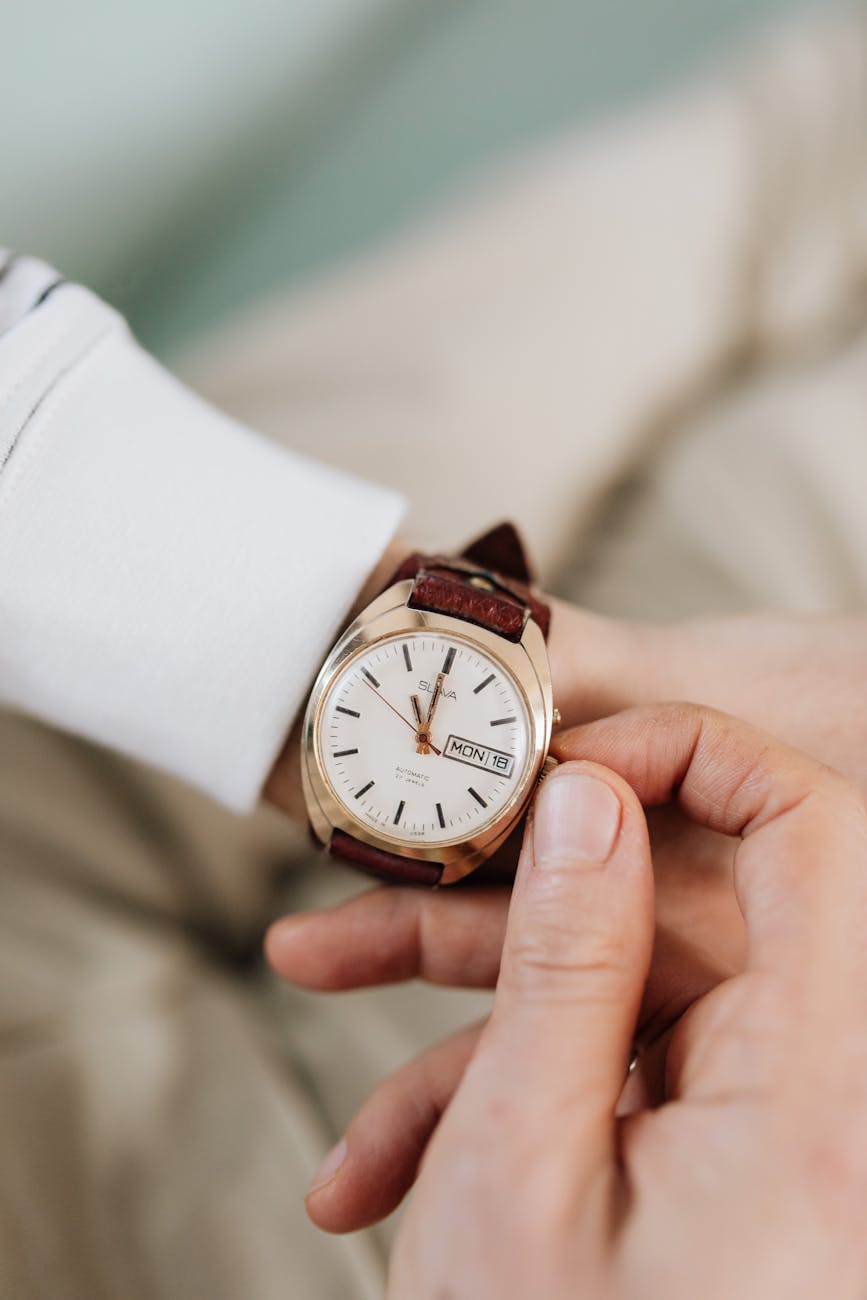
  • 10 Watch Maintenance Mistakes to Avoid

    10 Watch Maintenance Mistakes to Avoid

    A quick, 5-minute read to keep your timepiece ticking for decades.


    1. Skipping the Post-Swim Rinse

    ❌ Mistake: Assuming “water-resistant” means “chlorine-proof.”

    ⚙️ Fix: After every swim—pool or ocean—rinse under cool tap water, pat dry, then air-dry crown-down. Salt and chemicals eat gaskets fast.


    2. Setting the Date Between 9 p.m. – 3 a.m.

    ❌ Mistake: Adjusting the date while the date-change gears are engaged.

    ⚙️ Fix: Pull the crown to time-setting, move hands past 3 a.m., then set the date. Zero stripped gears, zero drama.


    3. Over-Winding Manuals & Under-Winding Autos

    ❌ Mistake: Cranking a manual until it squeaks—or never giving an automatic its 30–40 crown turns after downtime.

    ⚙️ Fix: Stop winding manuals the moment you feel resistance. For autos at rest, give 30 smooth crown turns before wearing.


    4. Ignoring Yearly Pressure Tests on “Water-Resistant” Quartz

    ❌ Mistake: Believing quartz gaskets last forever.

    ⚙️ Fix: Pressure-test every 12–18 months if you shower or swim with it. A $30 test beats a $300 movement swap.


    5. Leaving Crowns or Pushers Un-Screwed

    ❌ Mistake: Forgetting to screw-down the crown, or pressing chrono buttons underwater.

    ⚙️ Fix: Ritualize it—wind, set, screw-down. Keep hands off pushers unless the watch is clearly rated for it (200 m+).


    6. Storing on a Hot Dashboard or in Direct Sun

    ❌ Mistake: Heat bakes lubricants and fades dials.

    ⚙️ Fix: Use a shaded drawer or travel roll. In a car, glovebox > dashboard.


    7. Magnetizing Your Movement

    ❌ Mistake: Parking the watch near laptop speakers, phone mags, or magnetic bag clasps.

    ⚙️ Fix: Keep watches 15 cm / 6 in away. Second hand stuttering? A $20 demagnetizer fixes it in 10 sec.


    8. DIY Strap Changes Without Tape or a Spring-Bar Tool

    ❌ Mistake: Prying with a knife and scarring the lugs.

    ⚙️ Fix: Spend $10 on a spring-bar tool and cover lugs with painter’s tape. Two minutes of prep = zero resale-killing scratches.


    9. Letting Automatics Sit Dead for Weeks

    ❌ Mistake: Repeatedly draining the power reserve to zero.

    ⚙️ Fix: If unworn > 3 weeks, give a full wind monthly or use a low-TPD winder. Lubes stay fluid; accuracy stays tight.


    10. Skipping the 5-Year Full Service

    ❌ Mistake: Waiting until the watch runs slow—or stops.

    ⚙️ Fix: Budget an overhaul every 4–6 years (clean, oil, regulate, new seals). Cheaper than replacing a worn escapement later.


    Quick-Reference Cheat Sheet

    ✅ Do This🚫 For Avoiding This
    Rinse after swimmingChlorine / salt buildup
    Wind manuals until resistanceOver-cranking
    Set date outside 9 p.m.–3 a.m.Stripping date gears
    Tape lugs before strap swapsLug scratches
    Pressure-test yearly if you swimSilent gasket failure

    Final Thoughts

    Mechanical or quartz, a wristwatch is a miniature machine enduring 100+ million vibrations a day. Respect the tolerances, and it will outlive you; abuse them, and it becomes a paperweight. Follow the checklist above, and you’ll spend more time enjoying your watch than explaining repair invoices.


    🚀 Keep Learning

    • Subscribe to Mechanical Minutes for deep dives into calibres and affordable watch picks.
    • Got a horror story? Share your biggest maintenance mistake in the comments—help the next enthusiast avoid it!

    Stay ticking!

  • How to Wind a Mechanical Watch the Right Way

    How to Wind a Mechanical Watch the Right Way

    Avoiding overwinding and maintaining accuracy


    Why Winding Matters

    A mechanical watch stores energy in its mainspring. Keeping that spring in its ideal tension “sweet spot” (roughly the first 70-80 % of its power reserve) lets the balance wheel swing with consistent amplitude, which is what keeps time reliably. Winding correctly therefore isn’t just about avoiding damage—it’s about day-to-day accuracy.


    1. Know What’s on Your Wrist

    Movement typeTypical power-reserve (hrs)Clutch to stop overwind?Best practice
    Manual-wind (e.g., ETA 6497)38–50No – you can force breakagesWind once a day at the same time
    Modern hand-wind (e.g., Peseux 7001)42–55NoWind until resistance, stop
    Automatic (e.g., ETA 2824, Miyota 9000)38–70Yes – slipping bridle30–40 crown turns after a full stop, then rely on wrist wear

    2. When Should You Wind?

    • Manual watches: every morning before you strap it on. A daily routine prevents the amplitude dip that creeps in as the spring relaxes.
    • Automatics you don’t wear daily: give them a 30-40-turn “top-off” once a week or whenever they’ve stopped. Doing so resets the power reserve and the lubricants inside stay evenly distributed.

    3. The Safe Winding Routine (Step-by-Step)

    1. Take the watch off your wrist – avoids lateral pressure on the stem.
    2. Unscrew the crown (if it’s a screw-down) to position 0.
    3. Turn the crown clockwise in smooth, quarter-turn flicks.
      • Manual: expect 20-40 turns; resistance will grow steadily.
      • Automatic: expect a soft “whir” and little resistance at first.
    4. Stop the instant you feel firm resistance – that is the spring at full tension. For automatics the bridle will slip silently beyond this point, but continuing serves no purpose.
    5. Push / screw the crown back in to maintain water-resistance.

    4. “Overwinding” — Myth vs Reality

    • Manual: Forcing past the stop can shear the arbor or snap the mainspring. That’s true overwinding.
    • Automatic: The slipping bridle means you cannot overwind in normal use. You can still break the stem or crown if you crank excessively hard.
    • Rule of thumb: Resistance = Stop. Any grinding, squeaking or sudden looseness warrants a watchmaker’s inspection.

    5. Accuracy Tips

    • Stay topped-up: A fuller mainspring keeps the balance amplitude steadier, improving rate stability by 3–6 s/day on many calibres.
    • Avoid partial winds: Chasing a “few quick turns” multiple times a day creates uneven torque curves. One full wind is better than three half-winds.
    • Consistent posture: Wind at roughly the same time and position (crown pointing down) to minimise lubricant migration.
    • Service on schedule: Dried or displaced lubricants are the #1 culprit for erratic amplitude, not overwinding.

    6. Quick-fire FAQ

    • Can I wind backward? Not needed. Most modern movements disengage in reverse but some vintage pieces don’t—avoid unnecessary wear.
    • How many turns is “full”? Your manual is king, but 25–35 is common. Stop at resistance.
    • Daily winding hurts the crown threads, right? Not if you’re gentle and keep the tube gasket lubricated at each service interval.
    • Should I buy a winder? Only if you have many automatics with complications (perpetual calendar, etc.). Otherwise, a manual top-off is simpler.

    Take-away

    Winding a mechanical watch correctly boils down to three habits:

    1. Off-wrist, smooth clockwise turns.
    2. Stop at first firm resistance.
    3. Keep a consistent daily routine.

    Master those, and you’ll protect your mainspring, keep time accurately, and enjoy that satisfying crown-click for decades to come.


    Watch & Learn — Helpful YouTube Walk-throughs

    1. How to wind an automatic watch

    2. Automatic Movement Best Practices. Proper Winding, Helicopter Rotor, Movement Longevity.


    Stay ticking!


    Share & Subscribe

    If this deep dive made you look at your wrist differently, share the post and subscribe to Mechanical Minutes for more no‑nonsense horology every week.