Tag: fashion

  • Understanding Watch Complications: A Quick Guide

    Understanding Watch Complications: A Quick Guide

    As soon as you start surfing Chrono24, Bob’s Watches, or binge-watching Teddy Baldassarre, one thing jumps out: watches do much more than tell time. From timing a lap to summoning the phases of the moon, each “function”—or complication—adds engineering flair, price, and bragging rights.

    Below is a lightning-round tour of ten of the most talked-about functions. For each one you’ll see how it workstypical price entry points, an iconic reference, and an affordable gateway piece (when one exists—some complications stay stubbornly expensive).

    FunctionWhat Makes It TickStarting Price1Iconic PieceAffordable Gateway
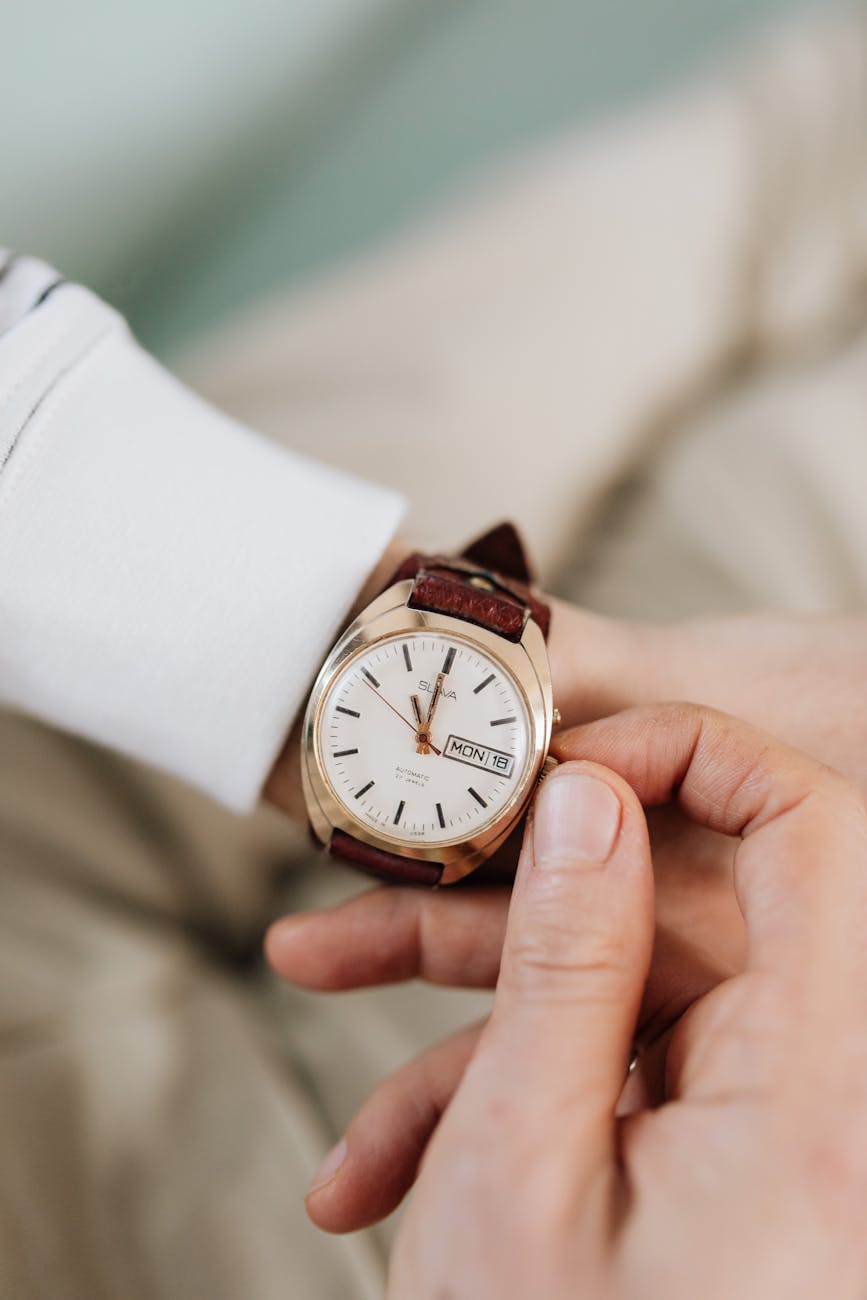
    Date / Day-DateA simple disk under the dial jumps once per day.≈ $150Rolex Day-Date (aka “President”)Seiko 5 Sports
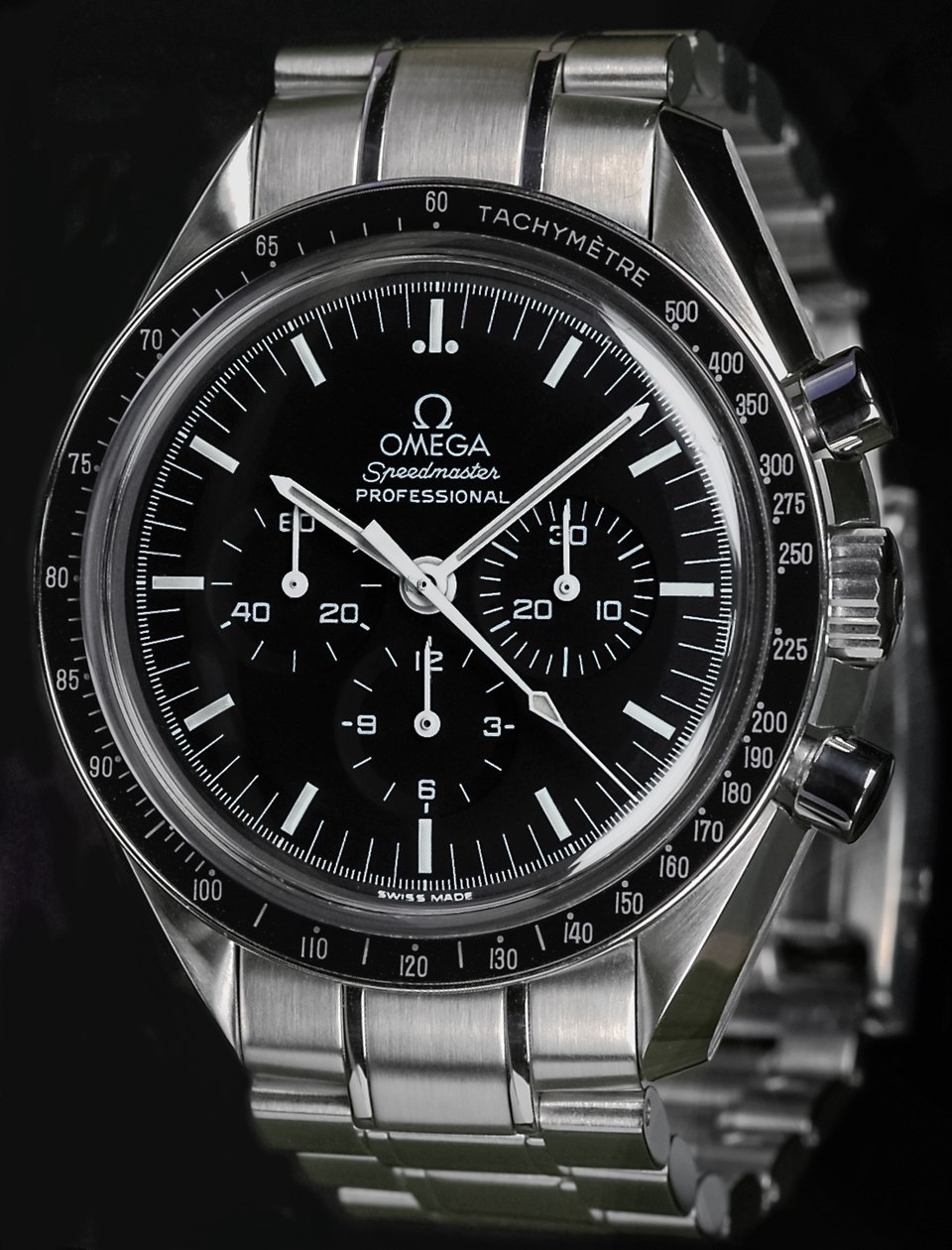
    ChronographStart/stop/reset cams2 & levers run a secondary gear-train to time events.≈ $250Omega Speedmaster “Moonwatch”Tissot PRX Chronograph
    GMT / Dual TimeA 24-hour hand geared to rotate once per day tracks a second zone.≈ $300Rolex GMT-Master II “Pepsi”Seiko 5 GMT (SSK series)
    AlarmA separate spring barrel drives a hammer that strikes an internal gong.≈ $600Jaeger-LeCoultre MemovoxSeiko “Bell-Matic” (vintage)
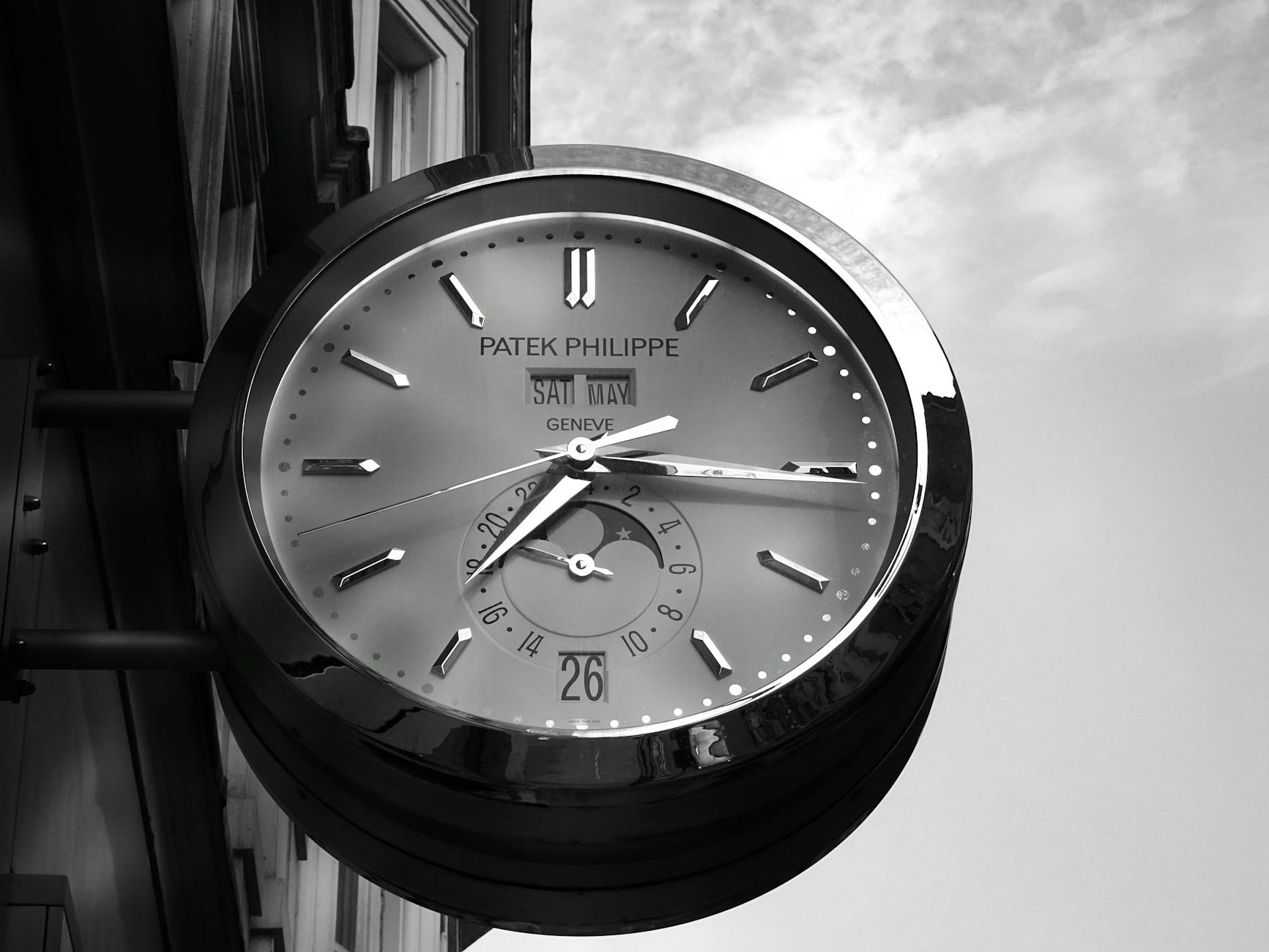
    Moon PhaseA 59-tooth disk advances once every 24 h to sync with the 29.5-day lunar cycle.≈ $300Patek Philippe 3940Orient Sun & Moon v4
    Tachymeter (with Chronograph)Fixed bezel or dial scale converts elapsed seconds into speed or rate.Chronograph pricingOmega SpeedmasterBulova Lunar Pilot
    Annual CalendarUses a cam programmed for 30-/31-day months; needs adjustment only on Feb 28/29.≈ $3 000Patek Philippe 5035 (first ever)Longines Master Collection Moonphase Retrograde Annual Calendar
    Perpetual CalendarLever “memory” accounts for leap years—no correction until 2100.≈ $6 000 (used)Audemars Piguet Royal Oak PerpetualNone—high-horology only
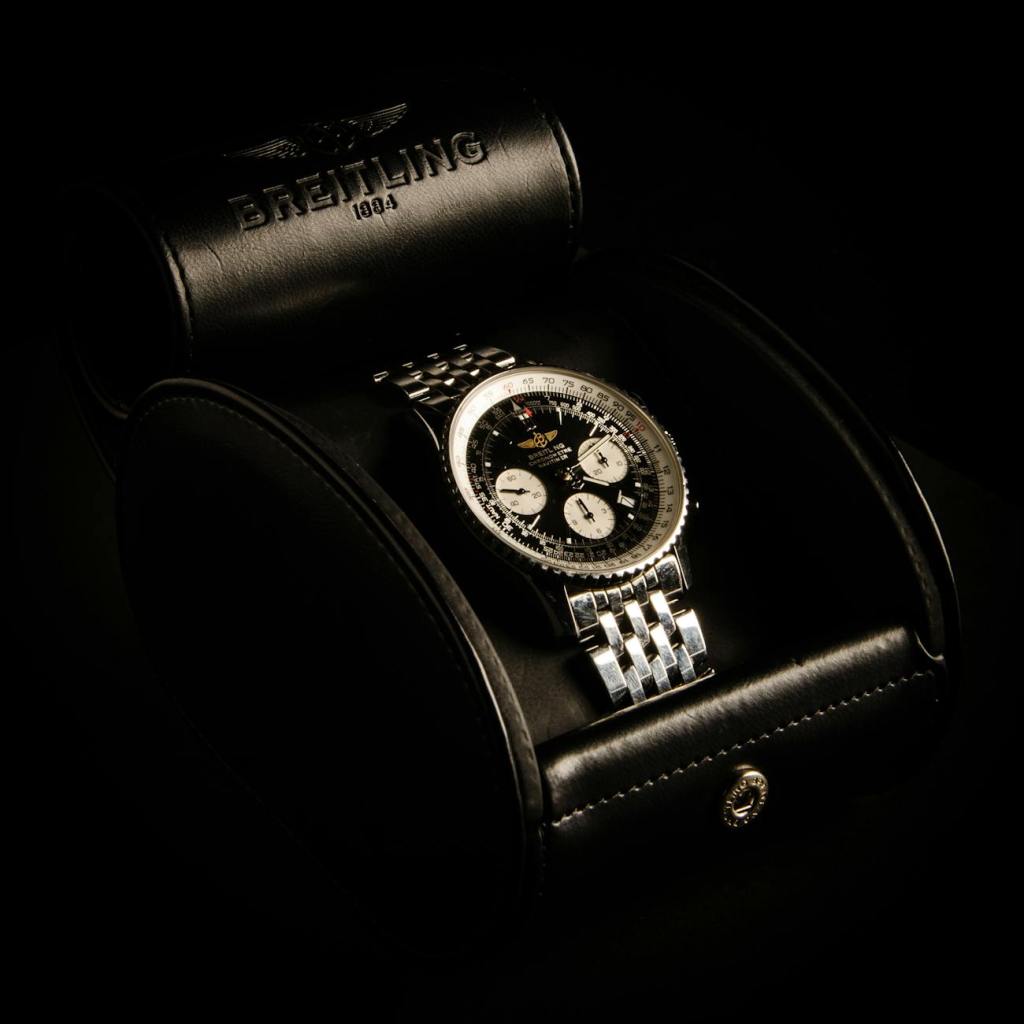
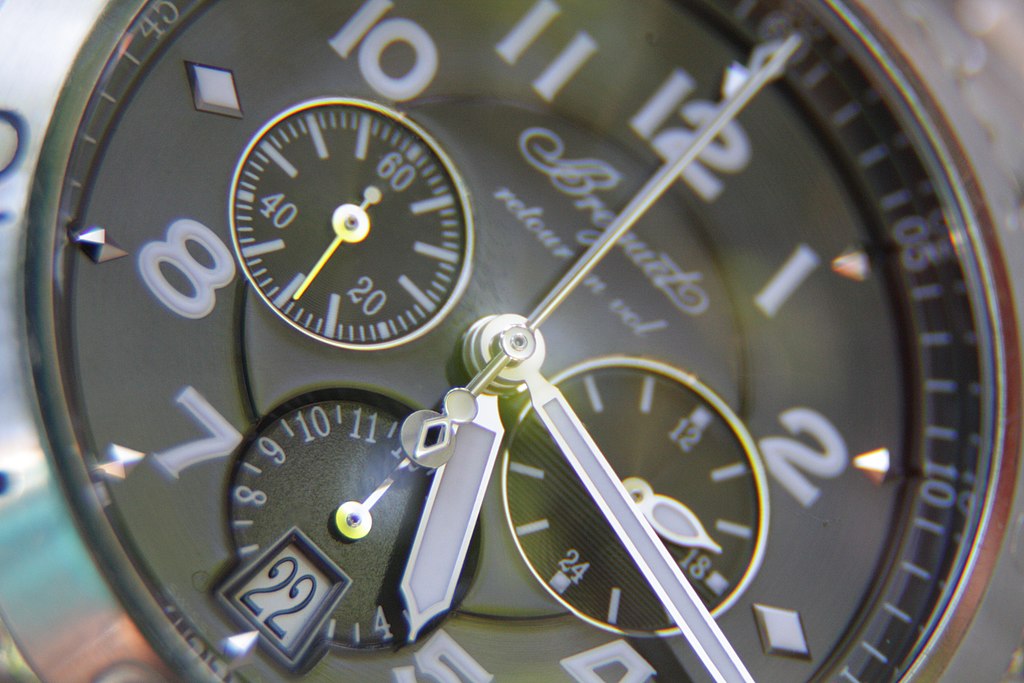
    Flyback ChronographClutch lets you reset & restart timing with one press—perfect for pilots.≈ $1400Breguet Type XXBaltic Bicompax “Panda”
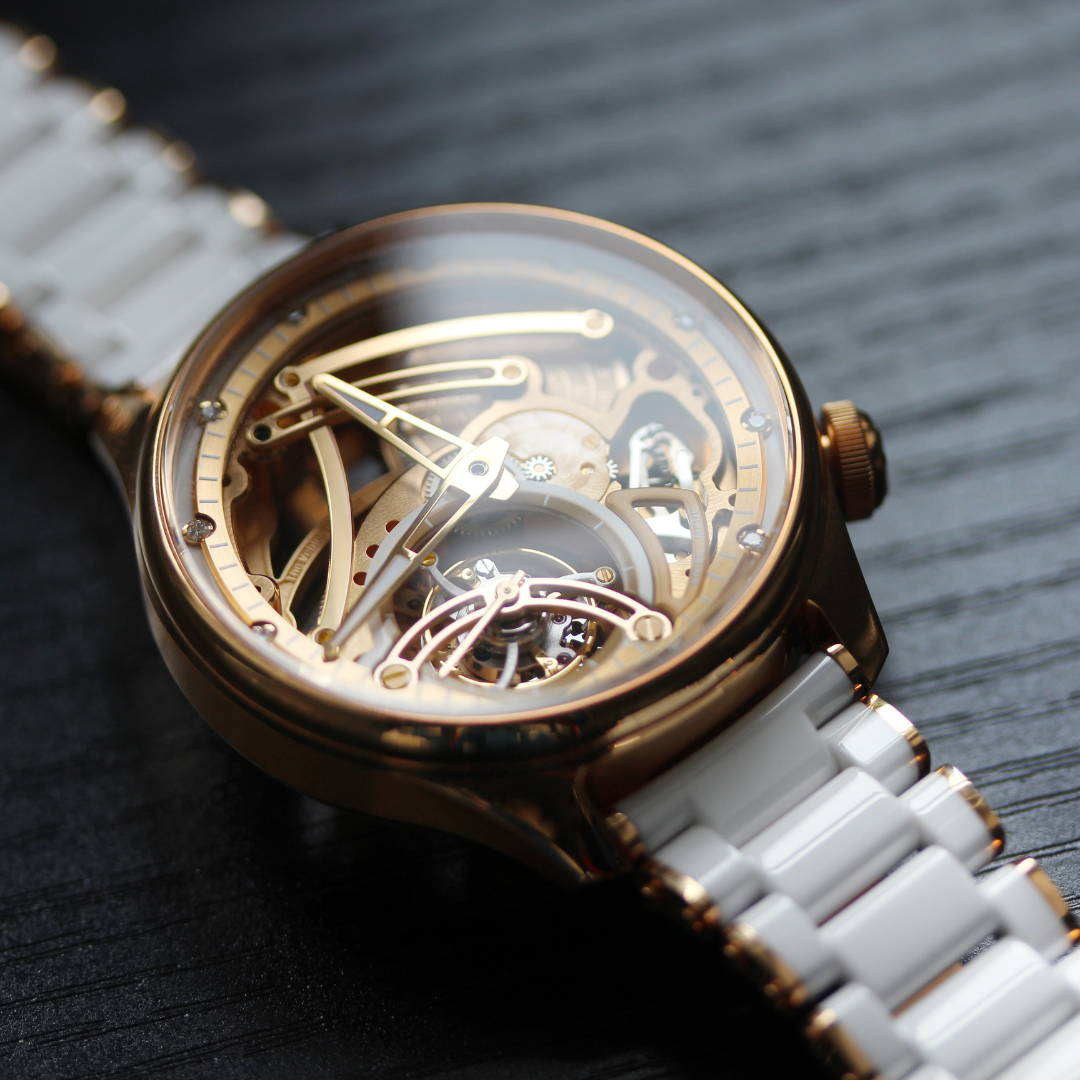
    TourbillonThe entire escapement spins in a cage each minute to average out positional errors.≈ $500 (Chinese brands)Breguet Classique 5317Seagull ST8000 tourbillon

    Bite-Size Deep-Dives


    1. Date / Day-Date

    Photo by Arjunn. la on Pexels.com
    • Why it matters: Everyday convenience.
    • Geek fact: Rolex’s 1945 Datejust was the first self-winding wristwatch with an instantaneous date jump; the “quick-set” feature didn’t appear until 1977.

    2. Chronograph

    Photo by Quang Viet Nguyen on Pexels.com
    • Why it matters: Lap timing + tactile pusher feel.
    • Geek fact: Vertical-clutch chronographs (e.g., Seiko 6139, Zenith El Primero) let the seconds hand run continuously with virtually no amplitude loss—perfect for OCD accuracy nerds.

    3. GMT / Dual Time

    Photo by Bhop Phikanesuan on Pexels.com
    • Why it matters: Track two zones at once.
    • Geek fact: The Rolex 6542 “Pepsi” (1954) was developed for Pan Am pilots; its original Bakelite bezel was so fragile many were swapped for aluminum—surviving Bakelite models fetch six-figure sums.

    4. Alarm

    Seiko Bell-Matic 17 Jewels, via Wikimedia Commons, licensed under CC BY-SA 3.0 AT.
    • Why it matters: A mechanical ringtone on your wrist.
    • Geek fact: The Vulcain “Cricket” was nicknamed The President’s Watch—Truman, Eisenhower, Nixon and Johnson all wore one in the Oval Office.

    5. Moon Phase

    Photo by SevenStorm JUHASZIMRUS on Pexels.com
    • Why it matters: Pure romance.
    • Geek fact: A 135-tooth moon-phase disk (e.g., H. Moser Endeavour) drifts by one day every 122 years—over 4 × more accurate than the traditional 59-tooth setup.

    6. Tachymeter (w/ Chronograph)

    Omega Speedmaster Professional, via Wikimedia Commons, released into the public domain by the author, Torsten Bolten.
    • Why it matters: Converts elapsed time into speed or rate.
    • Geek fact: You can flip the script—time one unit of production (say, wrapping a burrito) and the tachy scale shows burritos per hour. Fast-food nerd badge unlocked.

    7. Annual Calendar

    Jaeger-LeCoultre Master Calendar in Stainless Steel (Ref. Q151842A), via Wikimedia Commons, licensed under CC BY-SA 4.0.
    • Why it matters: Adjust once a year, not every month.
    • Geek fact: Patek Philippe created the complication only in 1996 (Ref 5035); they patented the three-cam mechanism that became the modern template.

    8. Perpetual Calendar

    Audemars Piguet Royal Oak Perpetual Calendar in Gold, mid-1990s, via Wikimedia Commons, licensed under CC BY-SA 4.0.
    • Why it matters: No correction until 2100.
    • Geek fact: Patek’s 1925 Ref 97975 was the first wrist-perpetual; its 48-month “leap-year cam” makes just one full rotation every 4 years.

    9. Flyback Chronograph

    Breguet Watch, via Wikimedia Commons, licensed under CC BY-SA 3.0.
    • Why it matters: Reset & restart with one push—ideal for navigation legs.
    • Geek fact: The Breguet Type 20 spec demanded the movement reset within 0.2 seconds—a quality-control test still enforced on modern Type XX models.

    10. Tourbillon

    Greubel Forsey Tourbillon 24 Secondes Incliné, via Wikimedia Commons, licensed under CC BY-SA 3.0.

    Geek fact: The original 1801 Breguet patent was for pocket watches; multi-axis tourbillons (e.g., Jaeger-LeCoultre Gyrotourbillon) compound the effect by spinning on two or three perpendicular axes.

    Why it matters: Rotating escapement eye-candy.


    Wrapping Up

    Complications add personality and engineering theater. Whether you’re timing a marathon or admiring a miniature lunar cycle, knowing why a function exists helps you decide if the extra cost (and service complexity) is worth it.


    Stay ticking!


    1. Typical street prices for stainless-steel pieces, new unless noted. Prices vary significantly based on brand, movement type, materials, and market demand. ↩︎
    2. Cams in watchmaking are specially shaped mechanical components that convert rotary motion into linear or intermittent movement. They are a critical part of many watch complications, particularly chronographs, where they help coordinate the start, stop, and reset actions. ↩︎

    Share & Subscribe

    If this deep dive made you look at your wrist differently, share the post and subscribe to Mechanical Minutes for more no‑nonsense horology every week.

  • Best Mechanical Watches Under $500 (2025 Edition)

    Best Mechanical Watches Under $500 (2025 Edition)

    Ultra‑high‑quality picks that punch well above their price tag

    Why this list is different: I set an uncompromising bar—factory sapphire (or tougher), mechanical movements, under $500 today, and a proven track‑record of owner satisfaction. Many of the materials and complications here normally sit in the $800–$1 000 bracket, but these few watches break that rule in the best possible way.


    How I Ranked Each Watch
    🛠 Factor⚖️ Weight🤓 Considerations
    ⚙ Movement30%Accuracy, hand-winding, power-reserve
    🛡 Durability20%Sapphire, screw-down crown, water resistance
    📆 Complications15%Date, moonphase, power-reserve indicator
    ⌚ Design15%Dial, wearability, legibility
    🔧 Serviceability10%Parts access, brand support
    👍 Owner Approval10%4.5★+, Reddit praise, real-world durability

    🏆 Top Picks

    1 → Orient Kamasu Diver (RA‑AA0004E19A)

    Image via Wikimedia Commons, licensed under CC BY 2.0.
    • Why it’s here
      • True in‑house calibre F6922 – hacking, hand‑winding, and often regulated by owners to ±10 seconds per day, something rarely seen below $300.
      • Sapphire crystal & 120‑click dive bezel – specs that cost double on competing divers.
      • 200 m water‑resistance and bright lume – equally at home on a reef or under a shirt cuff.
    • Key Specs
      • 41.8 mm × 12.8 mm, 47 mm lug‑to‑lug
      • Screw‑down crown, solid end‑links

    2 → Orient Sun & Moon Version III (RA‑AK0008S)

    Image sourced from Amazon
    • Why it’s here
      • Triple complication (day, date, elegant sun‑moon disc) rarely found under $350—and still capped with sapphire.
      • F6B24 movement – modern hacking/hand‑wound calibre with roughly 50‑hour reserve.
      • Dress‑watch finishing – guilloché‑style textures and applied indices deliver genuine “wow” factor.
    • Key Specs
      • 42 mm stainless case, exhibition back
      • Sapphire crystal, 50 m water‑resistance

    3 → Laco 1925 Pilot Classic (Ref. 861688)

    Laco Paderborn B-Muster Beobachtungsuhr Fliegeruhr Pilotenuhr, via Wikimedia Commons, licensed under CC BY-SA 3.0.
    • Why it’s here
      • Authentic German flieger heritage. Laco built pilot watches in the 1940s; this Modern Classic carries the same clean Type-A dial and heat-blued hands.
      • Sapphire crystal & bright Super-LumiNova. Scratch-proof glass and C3 lume give crisp legibility day or night.
      • Reliable, regulated Miyota 821A. Hacking, hand-winding, and factory regulation by Laco before shipping.
    • Key Specs
      • 42 mm case, 50 mm lug-to-lug, 20 mm strap width
      • Double-domed sapphire crystal, exhibition back, 50 m WR
      • Miyota 821A automatic, ~42-hour reserve

    Why only three mainstream picks?  Once I insisted on sapphire (or tougher) and genuine owner‑approval, almost everything else either swaps sapphire for a cheaper material or falls below the 4.5‑star satisfaction line. I’d rather stay brutally honest than stuff the list with mediocre options.


    ⭐️ Microbrand Spotlight – Boutique Excellence Under $500 (Top 3)

    Limited runs, sapphire crystals, and enthusiast‑level finishing—these three independents rose to the top when I ran the same scoring rubric (movement, durability, design, service, owner sentiment):

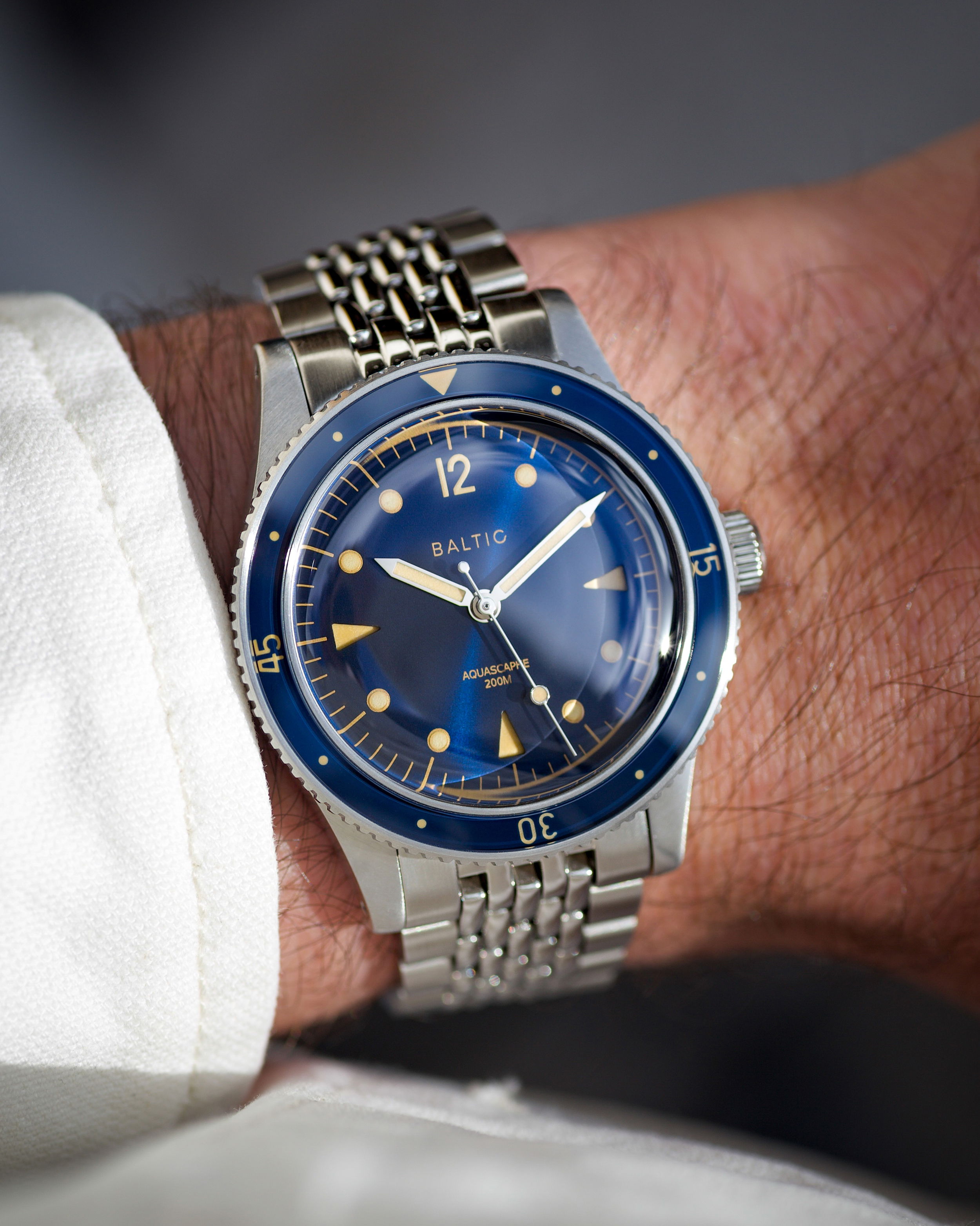
    1 → Baltic Aquascaphe Classic

    Image source: Baltic
    • Why it’s here
      • Retro diver looks with premium finishing. Double-domed sapphire, tropical dial, and beads-of-rice bracelet offer exceptional vintage appeal.
      • Slim, smooth, no-date Miyota movement. 9039 beats at 28 800 vph with a tight, clean sweep.
      • Collector favorite for a reason. Enthusiast-loved across forums, praised by Worn & Wound.
    • Key Specs
      • 39 mm case, 47 mm lug-to-lug
      • Double-domed sapphire, Miyota 9039 automatic

    2 → Zelos Swordfish 40

    Source: Zelos
    • Why it’s here
      • Built like a tank with a sapphire punch. 300 m water resistance, sapphire crystal and bezel insert, and full lume.
      • Performance-tuned Miyota 9015. Regulated by Zelos for improved accuracy.
      • Always sells out—and for good reason. Launches often disappear in hours due to spec-to-price value.
    • Key Specs
      • 40 mm case, 20 mm lug width
      • Sapphire crystal + bezel insert, Miyota 9015 automatic

    3 → Traska Summiteer 38

    Image Source: Traska
    • Why it’s here
      • Tough-as-nails field watch. Scratch-resistant coating over sapphire pushes durability above typical steel.
      • Premium regulation in a compact size. 9039 movement tuned to ±8 sec/day, in a wearable 38 mm case.
      • Minimalist tool-watch with daily appeal. Clean design, brushed finishing, and 150 m water resistance.
    • Key Specs
      • 38 mm case, 46 mm lug-to-lug
      • Flat sapphire with internal AR, Miyota 9039 automatic

    Final Take – Why These Beat Anything Else Under $500

    • Scratch‑proof sapphire crystals or better—no excuses, no “upgrade kits” needed later.
    • Movements with pedigree—from Orient’s in‑house calibres to the near‑bulletproof Seiko NH35A, each is serviceable and well‑understood by watchmakers.
    • Genuine owner approval—hundreds of real‑world reviews prove durability and accuracy over time.
    • Microbrands for flair—if you crave finishing and limited‑run cool factor, the spotlighted indies deliver specs you’d expect at $1 000+.
  • How to Wind a Mechanical Watch the Right Way

    How to Wind a Mechanical Watch the Right Way

    Avoiding overwinding and maintaining accuracy


    Why Winding Matters

    A mechanical watch stores energy in its mainspring. Keeping that spring in its ideal tension “sweet spot” (roughly the first 70-80 % of its power reserve) lets the balance wheel swing with consistent amplitude, which is what keeps time reliably. Winding correctly therefore isn’t just about avoiding damage—it’s about day-to-day accuracy.


    1. Know What’s on Your Wrist

    Movement typeTypical power-reserve (hrs)Clutch to stop overwind?Best practice
    Manual-wind (e.g., ETA 6497)38–50No – you can force breakagesWind once a day at the same time
    Modern hand-wind (e.g., Peseux 7001)42–55NoWind until resistance, stop
    Automatic (e.g., ETA 2824, Miyota 9000)38–70Yes – slipping bridle30–40 crown turns after a full stop, then rely on wrist wear

    2. When Should You Wind?

    • Manual watches: every morning before you strap it on. A daily routine prevents the amplitude dip that creeps in as the spring relaxes.
    • Automatics you don’t wear daily: give them a 30-40-turn “top-off” once a week or whenever they’ve stopped. Doing so resets the power reserve and the lubricants inside stay evenly distributed.

    3. The Safe Winding Routine (Step-by-Step)

    1. Take the watch off your wrist – avoids lateral pressure on the stem.
    2. Unscrew the crown (if it’s a screw-down) to position 0.
    3. Turn the crown clockwise in smooth, quarter-turn flicks.
      • Manual: expect 20-40 turns; resistance will grow steadily.
      • Automatic: expect a soft “whir” and little resistance at first.
    4. Stop the instant you feel firm resistance – that is the spring at full tension. For automatics the bridle will slip silently beyond this point, but continuing serves no purpose.
    5. Push / screw the crown back in to maintain water-resistance.

    4. “Overwinding” — Myth vs Reality

    • Manual: Forcing past the stop can shear the arbor or snap the mainspring. That’s true overwinding.
    • Automatic: The slipping bridle means you cannot overwind in normal use. You can still break the stem or crown if you crank excessively hard.
    • Rule of thumb: Resistance = Stop. Any grinding, squeaking or sudden looseness warrants a watchmaker’s inspection.

    5. Accuracy Tips

    • Stay topped-up: A fuller mainspring keeps the balance amplitude steadier, improving rate stability by 3–6 s/day on many calibres.
    • Avoid partial winds: Chasing a “few quick turns” multiple times a day creates uneven torque curves. One full wind is better than three half-winds.
    • Consistent posture: Wind at roughly the same time and position (crown pointing down) to minimise lubricant migration.
    • Service on schedule: Dried or displaced lubricants are the #1 culprit for erratic amplitude, not overwinding.

    6. Quick-fire FAQ

    • Can I wind backward? Not needed. Most modern movements disengage in reverse but some vintage pieces don’t—avoid unnecessary wear.
    • How many turns is “full”? Your manual is king, but 25–35 is common. Stop at resistance.
    • Daily winding hurts the crown threads, right? Not if you’re gentle and keep the tube gasket lubricated at each service interval.
    • Should I buy a winder? Only if you have many automatics with complications (perpetual calendar, etc.). Otherwise, a manual top-off is simpler.

    Take-away

    Winding a mechanical watch correctly boils down to three habits:

    1. Off-wrist, smooth clockwise turns.
    2. Stop at first firm resistance.
    3. Keep a consistent daily routine.

    Master those, and you’ll protect your mainspring, keep time accurately, and enjoy that satisfying crown-click for decades to come.


    Watch & Learn — Helpful YouTube Walk-throughs

    1. How to wind an automatic watch

    2. Automatic Movement Best Practices. Proper Winding, Helicopter Rotor, Movement Longevity.


    Stay ticking!


    Share & Subscribe

    If this deep dive made you look at your wrist differently, share the post and subscribe to Mechanical Minutes for more no‑nonsense horology every week.

  • Watch Parts 101 – Pt 2

    Watch Parts 101 – Pt 2

    A natural follow‑up to Watch Movements 101 Pt 1 —this guide steps outside the movement to explore every visible (and a few hidden) components that make your watch look, feel, and perform the way it does.


    1‑Minute Recap of Pt 1

    In Watch Movements 101 Pt 1 we dug into the engine room—mainspring, gear train, escapement, balance wheel, and fine regulation.
    Today we zoom out to the chassis and bodywork that protect and showcase that engine:

    • Exterior architecture (crystal, bezel, crown, lugs, case)
    • Protective hardware (gaskets, caseback, anti‑shock systems)
    • Interface elements (dial, hands, lume, pushers, strap/bracelet & clasps)
    • Supporting cast (jewels, rotor, bridges & plates—how they tie into the case)

    Goal: After this 5‑7 minute read, you’ll glance at a watch and instantly recognize why every detail exists, not just what it is.


    2. Surface Essentials—What You Touch & See First

    2.1 Crystal

    Close-up of a watch face with droplets of water on a dark blue dial, showcasing the hour markers and hands.

    A watch crystal is the transparent shield that keeps dust, moisture, and a life of knocks away from the dial. The scratch resistance of watch crystal is measured using the Mohs scale, with 1 being the softest (for example, talc, which can be easily scratched using a fingernail) to the highest being 10 (diamond).
    Commonly used materials:
    • Sapphire (9 Mohs): Almost scratch‑proof; premium divers and luxury pieces.
    • Mineral glass (≈5 Mohs): Hardened but affordable; easy to replace.
    • Acrylic (≈3 Mohs): Vintage charm, cheap, can be polished; shatters less dangerously (no prickly shattered pieces).

    2.2 Bezel

    Close-up of a watch featuring a tachymeter scale, with a white dial, black and silver accents, and a chronograph sub-dial.
    Tachymeter Bezel Detail, via Wikimedia Commons, licensed under CC BY-SA 3.0.

    The bezel is the frame around the crystal. On tool watches it’s more than decoration:

    • Diver’s bezel: Unidirectional count‑up for elapsed dive time.
    • GMT bezel: 24‑hour scale for a second time‑zone.
    • Tachymeter bezel: Fixed scale for speed = 3600 ÷ elapsed‑seconds.

    2.3 Crown & Pushers

    Close-up of a watch showcasing the dial, with prominent hour markers and a textured crown with a distinct emblem.
    Crown and chronograph pushers of a Montblanc Timewalker, via Wikimedia Commons, licensed under CC BY-SA 4.0.

    The crown is the command centre: wind, set, hack, or change modes. Screw‑down designs and twin gaskets safeguard water resistance.
    Chronographs add pushers—plunger buttons—usually at 2 & 4 o’clock.
    Photo by John Torcasio on Unsplash – Free to use.

    2.4 Lugs & Spring Bars

    Lugs are the horns that accept spring bars, letting straps swap easily. Shorter, downward‑curving lugs wear smaller; drilled lug holes speed up strap changes.

    Close-up view of a watch case back featuring a sapphire crystal, with engraved markings indicating water resistance and materials, alongside a beige leather strap.

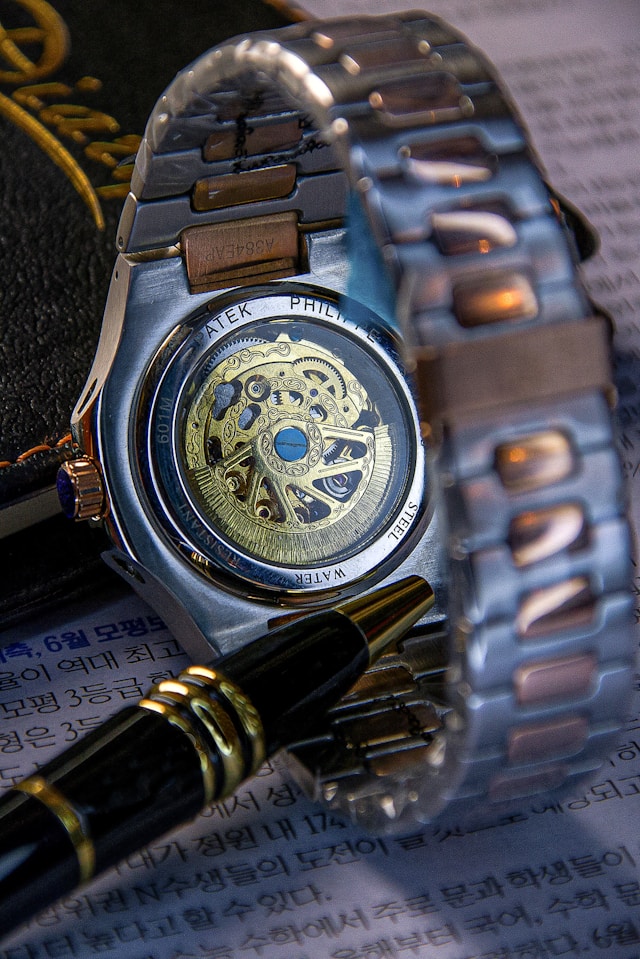
    3. The Case—Guardian of the Movement

    Close-up of a Patek Philippe showing its intricate movement through a transparent caseback, surrounded by a silver metal bracelet and a black pen resting on paper with text.
    Photo showing the caseback by Hammad Zaheer on Unsplash
    ComponentRoleEnthusiast Tips
    Mid‑caseMain metal shell (steel, titanium, bronze).Look for drilled lug holes & bevelled edges for comfort.
    CasebackSeals the movement. Solid backs allow engraving; sapphire display backs satisfy movement voyeurs.Transparent backs add ≈1 mm thickness & can compromise magnetism shielding.
    GasketsO‑rings of rubber or PTFE in crown, crystal, pushers, caseback.Replace every 2–3 years if you swim frequently.
    Helium ValveNiche to saturation‑diving watches.Useless to 99 % of wearers—consider it a flex.


    4. Dial & Hands—The Interface

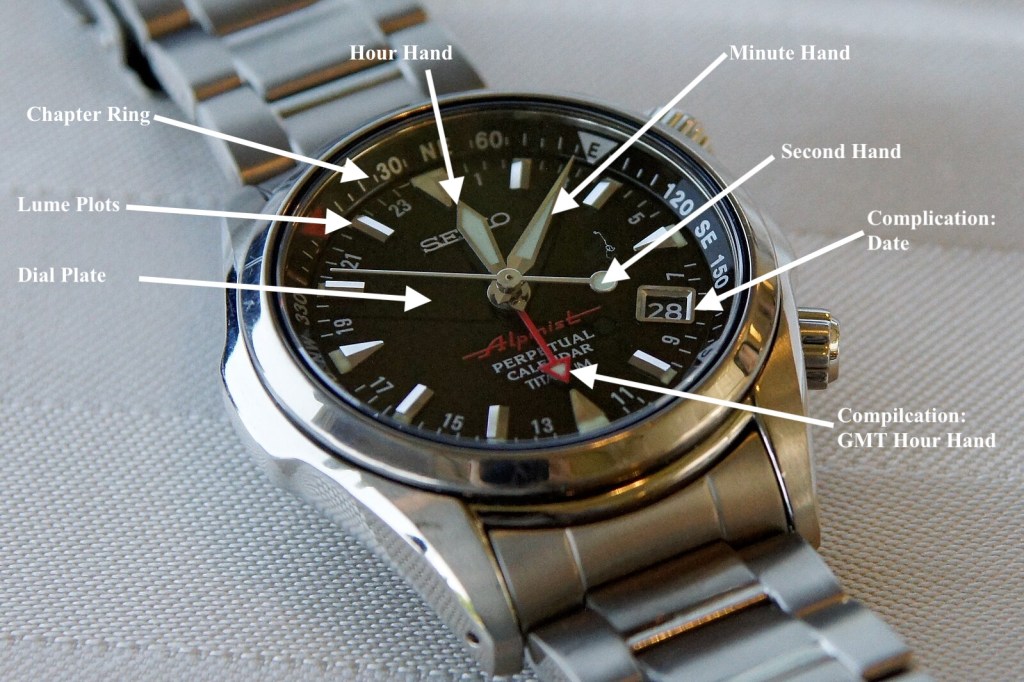
    Close-up of a watch face displaying hour, minute, and second hands, along with features like lume plots, dial plate, chapter ring, and complications such as date and GMT hour hand.
    Modified from “Seiko Prospex Alpinist,” via Wikimedia Commons, licensed under CC BY-SA 4.0.

    The dial is the face of the watch, where time is displayed and complications are showcased. It serves as the primary interface between the watch and its wearer, combining both function and style.

    Dial Plate: The main surface of the dial, typically made from brass or German silver, then coated, printed, or enamelled for color and texture. This is where the hour markers, brand logo, and other visual elements are applied.

    Hands: The moving pointers that indicate hours, minutes, and seconds. Often made from lightweight metal, they come in various shapes, from sword hands to dauphine or skeletonized designs.

    Rehaut/Chapter Ring: The angled ring surrounding the dial, often used for minute tracks or depth markers. It provides a sense of depth to the watch and can be engraved or printed with additional markings. Read more here.

    Lume Plots: Small, often raised dots or lines filled with luminous material like Super-LumiNova, designed to glow in the dark for improved legibility.

    Complications: Additional functions beyond just displaying hours and minutes. Common examples include date windows, chronograph sub-dials, moon phase indicators, and power reserve meters.


    5. Under‑The‑Hood Add‑Ons—Beyond the “101” Movement

    Close-up image of a watch movement showcasing intricate gears and a gold-plated rotor labeled 'Stowa Twenty-Five 25 Jewels Swiss Made'.
    ETA 2824 movement, via Wikimedia Commons, licensed under CC BY-SA 2.0.

    While Movements 101 covered power, transmission, and regulation, three supporting parts deserve a cameo here:

    1. Rotor (automatic only): A semicircular weight that swings 360°, winding the mainspring in one or two directions. Adds about 1 mm height but saves you daily hand winding.
    2. Bridges & Plates: The movement’s “skeleton”—bridges hold gears; the main‑plate anchors everything. Haute horlogerie brands skeletonise bridges for art and weight savings. Read more here.
    3. Shock Protection (Incabloc/KIF): Spring‑mounted jewel settings let the balance staff flex during impact, boosting durability. Read more here.


    6. Straps, Bracelets & Closures

    • Bracelet (metal): Links + solid end links (SELs) + clasp. Look for screws, not friction pins.
    • Strap (leather, rubber, fabric): Quick‑release spring bars are a boon for daily wearers.
    • Clasp types: Tang buckle (traditional), deployant (folding), micro‑adjust clasp (on‑the‑fly comfort).

    Hot‑take: A $20 well‑matched NATO strap can elevate a $500 micro‑brand better than a rattly stock bracelet.


    7. Bringing It All Together—Why This Matters

    Understanding the outer anatomy lets you:

    1. Diagnose: If your watch crystal fogs up, it’s not necessarily a movement issue—it’s more likely a gasket failure allowing moisture in. Knowing this saves you from unnecessary panic or costly movement repairs.
    2. Buy smarter: When buying a watch, it’s crucial to understand why certain features (like a ceramic bezel or a sapphire caseback) increase the price. It’s not just about aesthetics; these materials offer superior durability and scratch resistance, justifying the investment.
    3. Maintain: A gritty feeling when winding or setting your watch could indicate dirt or wear inside the screw-down crown tube. Getting it serviced early prevents water ingress, which could otherwise damage the movement you learned about earlier.

    Your watch isn’t a black box; it’s an ecosystem where every screw and gasket plays its part. Recognise the synergy, and routine time‑checks become moments of appreciation.


    Further Learning

    🎥 Video pick: “A Complete Guide to the Parts of a Watch

    Just like the 101 part 1, I’m sharing a video to that helps you visualize the components that you just reviewed.


    Share & Subscribe

    If this deep dive made you look at your wrist differently, share the post and subscribe to Mechanical Minutes for more no‑nonsense horology every week.


    Stay ticking!


  • Why Another Watch Blog?

    Why Another Watch Blog?

    A personal origin story and what you’ll find here


    An itch that started with my grandfather’s HMT

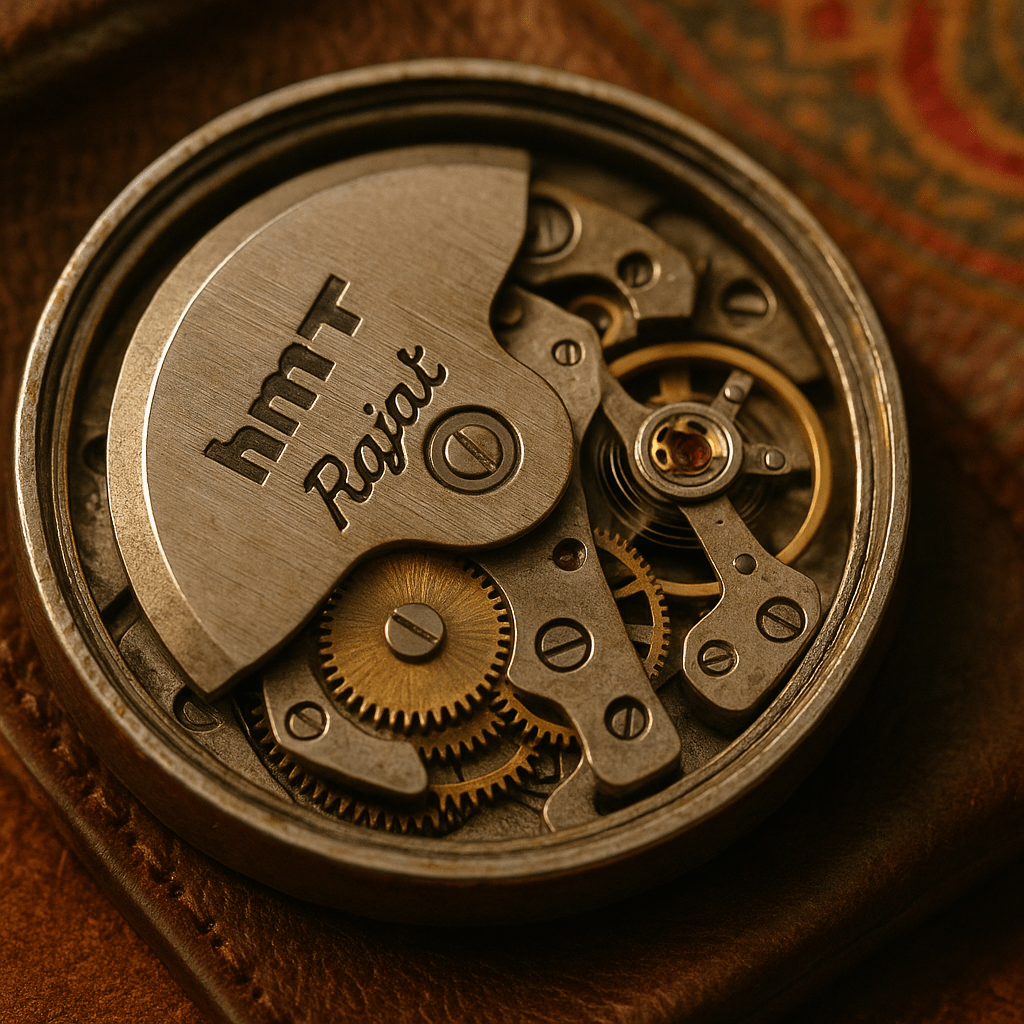
    I was eight when my grandfather slipped off his HMT Rajat, pried open the case‑back with a battered pen‑knife, and showed me the oscillating rotor. “It powers itself as long as you keep moving,” he said, half professor, half magician.

    That tiny swinging weight—no batteries, no screens—hooked me for life. The allure wasn’t price or prestige; it was engineering poetry you could wear.


    Fast‑forward to adulthood: tech life, restless hands

    By day I’m a tech consultant untangling cloud architectures and spaghetti code. The work is cerebral, digital, ephemeral. Watches became my analog counterweight—gears you can actually hear ticking after a day full of Slack pings.

    In the past few years I doubled‑down on the hobby because:

    1. Depth – Horology is an endless rabbit‑hole: movements, finishing, micro‑brands, history.
    2. Mindfulness – Winding a mechanical watch each morning is a 10‑second meditation.
    3. Community – Nothing sparks conversation like spotting a familiar dial across a conference table.

    I’ve already infected my wife, brother, and a couple of colleagues with the bug. This blog is simply the next, inevitable spiral: learn more together and pay forward what I pick up.


    “Spend less than you make, and invest the rest”

    Morgan Housel hammers this idea throughout The Psychology of Money:

    “Spending money to show people how much money you have is the fastest way to have less money.” — TPoM, Chap. 7

    That resonates. I earn a decent living but prefer value over flex—which is why you’ll see me index more on affordable watches under 2K. It’s a sweet spot where craftsmanship meets pragmatism; wealth you don’t see belies the real flex. That doesn’t mean that I don’t drool over the more expensive timepieces, which I’m sure most of my readers do as well. So, I’ll surely create content spotlighting such watches, their brands and the history behind them.


    My first “serious” watch: Sinn 104 St SA

    Last year my wife surprised me with a Sinn 104. It nails everything I love:

    • Tool‑watch toughness
    • Day‑date complication (beats checking a screen)
    • Design that toggles between boardroom and barbecue

    It also proved you don’t need a Swiss marquee to own a lifetime piece—another ethos you’ll see here.


    But … didn’t you ditch the Apple Watch?

    Yup. I wanted less beeping on my wrist.

    Problem: I still need health metrics and multiple time‑zones (family in India, clients worldwide).

    Solution:

    • Oura Ring Gen 3 for covert fitness tracking (battery lasts a week; no glowing rectangle).
    • A rotating roster of mechanical watches with use‑case complications: GMT hand when traveling, day‑date for office cadence, timing bezel for workouts.

    Call it digital minimalism with analog flair—and yes, it squares with the cost‑conscious mantra because the ring replaces annual smart‑watch churn.


    What to expect from this blog

    1. Plain‑English explainers – Movements, servicing, water resistance, lume, you name it.
    2. Curated watch reviews – Always under $2 k, with real‑world wear tests.
    3. History & stories – From HMT’s role in post‑Independence India to Sinn’s aviation roots.
    4. Buying used, safely – Marketplaces, red‑flags, and negotiation scripts.
    5. Money matters – Total‑cost‑of‑ownership calculators and “buy once, cry once” spreadsheets (coming soon).
    6. Interviews & community spotlights – Everyday collectors, not just influencers.

    How you can dive in right now

    • Subscribe to the newsletter (form in the sidebar).

    Thanks for stopping by—wind your watch, stay curious, and let’s demystify mechanical timepieces together.


    Next up: “Mechanical vs. Quartz vs. Automatic—A 5‑Minute Primer.” Stay tuned.