
If you’ve spent time around watch enthusiasts, you’ve probably noticed that few brands evoke the kind of passionate following Sinn (pronounced “Zinn”) does. Founded by Helmut Sinn in 1961, this Frankfurt-based watchmaker quickly became synonymous with rugged, functional watches designed initially for pilots and professionals.
Over the decades, Sinn has stayed true to its roots, focusing on purposeful design, impressive durability, and German precision engineering. This authenticity has earned the brand a dedicated community of fans who appreciate watches built for real-world performance rather than just luxury appeal.
3 Iconic Sinn Watches for Enthusiasts
1. Sinn 104
The Sinn 104 is a versatile classic, celebrated for its clean pilot-watch aesthetics and robust build. With its bidirectional countdown bezel, day-date complication, and highly legible dial, the 104 effortlessly transitions from casual to formal settings. It’s a staple among watch collectors who appreciate practicality combined with timeless style. I have owned this watch for nearly a year now and I love it with all its qualities and flaws (aka – small power reserve of 38 hours and modest accuracy).
2. Sinn U50
The Sinn U50 is a diver’s dream watch—compact, yet nearly indestructible. Crafted from corrosion-resistant German submarine steel, the U50 is rated to an impressive 500 meters water resistance. Its ruggedness and smaller size (41mm diameter) make it a favorite for enthusiasts seeking toughness without excessive bulk. This is likely going to be my next Sinn, probably the one that I’ll buy when I’m in Frankfurt.
3. Sinn 556
My personal pick for the third iconic Sinn model is the Sinn 556. Known for its minimalist elegance, the 556 balances functionality with understated design. Its simplicity makes it an ideal entry point for newcomers to the brand while retaining all the precision and reliability Sinn is known for. This is a great entry level Sinn watch.
Personal Spotlight: My Sinn 104

As many of you know, I proudly own a Sinn 104, a watch that captures everything I love about the brand: crisp legibility, precision build, and understated coolness. I’ve worn it through hikes, meetings, and even formal dinners—never once feeling out of place.
But perhaps my favorite Sinn story occurred during an unexpected moment at—of all places—a Rolex boutique.
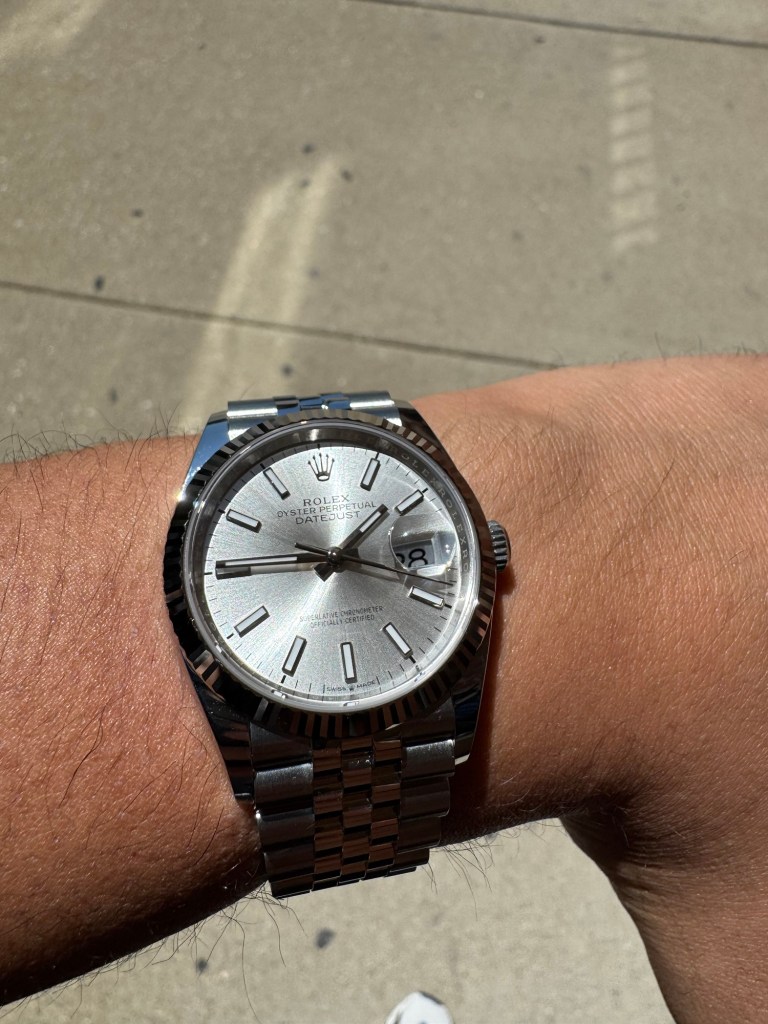
I walked into the Rolex boutique one afternoon, hoping merely to express interest in an Oyster Perpetual Datejust 36mm with a jubilee bracelet and white-gold fluted bezel —a watch notoriously hard to snag without considerable patience and repeated visits. On my wrist that day, naturally, was my Sinn 104. As my Rolex consultant began our conversation, his eyes quickly shifted to my Sinn.
“Is that a Sinn?” he asked, clearly intrigued. Within moments, he was handling my watch, turning it around, admiring its craftsmanship, and soon, our initial small talk turned into a lively chat about tool watches, engineering prowess, and understated German design. The consultant, clearly a genuine enthusiast himself, appreciated the watch’s honest purposefulness.
As our conversation wound down and after we’d discussed various Rolex models, the consultant stepped away briefly, returning with an unexpected surprise—a fresh Datejust in the exact configuration I was seeking. I had walked in fully expecting a polite “We’ll call you if something comes up,” but here I was, offered the coveted model on my very first visit, something people typically spend months waiting and chasing.
I left that day with more than a Rolex—I left with a profound appreciation for how Sinn, even quietly worn on the wrist, speaks volumes.
Final Thoughts
Despite minor shortcomings, Sinn has genuinely impressed me with its no-nonsense philosophy and exceptional value proposition. There’s an undeniable charm in wearing a watch from a brand driven by real-world use rather than flashy marketing campaigns. It’s authentic, reliable, and undeniably cool—exactly why Sinn watches deserve their loyal cult following.






























 Mechanical Minutes


.jpg)