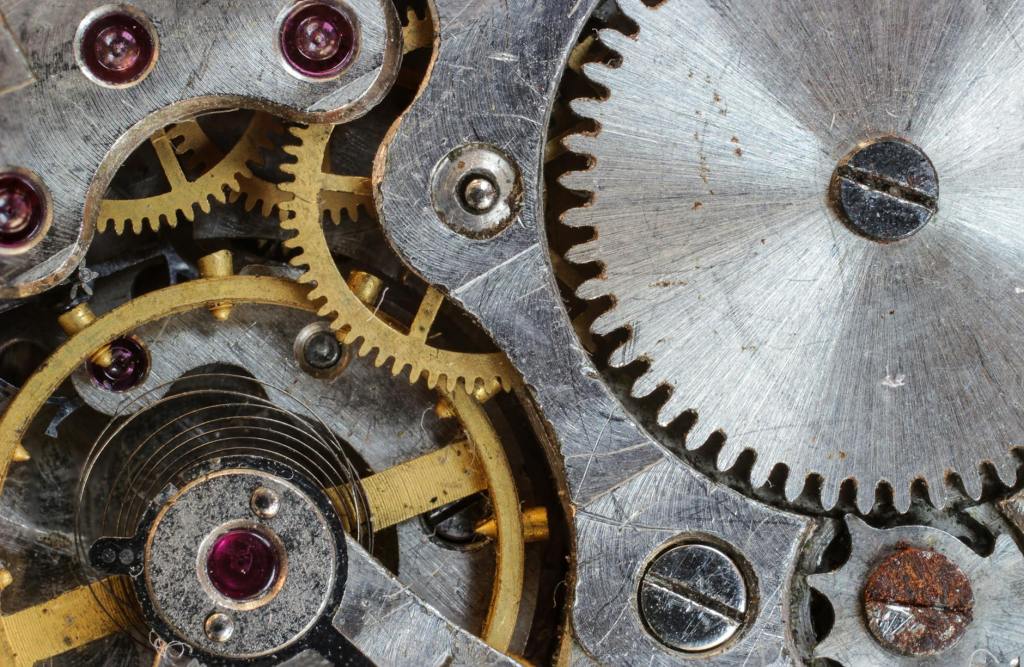
In horology, things move fast. New releases drop every week, auction results shake up the market, and brands keep reinventing how they connect with enthusiasts. If you want to stay current, you need a set of trusted sources. Here are the platforms I use to keep myself plugged into the watch world.
Websites Worth Bookmarking
Hodinkee – Probably the most recognizable watch media outlet. Best for deep-dive reviews, industry news, and high-quality photography. Great if you want context and storytelling.
Fratello Watches – Known for strong editorial opinions and their “Speedy Tuesday” coverage of Omega. Good for thoughtful commentary and in-depth comparisons.
Monochrome Watches – Technical breakdowns and detailed reviews, often covering independent and high-horology brands.
WatchTime – Traditional magazine style with serious reviews and coverage of the watch fair circuit.
Time+Tide – Australia-based, global in reach. Good mix of video, written reviews, and quick news hits.
YouTube Channels to Follow
Watchfinder & Co. – Benchmark channel for visual reviews. Their macro photography is unmatched, making movements and finishing details easy to appreciate.
Teddy Baldassarre– Balanced mix of reviews, buying guides, and education on movements and brands.
The Urban Gentry – Personal, story-driven approach. Strong on watch history and collecting philosophy.
Theo & Harris – Lively, opinionated commentary. Good for learning the cultural side of watches.
Just One More Watch – Accessible microbrand reviews and budget-friendly recommendations.
Reddit (r/Watches, r/WatchExchange) – Real-time discussions, unfiltered opinions, and a finger on the secondary market pulse.
TikTok (Mike Nouveau, Wristcheck, The Second Hand Club) – Quick-hit content, unboxings, and spotting watches in the wild. Surprisingly useful for staying up to date on trends.
Staying updated on watches doesn’t mean chasing every hype drop. It’s about curating sources that give you perspective, whether you’re into Rolex auctions, microbrand discoveries, or movement tech. Pick a few outlets that resonate with your style and you’ll always be in sync with the horological conversation.
Watches are deceptively simple objects. At first glance, they’re just machines that tell time. But anyone who has wound a movement, felt the weight of steel on the wrist, or seen lume glowing in the dark knows that a watch is far more than a utility. It’s history on your wrist, engineering distilled into art, and—most importantly—a conversation starter that can connect you with people in surprising ways.
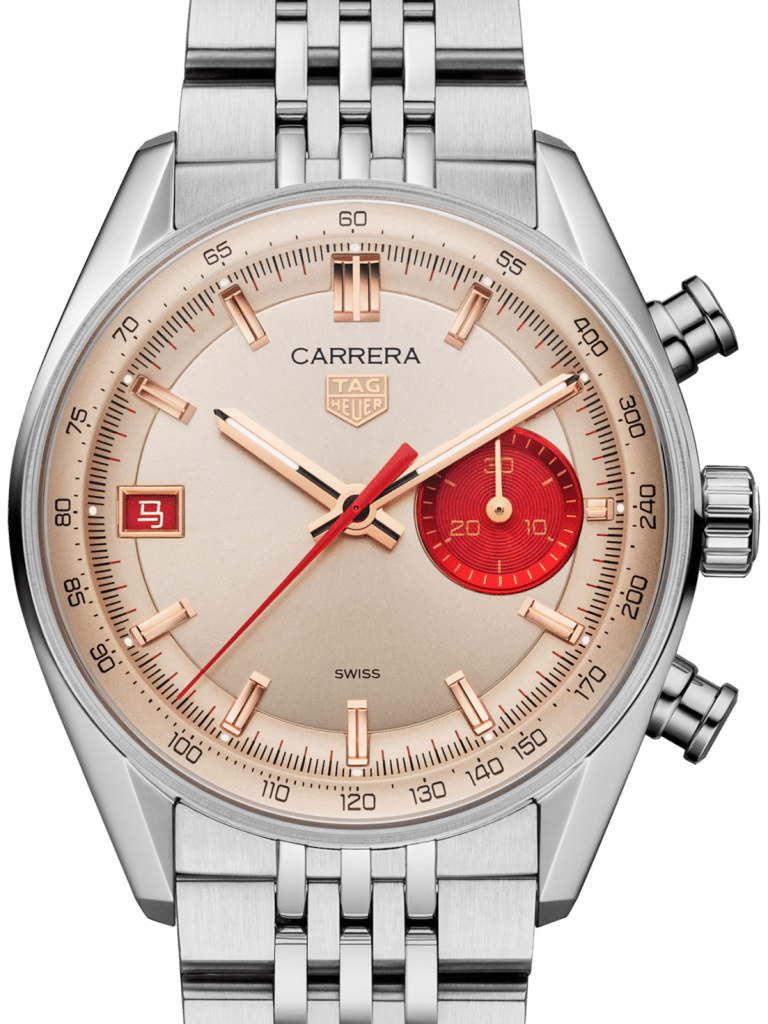
One of the best things about this hobby is how it breaks down walls between strangers. On a recent flight, I noticed the man seated next to me wearing a Rolex GMT-Master. I leaned over to ask about it, and that simple gesture led to an hour-long conversation. He told me he wears the watch all the time—even when he sleeps—and how it has served him faithfully for years, far outlasting the Tag Heuer Carrera he once owned.
It struck me that while brands, models, and complications matter, what really counts are the personal stories attached to these timepieces. Watches aren’t just objects—they’re companions to life itself.
Unlike some hobbies that demand ever-new equipment or extreme conditions, watches stay with you every day. You don’t need to set aside special time—they sit quietly on your wrist, reminding you of the craftsmanship, design, and innovation packed into something smaller than a matchbox. The fact that a purely mechanical movement—gears, springs, and levers—can keep time with such accuracy still feels miraculous in the digital age.
A Hobby with Layers of Meaning
History: Wearing a Speedmaster connects you to the moon landing; a Submariner, to generations of divers.
Engineering: Movements like ETA’s Powermatic 80 or Rolex’s 3235 aren’t just specs—they’re living testaments to precision.
Aesthetics: The artistry of dials, cases, and complications makes every piece an object of beauty.
Community: Enthusiast forums, watch fairs, and even casual office chats weave you into a global network of collectors.
Collecting watches can quickly spiral into a money pit and even a hoarding problem if you’re not careful. The temptation to chase every new release, every “must-have” limited edition, or every bargain on a sales forum is real. Before long, you’re not curating a collection—you’re filling drawers with watches you barely wear.
I’ve caught myself on this slope before, realizing that the line between meaningful collecting and compulsive buying can blur easily. The key is to recognize what truly resonates with you and to buy with intention, not impulse.
Unlike many hobbies that come and go with phases of interest, watches age with you. They gather scratches, patina, and stories along the way. Your daily beater becomes the watch you wore through promotions, milestones, and travels. Your first serious piece becomes the one you’ll hand down, carrying not just timekeeping function but personal history.
In a world where distractions are endless and hobbies can feel shallow, mechanical watches ground you. They remind you to slow down, to appreciate craftsmanship, and to value continuity.
Photo by Su00f3c Nu0103ng u0110u1ed9ng on Pexels.com
Final Thought
Pursuing watches as a hobby isn’t about chasing luxury or flexing status—it’s about discovering meaning in the mechanical, connecting with people across the world, and finding an anchor you can carry on your wrist for a lifetime. Just remember: a collection should tell your story, not bury it under excess.
Nothing kills the romance of a diver quicker than a dial that vanishes at dusk. Let’s make sure yours doesn’t.
What Exactly Is “Lume”?
Lume is any luminous compound applied to a watch’s hands, indices, or bezel so the wearer can read time in the dark. Modern formulas are either self-charging phosphorescent paints (e.g., Super-LumiNova, LumiBrite) or tiny sealed tritium gas tubes that glow continuously through beta decay.
Luminova Pigments via Wikimedia Commons (public domain)
A Two-Minute History Lesson
Radium paint (1910s-1960s) – radioactive, banned for safety.
Tritium paint (1960s-1990s) – less radioactive but still regulated.
When I first got my Sinn 104, I treated it like treasure. I’d gently wipe it down at the end of the day, admire the crisp dial under a lamp, and be extra careful when putting it on. Fast forward a few months—and the clasp looked like it had gone to war. Deep, scattered desk dive marks everywhere.
It didn’t take long to figure out what was happening: long hours at my desk, wrists brushing against the cold metal edge of my MacBook, and absolutely no wrist protection. The result? A scratched clasp and a lesson in what not to do with your watch.
If you’ve ever looked down and winced at fresh scratches, here’s a rundown of what really causes them—and how to stop the damage before it starts.
Scratched clasp on Omega Speedmaster, via Wkimedia Commons, CC BY-SA 4.0
1. Desk Diving: The Collector’s Common Enemy
This is where it all began for me. The constant contact between my Sinn’s stainless steel clasp and the aluminum edge of my MacBook created a perfect storm of micro-abrasions.
How to Prevent It:
Use a desk pad or leather mat—it adds cushioning and elevates your wrist above hard edges.
Wear long sleeves or slide your watch further up your wrist.
Switch to a fabric or rubber strap if you type a lot.
Work off an external keyboard if you use a laptop.
2. Strap Swaps That Go Wrong
I love switching straps, but in the early days, I wasn’t using the right tools. One slip of the spring bar tool is all it takes to leave a mark on your lugs or case.
Prevention Tips:
Use a proper spring bar tool—not a paperclip or the tip of a knife.
Work on a padded surface.
Add masking tape around the lugs for extra protection.
Invest in quick-release straps for fuss-free changes.
3. Accidental Knocks and Bumps
Sometimes the damage isn’t immediate—it’s a slow accumulation from daily interactions. Door frames, countertops, subway poles—if you’re not careful, polished cases and bezels take the hit.
Tips:
Be mindful in crowded spaces.
Wear smaller-cased watches in tight quarters or during errands.
Avoid stacking jewelry on the same wrist as your watch.
4. Poor Storage Choices
When I first started collecting, I’d toss my watch into a catch-all drawer at the end of the day. Big mistake. Crystals rubbing against casebacks, steel on steel—not good.
Storage Upgrades:
Use a watch roll, tray, or travel pouch with dividers.
Never store watches crystal-down.
For travel, go with a dedicated zippered case that holds each watch separately.
5. Shirt Cuffs and Micro-Abrasions
You’d be surprised how much damage your clothes can do. Tight shirt cuffs rubbing against lugs all day can dull polished surfaces over time.
Fixes:
Choose soft or looser cuffs when wearing polished watches.
Wipe down your watch regularly—grit and dust can cause hidden scratches when rubbed in.
6. Material Matters (Some Wear Harder Than Others)
Here’s a quick guide I’ve picked up through personal experience and collector circles:
Material
Scratch Resistance
Sapphire crystal
Excellent
Ceramic bezels/cases
Very high (but can shatter)
Tegimented steel (like Sinn’s)
Much better than standard 316L
Titanium
Light but scratch-prone
Acrylic crystals
Scratch easily—but polishable
That said, even Sinn’s hardened steel can’t save you from daily abuse if you’re not mindful. Ask my clasp.
Closing Thoughts: Embrace Patina, But Minimize Regret
Scratches tell stories, but not every mark is worth earning. My Sinn taught me that prevention isn’t about babying your watch—it’s about forming smarter habits. Today, I keep a leather desk mat at work, swap to NATO straps on laptop-heavy days, and store my watches properly. It’s made a world of difference.
Watches tell time, but their evolution tells a story. From medieval tower clocks to precision micro-mechanics on our wrists, the journey of watches spans centuries of invention, fashion, and obsession. This is the tale of how timekeeping became personal—and what might come next.
The Dawn of Timekeeping: Sundials and Tower Clocks
Long before watches, ancient civilizations tracked time using sundials, water clocks, and candle clocks. But these were immobile, communal, and far from precise.
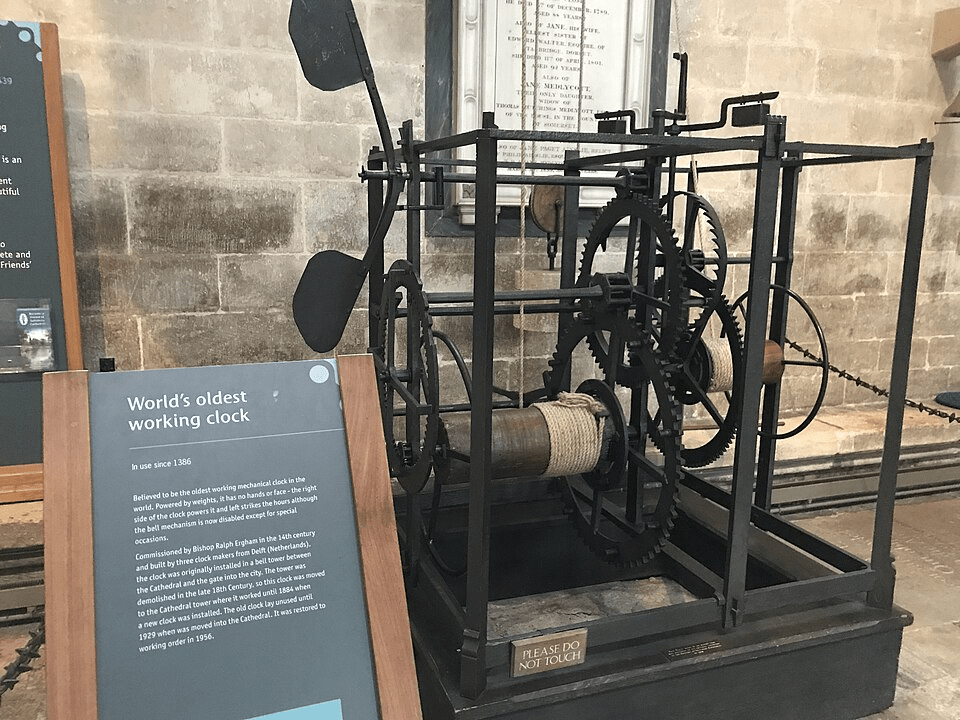
It wasn’t until the 14th century in Europe that mechanical tower clocks began to dominate town squares—giant machines powered by weights and regulated by verge escapements. These massive clocks brought standardized time to communities, often regulated by monks and cathedral bells.
14th-century clock mechanism, Salisbury Cathedral. Image via Wikimedia Commons, licensed under CC BY-SA 4.0.
Enter the Pocket Watch: Time Gets Personal
In the 16th century, German inventor Peter Henlein created one of the first portable clocks—what we now call a pocket watch. These “Nuremberg Eggs” were spring-driven and worn around the neck or carried in pockets.
Image of a clock-watch “Nuremberg Egg” watch by Peter Henlein, 1510 via Wikimedia Commons under CC BY-SA 3.0.
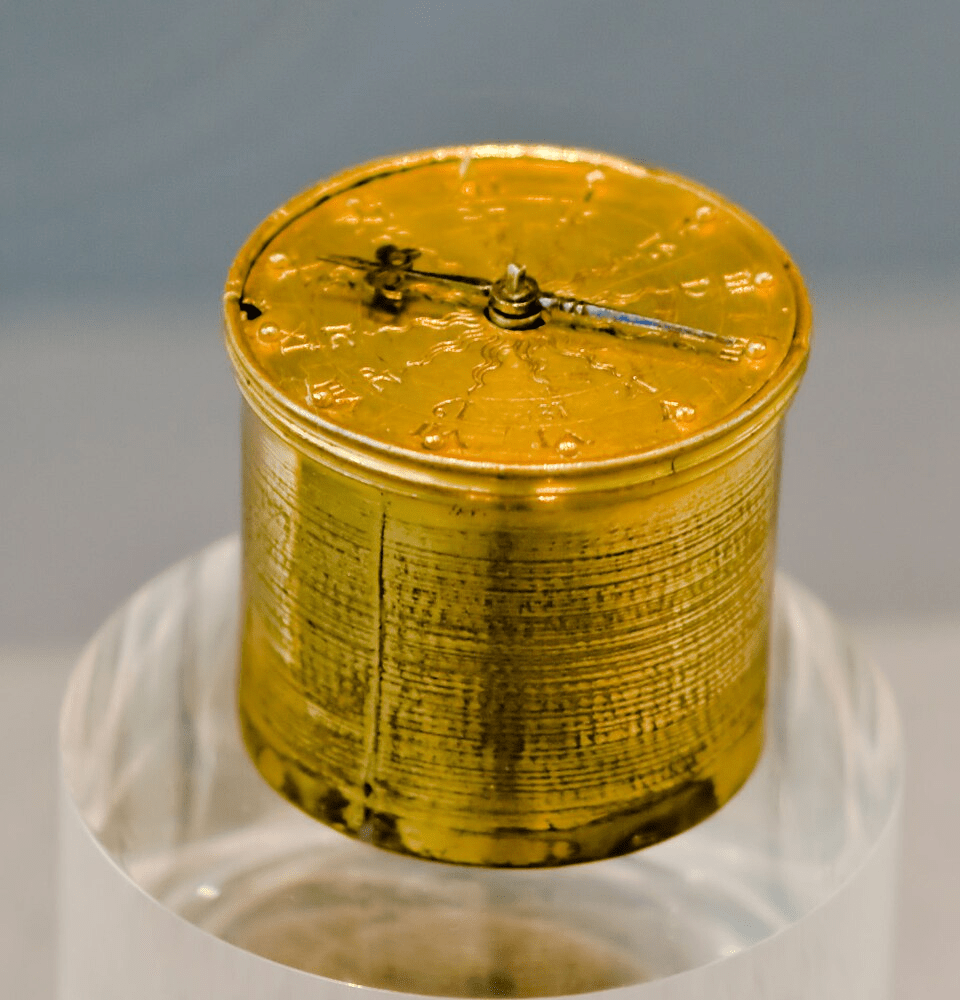
As watchmaking advanced through the 17th and 18th centuries, pocket watches became slimmer, more accurate, and increasingly decorative—status symbols for nobility and merchants alike. Innovations like the balance spring (1675) and jeweled movements greatly enhanced accuracy and durability.
Photo of 16th-century portable clock from Musée Paul‑Dupuy’s collection in Toulouse, via Wikimedia Commons, licensed under CC BY-SA 3.0.
The Birth of the Wristwatch: War, Women, and Innovation
Despite their elegance, pocket watches had a flaw—they needed two hands to check the time. The idea of strapping a timepiece to the wrist was initially considered feminine. But practicality changed everything.
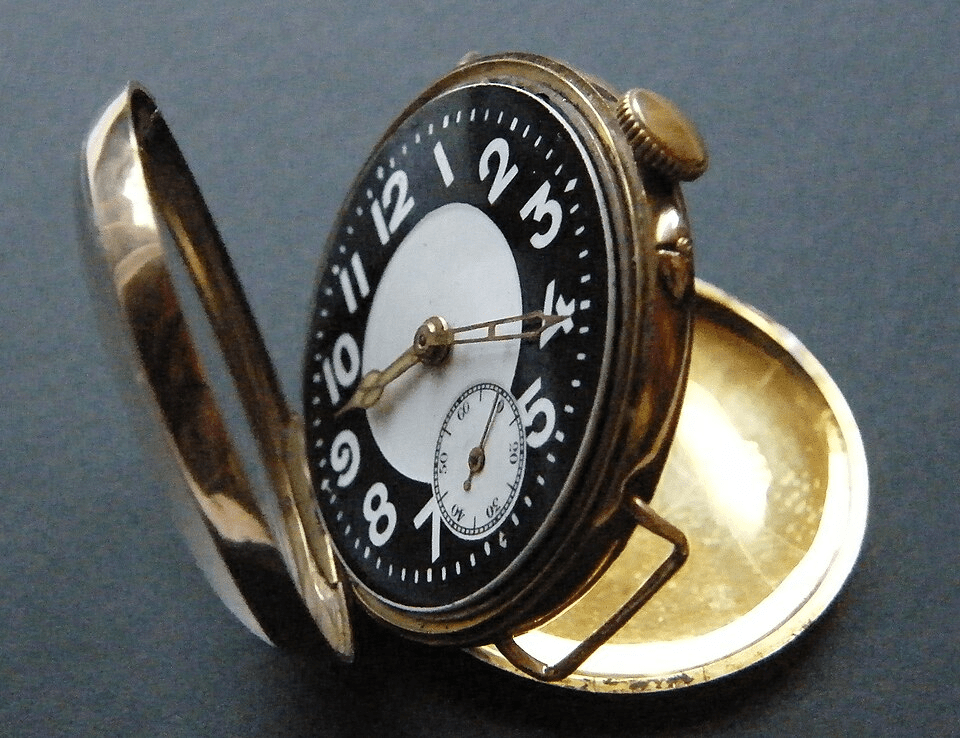
During the Boer War and World War I, soldiers began wearing modified pocket watches on their wrists for quick access. Military utility made wristwatches masculine, reliable, and essential.
By the 1920s, brands like Rolex, Longines, and Cartier were producing dedicated wristwatches for men. The transition was complete—wristwatches became the new standard.
WWI-era trench wristwatch. Image via Wikimedia Commons, released under public domain.
The Quartz Revolution: Accuracy vs. Tradition
In 1969, the world changed again when Seiko released the Astron, the first commercial quartz watch. Accurate to within seconds per month, it triggered the Quartz Crisis, nearly destroying the Swiss mechanical watch industry.
Brands like Omega, Tissot, and even Rolex scrambled to catch up. Meanwhile, Swatch emerged in the 1980s with colorful, affordable quartz watches, helping Switzerland regain relevance with mass-market appeal.
1969 Seiko Astron – the first quartz wristwatch. Image via Wikimedia Commons, licensed under CC BY-SA 4.0.”
Mechanical Renaissance: Art Meets Engineering
Despite quartz dominance, mechanical watches made a comeback in the 1990s and 2000s. No longer about pure utility, they became luxury items, heritage symbols, and feats of engineering.
Collectors revered the ticking heartbeat of an automatic movement, the craftsmanship behind hand-finished cases, and the legacy behind names like Patek Philippe, Audemars Piguet, and Rolex.
The 2010s ushered in a new contender: the smartwatch. Apple, Samsung, and Garmin blurred the line between fitness trackers, notifications, and health monitoring. Yet, traditional mechanical watches haven’t disappeared.
We might see mechanical hybrids (like Grand Seiko’s Spring Drive or experimental micro-energy harvesters), watches with blockchain service records (as used by Breitling and Vacheron Constantin), or AI-assisted movement calibration (still emerging, but being explored in manufacturing and smart hybrid platforms) in the near future.
If you’ve spent time around watch enthusiasts, you’ve probably noticed that few brands evoke the kind of passionate following Sinn (pronounced “Zinn”) does. Founded by Helmut Sinn in 1961, this Frankfurt-based watchmaker quickly became synonymous with rugged, functional watches designed initially for pilots and professionals.
Over the decades, Sinn has stayed true to its roots, focusing on purposeful design, impressive durability, and German precision engineering. This authenticity has earned the brand a dedicated community of fans who appreciate watches built for real-world performance rather than just luxury appeal.
3 Iconic Sinn Watches for Enthusiasts
1. Sinn 104
The Sinn 104 is a versatile classic, celebrated for its clean pilot-watch aesthetics and robust build. With its bidirectional countdown bezel, day-date complication, and highly legible dial, the 104 effortlessly transitions from casual to formal settings. It’s a staple among watch collectors who appreciate practicality combined with timeless style. I have owned this watch for nearly a year now and I love it with all its qualities and flaws (aka – small power reserve of 38 hours and modest accuracy).
2. Sinn U50
The Sinn U50 is a diver’s dream watch—compact, yet nearly indestructible. Crafted from corrosion-resistant German submarine steel, the U50 is rated to an impressive 500 meters water resistance. Its ruggedness and smaller size (41mm diameter) make it a favorite for enthusiasts seeking toughness without excessive bulk. This is likely going to be my next Sinn, probably the one that I’ll buy when I’m in Frankfurt.
3. Sinn 556
My personal pick for the third iconic Sinn model is the Sinn 556. Known for its minimalist elegance, the 556 balances functionality with understated design. Its simplicity makes it an ideal entry point for newcomers to the brand while retaining all the precision and reliability Sinn is known for. This is a great entry level Sinn watch.
Personal Spotlight: My Sinn 104
As many of you know, I proudly own a Sinn 104, a watch that captures everything I love about the brand: crisp legibility, precision build, and understated coolness. I’ve worn it through hikes, meetings, and even formal dinners—never once feeling out of place.
But perhaps my favorite Sinn story occurred during an unexpected moment at—of all places—a Rolex boutique.
I walked into the Rolex boutique one afternoon, hoping merely to express interest in an Oyster Perpetual Datejust 36mm with a jubilee bracelet and white-gold fluted bezel —a watch notoriously hard to snag without considerable patience and repeated visits. On my wrist that day, naturally, was my Sinn 104. As my Rolex consultant began our conversation, his eyes quickly shifted to my Sinn.
“Is that a Sinn?” he asked, clearly intrigued. Within moments, he was handling my watch, turning it around, admiring its craftsmanship, and soon, our initial small talk turned into a lively chat about tool watches, engineering prowess, and understated German design. The consultant, clearly a genuine enthusiast himself, appreciated the watch’s honest purposefulness.
As our conversation wound down and after we’d discussed various Rolex models, the consultant stepped away briefly, returning with an unexpected surprise—a fresh Datejust in the exact configuration I was seeking. I had walked in fully expecting a polite “We’ll call you if something comes up,” but here I was, offered the coveted model on my very first visit, something people typically spend months waiting and chasing.
I left that day with more than a Rolex—I left with a profound appreciation for how Sinn, even quietly worn on the wrist, speaks volumes.
Final Thoughts
Despite minor shortcomings, Sinn has genuinely impressed me with its no-nonsense philosophy and exceptional value proposition. There’s an undeniable charm in wearing a watch from a brand driven by real-world use rather than flashy marketing campaigns. It’s authentic, reliable, and undeniably cool—exactly why Sinn watches deserve their loyal cult following.
There’s a strange affliction that hits collectors the moment they buy a watch they love: the immediate desire to find the next one.
After picking up my Sinn 104—a watch I still admire for its clean pilot aesthetic, rugged build, and just the right dash of everyday wearability—I expected to feel done. At least for a while. But instead, I fell into one of my recurring watch phases: a dopamine-fueled spiral of browsing, wishlist building, and near-purchases that all end the same way—me losing interest days later.
Sound familiar?
This cycle isn’t just anecdotal. There’s actually a term for it in psychology: “hedonic adaptation.” It’s the human tendency to quickly return to a baseline level of satisfaction after experiencing something positive. That burst of joy when the package arrives? It fades. And we start hunting for the next high.
Why Curating a Collection Can Be a Money Pit
Let’s be honest. This hobby—especially when you’re venturing into mechanical watches—is a slow bleed on your bank account if left unchecked. You can justify each purchase with “diversity,” “investment potential,” or “heritage,” but it’s all too easy to end up with a drawer full of watches you don’t wear and a savings account that looks like it lost a fight with a NATO strap.
And I say this as someone who loves the hunt. The problem isn’t loving watches; it’s loving too many at once with no clear framework.
Every watch should earn its place. Before falling for a model’s lume shot or bracelet clasp, ask: What gap does this fill?
Do I need a dress watch that actually fits under a cuff? Do I need a travel watch with GMT functionality? Do I just want a weekend beater that doesn’t cost a fortune to service?
Let the function define the form.
2. Set a Watch Budget Like You Mean It
If you don’t treat your watch budget like a real category—like rent or groceries—you’ll always find ways to justify stretching it. Set your yearly or per-watch limit and stick to it. Ingenuity thrives under constraint. That’s part of what makes finding the one so rewarding.
3. Impose a Cool-Off Period
My new rule: no impulse buys. If I fall in love with a piece, I give it a 30-day cooling-off period. If I still want it just as much—and I’ve imagined exactly how and when I’ll wear it—then it’s probably worth pulling the trigger.
And you’d be surprised how many “grails” fall off the radar after two weeks.
I no longer chase what looks good in an Instagram post. I go deeper. Movement reliability, servicing cost, heritage, community feedback—these things matter more in the long run than a killer press photo. If possible, try it before you buy it!
A good question to ask: Would I still want this if nobody else saw it on my wrist?
Where I’m At Now with my watch buying
After spending hours on Hodinkee, Teddy Baldassarre, and countless other watch blogs and sites, I’ve come to realize one thing: finding a truly desirable watch takes time.
What you find desirable one day might not appeal to you the next. My watch searches have started with a Seiko SPK43 and ended with an IWC Aquatimer. So, don’t trust your taste until you find yourself consistently drawn to the same watch. For me, only my 104 has managed to do that.
To help myself decide, I’ve come up with a four-category watch list—which I’ll describe in a future blog post.
What makes a watch truly worth collecting? The dial might charm, and the case might shine—but it’s the movement underneath that tells the real story. For collectors, the caliber powering the watch isn’t just a mechanism; it’s the soul of the timepiece.
In today’s post, I will spotlight 10 watch movements that every modern collector should know—grouped not by price or brand, but by their real-world relevance, horological significance, and mechanical merit. From reliable entry-level staples to movements that define luxury watchmaking, these are the engines shaping the wristwatch world in 2025.
The Everyday Legends
Affordable, accessible, and the backbone of the enthusiast community
1. Miyota 9015 – The Microbrand Powerhouse
Techné Harrier Ref. 363 (Miyota 9015), versions 132 & 031, via Wikimedia Commons, licensed under CC BY-SA 4.0.
Used in: Zelos, Baltic, Lorier, Laco Specs: Automatic, 28,800 vph, 42-hour power reserve, hacking & hand-winding
The Miyota 9015 is the unsung hero of the modern microbrand scene. Thin, reliable, and cost-effective, it’s a Swiss ETA alternative made in Japan—perfect for slim, everyday automatics. Its high beat rate gives a satisfying sweep, and it’s used in watches often priced under $1,000.
Used in: Seiko 5, Invicta, Vostok Europe, many modded builds Specs: Automatic, 21,600 vph, 41-hour power reserve, hacking
One of the most mass-produced movements in the world, the NH35 is beloved by modders and budget brands alike. It’s durable, serviceable, and works forever—literally, some watches run for a decade with no intervention. What it lacks in finesse, it makes up for in rugged character.
3. ETA 2824-2 – The Swiss Benchmark
ETA 2824-2 Automatic Movement, via Wikimedia Commons, licensed under CC BY-SA 3.0 DE.
Used in: Hamilton, Tissot, Steinhart, Sinn Specs: Automatic, 28,800 vph, 38-hour power reserve
Even with limited availability, the ETA 2824-2 is still one of the most respected entry-level Swiss movements. Known for its smooth sweep, compact build, and high accuracy, it’s a trusted choice in field watches, divers, and affordable luxury pieces alike.
4. Sellita SW200-1 – The Reliable Stand-In
Christopher Ward C8 Power Reserve Chronometer featuring the Sellita SW200-1 movement, via Wikimedia Commons, licensed under CC BY 2.0.
Used in: Sinn, Oris, Christopher Ward, Formex Specs: Automatic, 28,800 vph, 38-hour power reserve
When ETA restricted movement supply, Sellita became the savior for many independent brands. The SW200-1 is an ETA 2824 clone that’s been steadily improved. Today, it’s practically indistinguishable in terms of performance, and widely adopted in rugged tool watches under $2K.
Chronograph Powerhouses
Still the heart of the modern chronograph scene
5. Valjoux 7750 – The Chrono Classic
Valjoux 7750 Movement in Franchi Menotti Automatic Chronograph, via Wikimedia Commons, licensed under CC BY-SA 4.0.
Used in: Sinn 103, Hamilton Khaki Chronograph, Fortis Specs: Automatic Chronograph, 28,800 vph, 42-hour power reserve
The Valjoux 7750 is the most popular automatic chronograph movement in the world. With its distinctive rotor wobble and loud ticking, it’s not subtle—but it is reliable. Collectors appreciate it for its rich history and continued use in rugged, aviation-style chronographs.
Innovators & Icons
Where engineering meets elegance
6. Omega Co-Axial Caliber 8900 – The Escapement Revolution
Omega Seamaster Planet Ocean Ref. 215.30.44.21.03.001 featuring the Co-Axial Master Chronometer Caliber 8900, via Wikimedia Commons, licensed under CC BY-SA 4.0.
Used in: Seamaster Diver 300M, Aqua Terra, Globemaster Specs: Automatic, 25,200 vph, 60-hour power reserve, METAS-certified
This is the movement that set Omega apart in modern watchmaking. With George Daniels’ co-axial escapement and anti-magnetic silicon parts, the Caliber 8900 offers incredible long-term stability. Certified by METAS, it exceeds COSC standards and delivers next-level performance for under $10K.
7. Grand Seiko Spring Drive 9R65 – Glide into Precision
Used in: SBGA211 “Snowflake,” SBGA413 “Cherry Blossom” Specs: Hybrid (mechanical + quartz), ±1s/day, 72-hour power reserve
The 9R65 is where mechanical craftsmanship meets quartz accuracy. Exclusive to Grand Seiko, it produces the smoothest seconds hand sweep in the business—no ticking, just pure glide. For collectors who love tradition but crave precision, this movement is a technical marvel.
8. Jaeger-LeCoultre Caliber 899 – The Elegant Performer
Jaeger-LeCoultre Master Control Hometime Ref. 147.2.05.S, via Wikimedia Commons, licensed under CC BY-SA 4.0.
Used in: JLC Master Control, Polaris Specs: Automatic, 28,800 vph, 70-hour power reserve
JLC is often behind the scenes, making movements for other big names. But the Caliber 899 proves they deserve the spotlight. Thin, beautifully decorated, and highly reliable, it’s a collector’s favorite in refined dress watches that don’t sacrifice engineering for elegance.
9. Patek Philippe Caliber 324 S C – Haute Horlogerie, Refined
Iconic Patek Philippe Nautilus Ref. 5711/1A-010 featuring Caliber 324 S C, via Wikimedia Commons, licensed under CC BY-SA 4.0.
Used in: Calatrava, Nautilus (earlier references) Specs: Automatic, 28,800 vph, 45-hour power reserve
One of Patek Philippe’s signature movements, the 324 S C is known for exquisite finishing, tight tolerances, and smooth winding. It’s found in some of the most collectible watches ever made, and while not as complicated as a tourbillon, its refinement is second to none.
10. Rolex Caliber 3235 – The Modern Rolex Workhorse
Rolex Sea-Dweller, featuring Caliber 3235, by John Torcasio, CC BY-SA 3.0, via Wikimedia Commons
Used in: Rolex Datejust 41, Submariner Date, Sea-Dweller, Yacht-Master Specs: Automatic, 28,800 vph, 70-hour power reserve
Rolex’s flagship automatic movement, the Caliber 3235, powers most of their modern lineup and represents a significant evolution from the long-serving 3135. It features the proprietary Chronergy escapement—optimized for efficiency—and a longer mainspring, resulting in a robust 70-hour reserve. With a Parachrom hairspring, Paraflex shock protection, and Superlative Chronometer accuracy, it blends daily reliability with technical refinement. While not haute horology, it’s one of the most battle-tested and serviceable modern calibers in high-end watchmaking, built for longevity and precision.
Final Thoughts: Know What Drives Your Watch
Behind every great watch is a great movement. Whether you’re exploring microbrands, investing in your first Swiss automatic, or dreaming of your next haute horlogerie piece, understanding the engine inside your timepiece gives your collection meaning and depth.
These 10 movements aren’t just parts—they’re proof that watchmaking is alive, evolving, and accessible at every level of collecting.
Stay curious. Stay passionate. And as always—stay ticking.
My grandfather’s worn-out HMT Rajat is still the most precious watch in my collection.
The first mechanical watch I ever held wasn’t mine—it was my grandfather’s. A slim, silver-dialed HMT Rajat, always peeking out from under the cuff of his kurta. He would wind it each morning with a quiet reverence, as though awakening something sacred. It wasn’t just a tool to tell time—it was a symbol.
Through him, I discovered that HMT wasn’t just a watch brand. It was a badge of honor, a retirement gift, a wedding present, a milestone. Owning an HMT meant something in India—because it was India’s timekeeper.
As someone who now explores microbrands and affordable mechanical watches through my blog Mechanical Minutes, I wanted to step back and honor the brand that put India on time—and did it with dignity, precision, and pride.
The Backdrop: India’s Tryst with Industrial Destiny
When India gained independence in 1947, the country’s leadership knew that self-reliance wouldn’t just come from freedom—it needed factories, tools, and technology.
In 1953, Hindustan Machine Tools (HMT) was born as a state-owned enterprise focused on machine tools. But it wasn’t long before Nehru’s vision expanded. By 1961, with technical assistance from Japan’s Citizen Watch Co., HMT took on a new mission: manufacturing India’s very first wristwatches.
This wasn’t just industrial diversification—it was nation-building on your wrist.
HMT’s Contributions: Timekeeping as Nation-Building
🏭 Made in India, For Indians
HMT created watches in India, by Indians, for Indians—a revolutionary concept in an era where imported Swiss watches were luxuries few could afford. These weren’t mass-manufactured gadgets—they were engineered with care, often by skilled artisans trained in Japan and Switzerland.
“Time is money, they say. But in India, time was also identity. And HMT gave it form.”
⏱️ Mechanical Movements for the Masses
Where the world was shifting to quartz, HMT doubled down on manual-wind mechanical calibers—tough, repairable, and romantic in their ticking rhythm. The Caliber 020, based on Citizen’s movement, powered many iconic models like the Janata, Sona, and Rajat.
Some innovations include:
Shock-resistant designs, rare in that price bracket.
Hand-finished dials, often with subtle textures or sunburst effects.
Slim cases and domed acrylics, styled with Bauhaus-like restraint.
🎓 Skill Transfer & Watchmaking Ecosystem
HMT didn’t just make watches—it built an entire generation of Indian watchmakers, many of whom would later go on to launch private ventures. Its training programs were rigorous and respected, often mirroring Swiss watchmaking pedagogy.
Why Were HMT Watches So Prestigious?
Before Titan, before Seiko’s Indian presence, HMT was the gold standard of wristwatches in India. If you received one:
At retirement—it meant your service was honored.
As a gift—it meant you were respected.
At marriage—it symbolized a lifelong promise.
They had emotional value, but also social status. A man wearing an HMT was punctual, disciplined, and “set in time.”
HMT Janata, via Wikimedia Commons, licensed under GNU
HMT Pilot: A robust, field-style watch with cult status.
HMT Sona & Rajat: Elegant dress watches in gold and silver tones, often passed down generations.
HMT Jawan: Issued to the Indian Army—practical, matte, and hard-as-nails.
HMT Watches on display, via Wikimedia Commons, licensed under CC BY-SA 4.0
What Made HMT Special Technically?
HMT Jhalak via Wikimedia Commons, licensed under GNU
Beyond nostalgia, these watches had horological merit:
In-house assembly: Movements were hand-assembled in India, not imported as kits. Low-beat but long-lasting: 18,000–21,600 bph calibers optimized for longevity, not flash. Serviceable for decades: You could find a watch repair guy in any town who knew HMT guts.
This “tool-for-life” philosophy made them more than machines—they were companions.
The Quartz Crisis hit HMT harder than most. By the late 1980s, consumers wanted slimmer, battery-powered watches. HMT’s mechanical tooling couldn’t adapt fast enough. Their quartz lineup arrived too late—and lacked the charm of their originals.
The 2000s saw further decline, with branding missteps, little innovation, and growing financial losses. In 2016, the Indian government officially shut down HMT Watches.
A Cult Rebirth: HMT in the 21st Century
HMT Stellar DASL 02 BLUE
Paradoxically, HMT’s death sparked a revival. Vintage watch enthusiasts began hunting down Pilots and Janatas on eBay, refurbishing them, and showcasing them online. A new generation began to appreciate their mechanical soul.
Even today, owning an HMT is a love letter to Indian engineering, and a reminder that not all timekeeping is digital.
Final Words: A Personal Thanks
I still have my grandfather’s HMT Rajat. It doesn’t work perfectly—but that’s part of the magic. It’s not just a watch. It’s a time capsule, a tribute to a time when India built its dreams from scratch, one tick at a time.
If you’re an Indian collector, your journey begins not with a Rolex or a Nomos—but with a Janata, a Pilot, or maybe a Rajat. Check out the collection here.
As soon as you start surfing Chrono24, Bob’s Watches, or binge-watching Teddy Baldassarre, one thing jumps out: watches do much more than tell time. From timing a lap to summoning the phases of the moon, each “function”—or complication—adds engineering flair, price, and bragging rights.
Below is a lightning-round tour of ten of the most talked-about functions. For each one you’ll see how it works, typical price entry points, an iconic reference, and an affordable gateway piece (when one exists—some complications stay stubbornly expensive).
Geek fact: Rolex’s 1945 Datejust was the first self-winding wristwatch with an instantaneous date jump; the “quick-set” feature didn’t appear until 1977.
Geek fact: Vertical-clutch chronographs (e.g., Seiko 6139, Zenith El Primero) let the seconds hand run continuously with virtually no amplitude loss—perfect for OCD accuracy nerds.
Geek fact: The Rolex 6542 “Pepsi” (1954) was developed for Pan Am pilots; its original Bakelite bezel was so fragile many were swapped for aluminum—surviving Bakelite models fetch six-figure sums.
Geek fact: A 135-tooth moon-phase disk (e.g., H. Moser Endeavour) drifts by one day every 122 years—over 4 × more accurate than the traditional 59-tooth setup.
6. Tachymeter (w/ Chronograph)
Omega Speedmaster Professional, via Wikimedia Commons, released into the public domain by the author, Torsten Bolten.
Why it matters: Converts elapsed time into speed or rate.
Geek fact: You can flip the script—time one unit of production (say, wrapping a burrito) and the tachy scale shows burritos per hour. Fast-food nerd badge unlocked.
7. Annual Calendar
Jaeger-LeCoultre Master Calendar in Stainless Steel (Ref. Q151842A), via Wikimedia Commons, licensed under CC BY-SA 4.0.
Why it matters: Adjust once a year, not every month.
Geek fact: Patek Philippe created the complication only in 1996 (Ref 5035); they patented the three-cam mechanism that became the modern template.
8. Perpetual Calendar
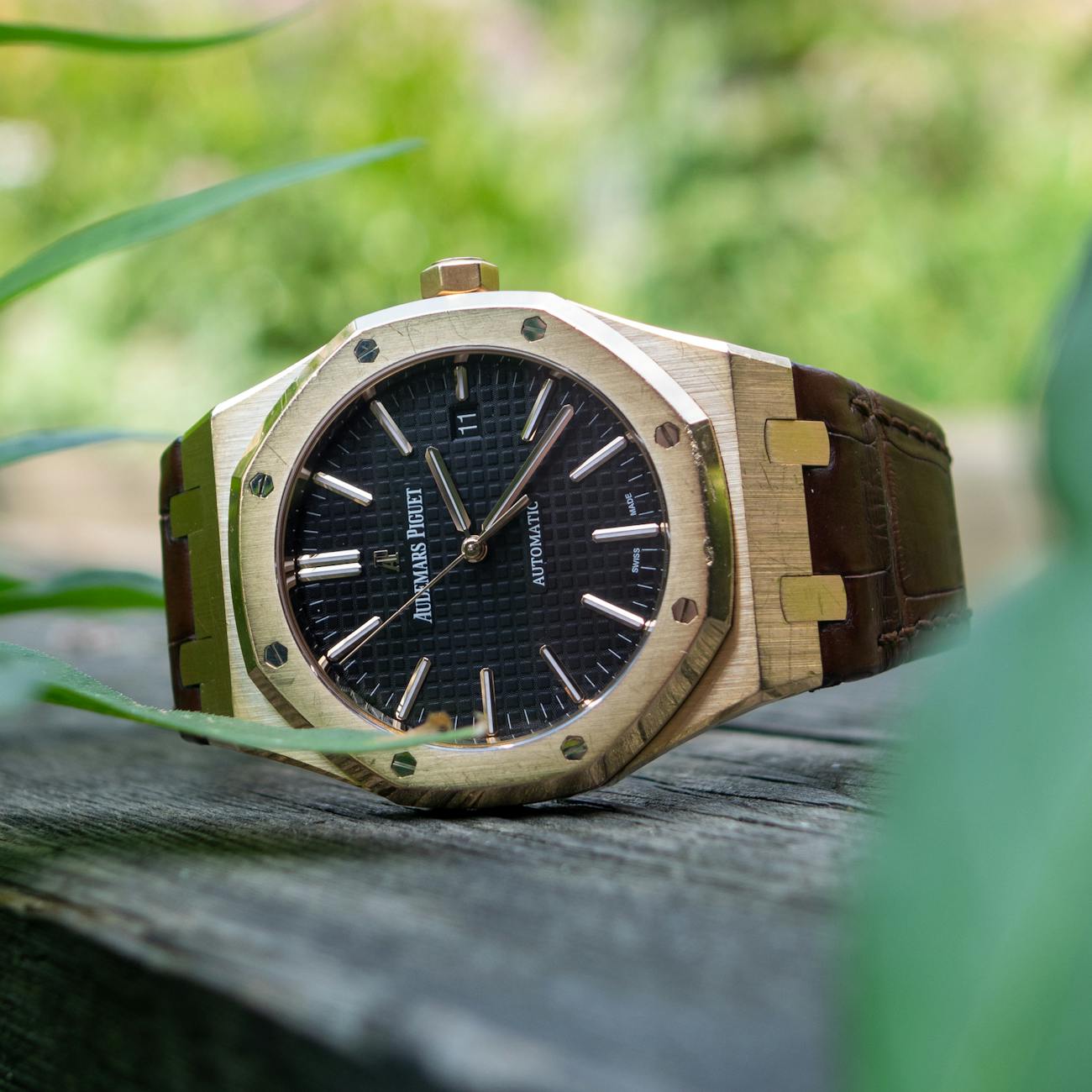
Audemars Piguet Royal Oak Perpetual Calendar in Gold, mid-1990s, via Wikimedia Commons, licensed under CC BY-SA 4.0.
Why it matters: No correction until 2100.
Geek fact: Patek’s 1925 Ref 97975 was the first wrist-perpetual; its 48-month “leap-year cam” makes just one full rotation every 4 years.
9. Flyback Chronograph
Breguet Watch, via Wikimedia Commons, licensed under CC BY-SA 3.0.
Why it matters: Reset & restart with one push—ideal for navigation legs.
Geek fact: The Breguet Type 20 spec demanded the movement reset within 0.2 seconds—a quality-control test still enforced on modern Type XX models.
10. Tourbillon
Greubel Forsey Tourbillon 24 Secondes Incliné, via Wikimedia Commons, licensed under CC BY-SA 3.0.
Geek fact: The original 1801 Breguet patent was for pocket watches; multi-axis tourbillons (e.g., Jaeger-LeCoultre Gyrotourbillon) compound the effect by spinning on two or three perpendicular axes.
Why it matters: Rotating escapement eye-candy.
Wrapping Up
Complications add personality and engineering theater. Whether you’re timing a marathon or admiring a miniature lunar cycle, knowing why a function exists helps you decide if the extra cost (and service complexity) is worth it.
Stay ticking!
Typical street prices for stainless-steel pieces, new unless noted. Prices vary significantly based on brand, movement type, materials, and market demand. ↩︎
Cams in watchmaking are specially shaped mechanical components that convert rotary motion into linear or intermittent movement. They are a critical part of many watch complications, particularly chronographs, where they help coordinate the start, stop, and reset actions. ↩︎
Share & Subscribe
If this deep dive made you look at your wrist differently, share the post and subscribe to Mechanical Minutes for more no‑nonsense horology every week.